
Ethical Use of People Data and Employee Privacy in Indian Organisations
HR TECH & ANALYTICS
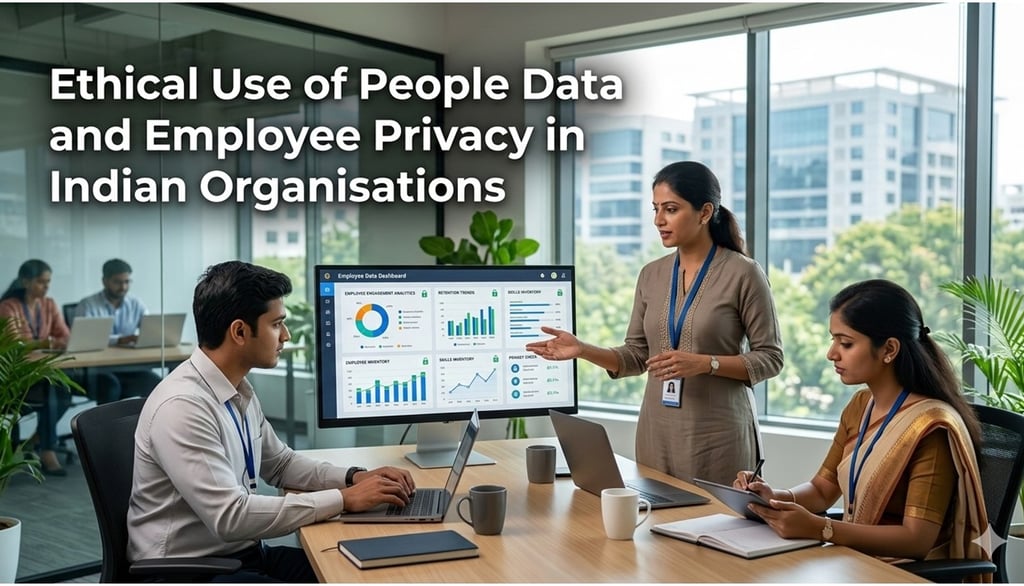
As HR functions become increasingly digital and data-driven, organisations collect and process large volumes of employee data. While people data enables better workforce planning, analytics, and decision-making, it also raises important concerns around ethics, privacy, and trust.
In the Indian context, ethical use of people data is not only a legal responsibility but also a critical factor in maintaining employee confidence and organisational credibility.
What Is People Data in HR?
People data includes any information related to employees or candidates, such as:
Personal identification details
Employment and compensation records
Attendance, leave, and performance data
Learning, assessment, and feedback records
Engagement surveys and behavioural data
This data is sensitive by nature and must be handled with care throughout the employee lifecycle.
Why Ethics and Privacy Matter in HR Data Usage
Employee Trust and Organisational Culture
Employees expect transparency and fairness in how their data is used. Ethical practices strengthen trust, while misuse leads to disengagement and reputational risk.
Legal and Regulatory Considerations
Indian organisations must align with:
Information Technology Act provisions
Emerging data protection regulations
Sector-specific compliance requirements
Failure to comply can lead to legal exposure and penalties.
Responsible Decision-Making
Data-driven decisions should support fairness, not reinforce bias or discrimination. Ethics ensure analytics is used to improve people practices rather than control or penalise employees unfairly.
Ethical Principles for Using People Data
Purpose Limitation
Collect and use employee data only for legitimate, defined organisational purposes.
Transparency
Clearly communicate:
What data is collected
Why it is collected
How it will be used
Data Minimisation
Avoid collecting excessive or unnecessary information that does not serve a clear purpose.
Fairness and Non-Discrimination
Ensure data and analytics do not unfairly disadvantage individuals or groups.
Employee Privacy in the Digital HR Environment
Access Control
Restrict access to people data based on role and responsibility.
Data Security
Implement safeguards to protect data from unauthorised access, breaches, or misuse.
Retention and Disposal
Define how long data is retained and ensure secure disposal when no longer required.
Consent and Awareness
Where applicable, seek informed consent and keep employees aware of data practices.
HR’s Role in Ethical Data Governance
HR acts as the custodian of people data by:
Defining ethical guidelines for data use
Collaborating with legal and IT teams
Reviewing analytics use cases for fairness
Training HR teams and managers on data responsibility
Addressing employee concerns transparently
Ethical data usage must be embedded into HR policies and daily practices.
Common Ethical Risks in People Analytics
Using data beyond its original purpose
Over-monitoring employees through digital tools
Making decisions without contextual understanding
Sharing sensitive data without proper controls
Proactive governance helps mitigate these risks.
Conclusion
Ethical use of people data and protection of employee privacy are foundational to sustainable HR practices. For Indian organisations, responsible data handling strengthens compliance, trust, and long-term organisational health.
When HR balances data-driven insights with ethical judgement, people analytics becomes a positive force for fairness, transparency, and informed decision-making.
Checklist: Ethical Use of People Data and Employee Privacy
🗹 Define clear purposes for collecting and using people data.
🗹 Communicate data usage practices transparently to employees.
🗹 Limit data collection to what is necessary and relevant.
🗹 Implement role-based access controls and security measures.
🗹 Review analytics outputs for fairness and unintended bias.
🗹 Train HR teams and managers on ethical data handling.
🗹 Establish data retention and secure disposal policies.
🗹 Address employee queries and concerns about data usage.
🗹 Align practices with applicable Indian legal requirements.
🗹 Periodically review and update data ethics guidelines.
Sample Table: Ethical and Privacy Considerations in HR Data
Conclusion--
Effective labour law compliance depends on how well HR operations, payroll, and business processes work together. When compliance is embedded into everyday workflows, organisations reduce risk, improve accuracy, and build sustainable governance systems. HR teams that prioritise integration over isolation are better positioned to manage compliance confidently and consistently.
HireDesk India © 2026 | All Rights Reserved
"Thoughtful guidance for everyday HR"


Quick Links
Topics
Connect
_______________________________________________________________________________________________________________________________________________________________________________________
HireDesk is a free HR knowledge platform focused on practical, India-specific workplace guidance. We help HR professionals, managers, and learners navigate people practices with clarity, responsibility, and real-world relevance.