
Ethics, Integrity, and Whistleblowing: Building a Speak-Up Culture Employees Trust
EMPLOYEE EXPERIENCE & CULTURE
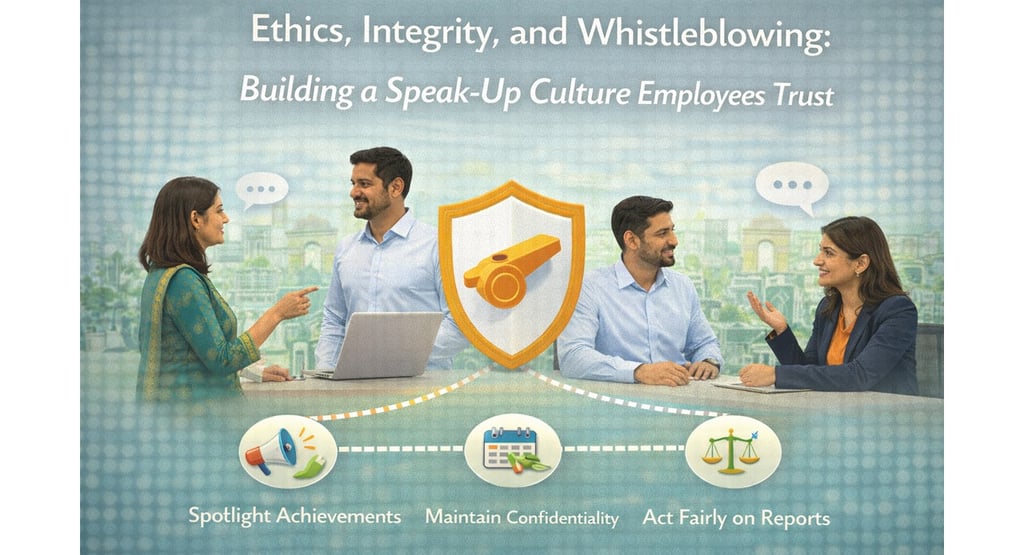
Most ethics failures in Indian organisations do not begin with intent to cheat. They begin with silence. Employees notice shortcuts, conflicts of interest, misuse of authority, or financial irregularities, but choose not to speak up because they fear retaliation, isolation, or being labelled disloyal.
A true speak-up culture is not created by policy alone. It is built through trust, protection, and consistent action. This article explains how HR can design ethical systems and whistleblowing mechanisms that employees in India actually trust and use.
Ethics and Integrity in the Indian Workplace Context
Ethical challenges in India often arise from:
High power distance and respect for authority
Informal decision-making and verbal approvals
Family or promoter influence
Pressure to deliver results at any cost
In such environments, employees need clarity on where the line is — and confidence that crossing it to raise concerns will not harm them.
Why Employees Hesitate to Speak Up
Common reasons include:
Fear of retaliation or career impact
Past experiences where issues were ignored
Lack of anonymity or confidentiality
Belief that “nothing will change”
Cultural discomfort with confrontation
Without trust, even the best whistleblowing policy remains unused.
HR’s Role in Building a Credible Speak-Up System
HR must shift from compliance-driven design to trust-driven execution.
Practical HR responsibilities include:
Creating multiple reporting channels
Ensuring confidentiality and anonymity where required
Communicating protection against retaliation
Acting promptly and impartially
Closing the loop with appropriate feedback
Credibility comes from consistent action, not announcements.
Whistleblowing vs Grievances: Drawing the Line
Not every concern is whistleblowing.
HR should clearly distinguish:
Whistleblowing: serious ethical, financial, or legal violations
Grievances: interpersonal or employment-related issues
Clear classification prevents misuse while protecting genuine concerns.
Protecting the Messenger
The biggest test of integrity is how the organisation treats the person who speaks up.
HR must:
Monitor for retaliation subtly
Intervene early if backlash is observed
Ensure career progression is not quietly impacted
Reinforce leadership accountability
A single mishandled case can destroy trust across the organisation.
Leadership Behaviour: The Loudest Signal
Employees judge ethics by leadership actions.
Leaders strengthen speak-up culture when they:
Encourage questioning and challenge
Respond calmly to bad news
Avoid punishing the messenger
Act visibly on substantiated issues
Tone at the top determines silence or voice.
Conclusion
In Indian organisations, ethics and whistleblowing systems succeed only when employees believe they are safe to use them. HR’s role is not just to set up channels, but to protect trust, ensure fairness, and demonstrate that integrity matters more than convenience.
A speak-up culture grows when silence is riskier than honesty.
HR Checklist: Building a Trusted Speak-Up Culture
🗹 Define clear ethics and integrity expectations
🗹 Provide multiple reporting channels
🗹 Ensure confidentiality and anonymity
🗹 Communicate non-retaliation protections clearly
🗹 Act promptly and impartially on reports
🗹 Protect whistleblowers from backlash
🗹 Close cases with appropriate communication
🗹 Reinforce ethical leadership behaviour
Ethics Concerns and HR Handling Framework
Conclusion--
Effective labour law compliance depends on how well HR operations, payroll, and business processes work together. When compliance is embedded into everyday workflows, organisations reduce risk, improve accuracy, and build sustainable governance systems. HR teams that prioritise integration over isolation are better positioned to manage compliance confidently and consistently.
HireDesk India © 2026 | All Rights Reserved
"Thoughtful guidance for everyday HR"


Quick Links
Topics
Connect
_______________________________________________________________________________________________________________________________________________________________________________________
HireDesk is a free HR knowledge platform focused on practical, India-specific workplace guidance. We help HR professionals, managers, and learners navigate people practices with clarity, responsibility, and real-world relevance.