
Everyday Moments That Shape Workplace Culture: Small HR Actions, Big Impact
EMPLOYEE EXPERIENCE & CULTURE

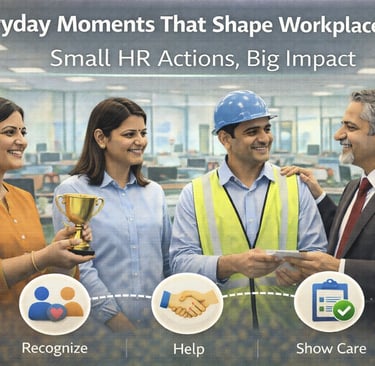
Workplace culture is often discussed in terms of values, leadership speeches, and large initiatives. However, in Indian organisations, culture is shaped far more by everyday moments — routine interactions, small decisions, and how people are treated during normal workdays.
Employees form their understanding of culture through these daily experiences. For HR, paying attention to these moments is critical. This article explains how small, often overlooked HR actions influence workplace culture in a big way, and where HR can intervene most effectively.
Why Everyday Moments Matter More Than Big Initiatives
Large culture programmes create visibility, but they do not automatically change behaviour. Employees observe what happens:
When someone requests leave at short notice
When a manager speaks disrespectfully in a meeting
When HR delays responding to a grievance
When exceptions are quietly made for a few
In Indian workplaces, these moments spread quickly through informal networks and shape perception faster than any formal communication.
Common Everyday Moments That Shape Culture
Certain recurring situations have an outsized cultural impact.
1. Manager–Employee Interactions
Tone, respect, and responsiveness in daily conversations strongly influence trust and morale.
2. Handling of Mistakes
Whether errors are treated as learning opportunities or occasions for blame sends a clear cultural signal.
3. HR Responsiveness
How quickly and clearly HR responds to employee queries reflects the organisation’s seriousness about people matters.
4. Application of Rules
Consistent or selective enforcement of policies is noticed immediately by employees.
HR’s Role in Shaping These Moments
HR cannot be present in every interaction, but it can shape outcomes by:
Setting clear behavioural expectations for managers
Creating simple escalation and resolution pathways
Intervening early in repeated negative patterns
Encouraging respectful communication norms
The goal is not control, but predictability and fairness.
Making Small HR Actions Intentional
To influence culture through everyday moments, HR should:
Identify high-impact routine interactions
Clarify expected responses and behaviours
Coach managers on tone and approach
Reinforce positive behaviour publicly and privately
When small actions are intentional, culture improves steadily without grand programmes.
Risks of Ignoring Everyday Cultural Signals
When HR overlooks daily cultural signals:
Small issues accumulate into mistrust
Informal practices replace formal systems
Perceived bias increases
Employees disengage quietly rather than escalate
Culture weakens not through big failures, but through consistent neglect.
Conclusion
Workplace culture in Indian organisations is built in everyday moments, not annual events. Small HR actions — consistency, timely responses, respectful handling, and visible judgement — create powerful cultural signals.
By focusing on these moments, HR can shape culture meaningfully, even within constraints of hierarchy and business pressure.
HR Checklist: Using Everyday Moments to Shape Culture
🗹 Identify routine interactions that strongly influence employee perception
🗹 Set minimum behaviour standards for daily manager interactions
🗹 Ensure timely HR responses to employee concerns
🗹 Address recurring behavioural issues early
🗹 Reinforce consistency in applying policies and rules
🗹 Coach managers on tone, respect, and communication
🗹 Recognise positive behaviour, not just outcomes
🗹 Track informal feedback for cultural warning signs
🗹 Intervene when small issues begin to repeat
Everyday Moments and Their Cultural Impact
Conclusion--
Effective labour law compliance depends on how well HR operations, payroll, and business processes work together. When compliance is embedded into everyday workflows, organisations reduce risk, improve accuracy, and build sustainable governance systems. HR teams that prioritise integration over isolation are better positioned to manage compliance confidently and consistently.
HireDesk India © 2026 | All Rights Reserved
"Thoughtful guidance for everyday HR"


Quick Links
Topics
Connect
_______________________________________________________________________________________________________________________________________________________________________________________
HireDesk is a free HR knowledge platform focused on practical, India-specific workplace guidance. We help HR professionals, managers, and learners navigate people practices with clarity, responsibility, and real-world relevance.