
Exit Management in SMEs: Smooth, Compliant, and Professional Offboarding
SME HR OPERATIONS
Introduction--
Once a candidate accepts an offer, the period between acceptance and joining becomes a critical phase in the recruitment lifecycle. This pre-joining window influences whether a candidate actually joins, how prepared they feel on Day One, and how quickly they settle into the organisation. For HR, effective pre-joining engagement and onboarding planning are essential to convert offers into confident, committed employees.
This article outlines practical approaches HR teams can adopt to manage pre-joining engagement and establish strong onboarding foundations—without overcomplicating the process.
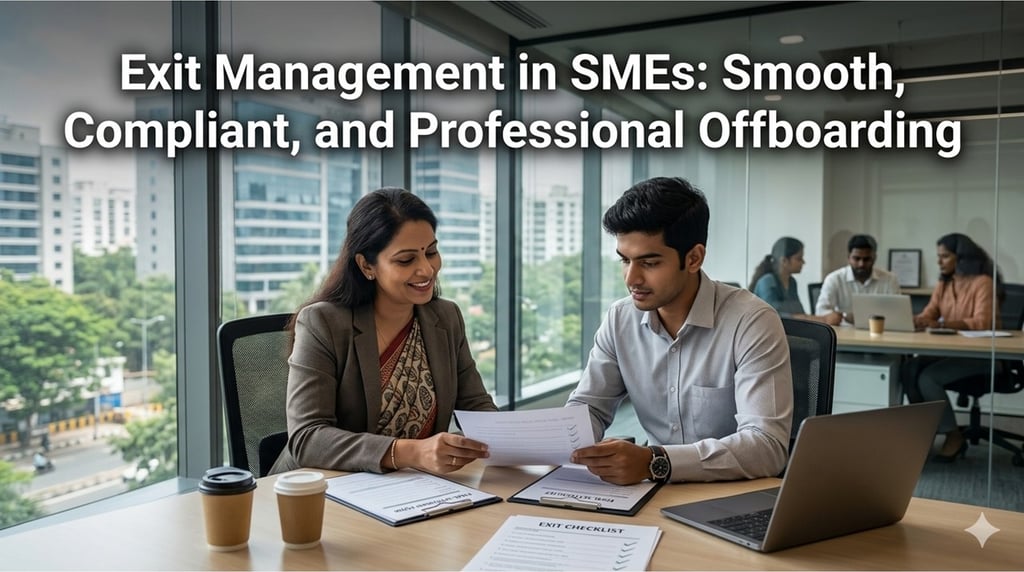
Exit management is often neglected in Indian SMEs. Resignations are handled informally, documents are delayed, and handovers are rushed. While exits may seem routine, poorly managed separations create legal exposure, damage employer reputation, and affect team morale.
This article explains how HR in SMEs can manage employee exits professionally, compliantly, and respectfully — without over-engineering the process.
Why Exit Management Matters for SMEs
In small organisations, exits are highly visible.
Poor exit handling can result in:
Disputes over notice pay and final settlement
Withholding of documents leading to complaints
Negative word-of-mouth in tight talent markets
Loss of knowledge and operational disruption
A simple, standard exit process protects both sides.
Common Exit Scenarios in SMEs
HR in SMEs typically handles exits arising from:
Employee resignation
End of fixed-term or contract employment
Performance-related separation
Misconduct-related termination
Business-driven role changes
Each scenario requires slightly different handling, but the core process remains the same.
Notice Periods and Separation Communication
Clarity at the start prevents conflict later.
HR should ensure:
Notice periods are clearly defined in appointment letters
Acceptance of resignation is communicated in writing
Last working day is confirmed upfront
Any notice shortfall or waiver is documented
Verbal agreements should always be followed up in writing.
Handover and Knowledge Transfer
SMEs are vulnerable to knowledge loss during exits.
HR should coordinate with managers to:
Identify handover responsibilities
Ensure documentation of critical tasks
Reassign access and responsibilities
Avoid over-dependence on single employees
Even basic handover notes add value.
Full and Final Settlement (FnF) Basics
FnF delays are one of the biggest SME pain points.
HR should calculate and release:
Salary up to last working day
Leave encashment, if applicable
Statutory dues (PF, ESI)
Deductions, recoveries, or notice pay
Timely settlement reflects organisational maturity.
Exit Documents and Compliance
Employees are legally entitled to certain documents.
HR must ensure timely issuance of:
Experience letter
Relieving letter
Service certificate (where applicable)
Statutory forms or acknowledgements
Delaying documents invites complaints and legal scrutiny.
Exit Interviews: Keep Them Simple
Exit interviews need not be elaborate.
HR can use them to:
Identify recurring issues
Understand manager or role challenges
Capture improvement inputs
Spot early attrition signals
Insights matter more than perfect formats.
Conclusion
Exit management in SMEs should be calm, structured, and respectful. A professional offboarding experience reinforces discipline, reduces disputes, and protects the organisation’s reputation — even when the separation itself is difficult.
Checklist: Effective Exit Management for SMEs
🗹 Acknowledge and accept resignation in writing
🗹 Confirm last working day and notice period
🗹 Plan and track handover responsibilities
🗹 Calculate and release FnF on time
🗹 Issue all exit documents promptly
🗹 Revoke system access and recover assets
🗹 Conduct a basic exit interview
🗹 Close exits respectfully and formally
Standard Exit Management Process for SMEs
Conclusion--
Effective labour law compliance depends on how well HR operations, payroll, and business processes work together. When compliance is embedded into everyday workflows, organisations reduce risk, improve accuracy, and build sustainable governance systems. HR teams that prioritise integration over isolation are better positioned to manage compliance confidently and consistently.
HireDesk India © 2026 | All Rights Reserved
"Thoughtful guidance for everyday HR"


Quick Links
Topics
Connect
_______________________________________________________________________________________________________________________________________________________________________________________
HireDesk is a free HR knowledge platform focused on practical, India-specific workplace guidance. We help HR professionals, managers, and learners navigate people practices with clarity, responsibility, and real-world relevance.