
Experience of Contract, Gig, and Third-Party Staff: Extending Culture Beyond Payroll
EMPLOYEE EXPERIENCE & CULTURE
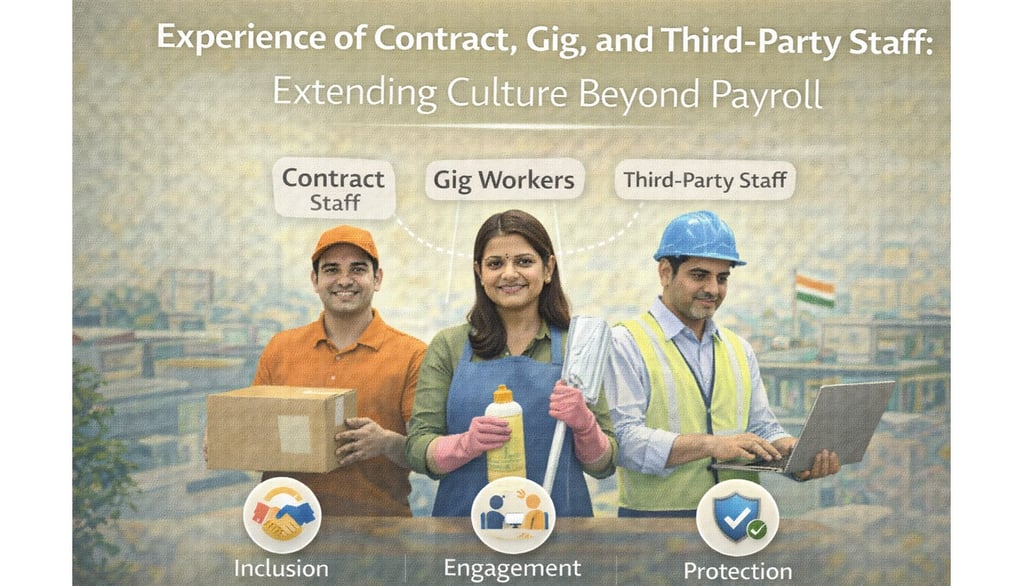
In Indian organisations, a significant portion of the workforce comprises contract, gig, or third-party staff. Yet, these employees often feel disconnected from the organisation’s culture because they are outside the formal payroll, excluded from recognition, communication, and engagement practices.
Creating a consistent culture for all workers is not just a compliance or HR formality—it directly affects productivity, quality, and employer reputation. This article explains how HR can extend culture to non-permanent staff in a practical and inclusive way.
Why Contract and Gig Workers Often Feel Disconnected
Common challenges include:
Limited access to onboarding and training
Exclusion from team communications or cultural activities
Minimal visibility in recognition and feedback loops
Unclear understanding of organisational values and expectations
Inconsistent treatment across vendors and contractors
This disconnect can lead to disengagement, attrition, and poor alignment with organisational goals.
HR’s Role in Extending Culture Beyond Payroll
HR must intentionally include non-permanent staff in cultural initiatives:
Onboarding and Induction: Provide a concise orientation that communicates values, expectations, and norms.
Communication: Include contract and gig workers in relevant updates, announcements, and team communications.
Recognition and Feedback: Acknowledge achievements, provide feedback, and include them in reward programmes where feasible.
Behavioural Expectations: Clearly communicate codes of conduct, safety standards, and workplace ethics.
Integration with Teams: Encourage team inclusion in meetings, social interactions, and collaborative activities.
Cultural alignment improves engagement, quality, and retention, even for temporary staff.
Practical Approaches in Indian Context
Indian workplaces can implement cost-effective, high-impact measures:
Include contract workers in induction videos or orientation sessions
Share core values through accessible posters, emails, or mobile apps
Allow gig staff to participate in team recognition initiatives
Conduct periodic check-ins to understand challenges and engagement
Rotate contractor assignments to encourage interaction with permanent teams
Even small, consistent steps make culture tangible for everyone.
Challenges and Solutions
Perceived “outsider” status: Include non-permanent staff in key communications and meetings
Recognition gap: Extend peer and manager recognition where appropriate
Limited learning opportunities: Provide access to online learning or skill development sessions
Vendor misalignment: Set expectations in contracts and monitor compliance
Disconnection from team: Encourage shared team activities and informal interaction
HR must act as the bridge between permanent and non-permanent workforce.
Conclusion
Culture is experienced, not just communicated. For Indian organisations with diverse workforce models, ensuring that contract, gig, and third-party staff feel included is a strategic priority. HR’s role is to design systems and practices that extend culture beyond payroll while maintaining fairness and operational efficiency.
Inclusion of all workers strengthens engagement, performance, and organisational reputation.
HR Checklist: Extending Culture Beyond Payroll
🗹 Include contract and gig workers in onboarding and induction
🗹 Share organisational values and behaviour expectations
🗹 Include in team communication and recognition initiatives
🗹 Conduct regular engagement check-ins
🗹 Provide access to relevant learning opportunities
🗹 Encourage participation in team-building and social activities
🗹 Ensure vendor compliance with cultural standards
🗹 Monitor engagement and act on gaps
Inclusion of Non-Permanent Staff: Practices and HR Actions
Conclusion--
Effective labour law compliance depends on how well HR operations, payroll, and business processes work together. When compliance is embedded into everyday workflows, organisations reduce risk, improve accuracy, and build sustainable governance systems. HR teams that prioritise integration over isolation are better positioned to manage compliance confidently and consistently.
HireDesk India © 2026 | All Rights Reserved
"Thoughtful guidance for everyday HR"


Quick Links
Topics
Connect
_______________________________________________________________________________________________________________________________________________________________________________________
HireDesk is a free HR knowledge platform focused on practical, India-specific workplace guidance. We help HR professionals, managers, and learners navigate people practices with clarity, responsibility, and real-world relevance.