
Factory HR vs Corporate HR: Key Differences HR Must Understand
INDUSTRIAL RELATIONS & FACTORY HR
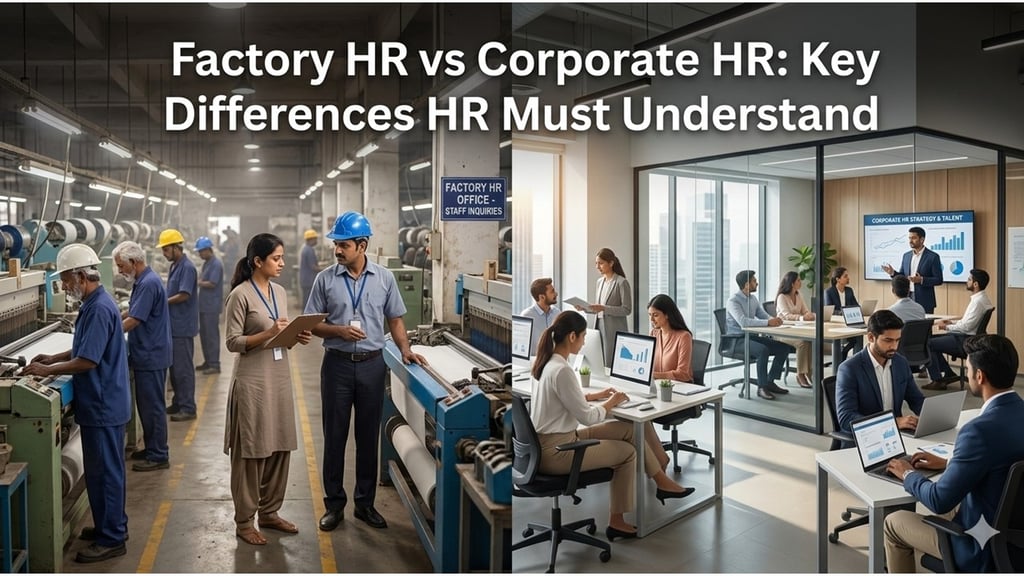
HR functions in factories differ significantly from corporate or office-based HR. While both aim to engage employees, ensure compliance, and drive productivity, the context, workforce composition, and operational pressures make factory HR a distinct discipline.
Understanding these differences is essential for HR professionals, managers, and business leaders to apply the right policies, manage risks, and support operational continuity.
This article explains the key distinctions between Factory HR and Corporate HR, highlighting what HR teams must know to perform effectively in each environment.
Workforce Composition and Structure
Factory HR:
Large, diverse workforce including permanent, contract, and gig workers.
Shift-based operations with frontline supervisors managing daily activities.
Higher ratio of blue-collar staff and skilled/unskilled labour.
Strong union presence in many manufacturing and industrial sectors.
Corporate HR:
Predominantly white-collar, knowledge-based employees.
Flexible working arrangements, fixed hours, and remote or hybrid work models.
Fewer contractual or temporary employees.
Limited union involvement; employee relations managed through HR and managers.
Implication for HR: Policies, engagement strategies, and compliance measures must reflect the workforce composition and operational reality.
HR Functionality and Responsibilities
Key Differences in HR Challenges
Industrial Relations:
Factory HR deals directly with unions, disputes, and conciliation processes.
Corporate HR focuses more on engagement programs, performance management, and policy communication.
Operational Pressure:
Decisions in factories can immediately affect production, safety, and compliance.
Corporate HR decisions primarily affect morale, retention, and long-term performance metrics.
Regulatory Complexity:
Factory HR handles multiple labour laws, safety standards, contract labour, and inspections.
Corporate HR deals with general employment laws, PF/ESI, and office safety regulations.
Communication and Supervision:
Factory HR relies heavily on shop-floor presence, direct supervision, and briefings.
Corporate HR relies on digital communication, emails, town halls, and manager-led execution.
HR Must Understand
Skill Sets: Factory HR needs operational awareness, IR expertise, compliance focus, and safety knowledge. Corporate HR requires strategic thinking, talent management, and employee engagement skills.
Decision-Making: Factory HR decisions are immediate, often affecting production or safety. Corporate HR decisions are usually medium- to long-term in impact.
Employee Experience: Engagement, motivation, and welfare programs must be context-specific, aligned with the work environment and employee expectations.
Recognising these differences helps HR professionals adapt policies, train supervisors, and maintain compliance while fostering employee satisfaction.
Conclusion
While Factory HR and Corporate HR share common objectives, the context, workforce, operational pressures, and regulatory environment make them distinct disciplines. HR teams must understand these differences to design effective policies, manage risks, and ensure engagement and productivity in each setting.
A nuanced understanding allows organisations to apply the right practices, prevent disputes, and maintain workforce trust, whether on the shop floor or in the office.
🗹 Factory HR vs Corporate HR – HR Action Checklist
🗹 Analyse workforce composition before implementing HR policies
🗹 Adapt engagement and welfare initiatives to operational context
🗹 Ensure compliance with relevant laws (IR Code, Factories Act, office regulations)
🗹 Train supervisors in discipline, safety, and grievance handling
🗹 Coordinate HR decisions closely with operations or business heads
🗹 Use data-driven approaches to monitor attendance, productivity, and performance
🗹 Communicate policies clearly and in a language employees understand
🗹 Review HR interventions periodically for context relevance and effectiveness
Factory HR vs Corporate HR – Key Differences (Sample Table)
Conclusion--
Effective labour law compliance depends on how well HR operations, payroll, and business processes work together. When compliance is embedded into everyday workflows, organisations reduce risk, improve accuracy, and build sustainable governance systems. HR teams that prioritise integration over isolation are better positioned to manage compliance confidently and consistently.
HireDesk India © 2026 | All Rights Reserved
"Thoughtful guidance for everyday HR"


Quick Links
Topics
Connect
_______________________________________________________________________________________________________________________________________________________________________________________
HireDesk is a free HR knowledge platform focused on practical, India-specific workplace guidance. We help HR professionals, managers, and learners navigate people practices with clarity, responsibility, and real-world relevance.