
Fair Hiring Practices and Ethical Recruitment
RECRUITMENT AND HIRING
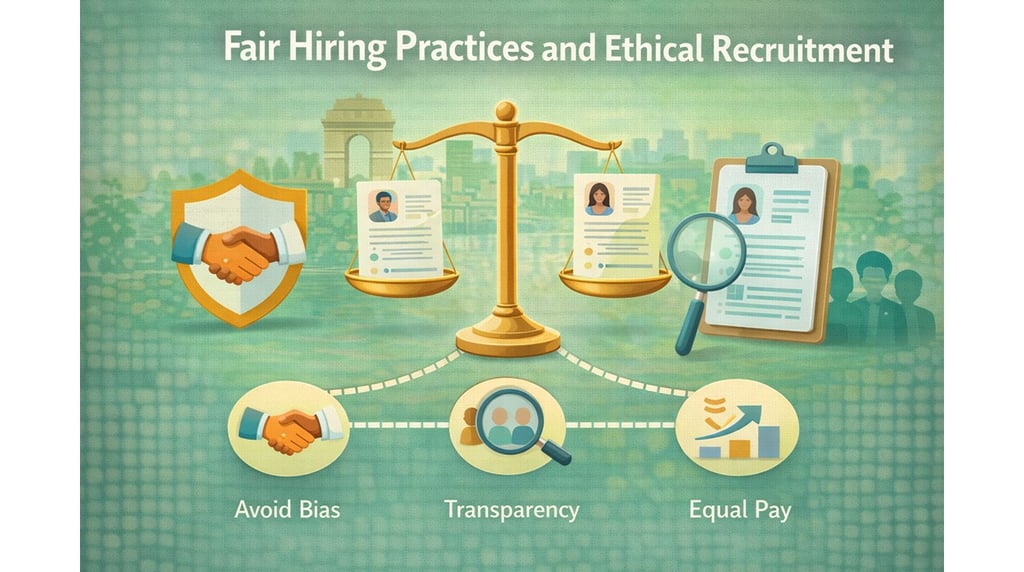
Fair hiring and ethical recruitment are no longer “good-to-have” values—they are core governance requirements for Indian organisations. As hiring volumes grow, digital tools expand reach, and regulatory scrutiny increases, HR must ensure that recruitment decisions are transparent, unbiased, and defensible.
Ethical recruitment protects candidates, strengthens employer brand, and shields organisations from legal, reputational, and cultural risks.
What Fair Hiring Means in the Indian Context
Fair hiring refers to recruitment practices that are:
Objective – based on job-related criteria
Transparent – clearly communicated and documented
Inclusive – offering equal opportunity to all eligible candidates
Consistent – applied uniformly across roles and candidates
Ethical recruitment goes a step further by ensuring dignity, honesty, and respect throughout the hiring lifecycle.
Key Ethical Risks in Recruitment
1. Bias and Subjective Decision-Making
Common risks include:
Preference based on gender, caste, age, region, language, or personal familiarity
Halo or horn effect from resumes or interviews
Informal shortlisting without documented criteria
Unchecked bias leads to unfair outcomes and weak hiring quality.
2. Unethical Sourcing and Referral Practices
Paid or forced referrals without transparency
Use of unregistered agents or middlemen
Charging candidates fees for job opportunities (especially in frontline or factory hiring)
Such practices are unethical and, in many cases, illegal.
3. Misrepresentation of Roles or Terms
Ethical breaches occur when:
Job responsibilities are overstated or unclear
Compensation structures are hidden or miscommunicated
Probation, transfers, bonds, or variable pay conditions are not disclosed upfront
This damages trust and increases early attrition.
4. Exploitation of Vulnerable Talent Segments
High-risk areas include:
Migrant workers
Apprentices, trainees, and interns
Contract and gig workforce
HR must ensure fair wages, consent, and clarity of engagement terms.
Principles of Ethical Recruitment
Transparency
Share clear job descriptions, selection steps, and timelines
Communicate outcomes honestly, even in rejection
Avoid misleading advertisements or promises
Objectivity and Job Relevance
Define role-specific competencies and criteria
Use structured interviews and assessments
Document reasons for selection and rejection
Decisions should always be linked to role requirements, not personal preferences.
Equal Opportunity
Provide non-discriminatory access to job opportunities
Ensure reasonable accommodation where required
Follow equal opportunity and inclusion policies consistently
Respect for Candidates
Maintain confidentiality of candidate data
Seek informed consent for assessments and background checks
Avoid unnecessary delays, ghosting, or disrespectful interactions
Candidate dignity is central to ethical hiring.
HR Controls to Ensure Fair Hiring
Standardised Recruitment Frameworks
Approved job descriptions and competency matrices
Structured interview guides and evaluation sheets
Defined shortlisting and offer approval workflows
Standardisation reduces bias and improves defensibility.
Interviewer Training and Accountability
Train hiring managers on unconscious bias
Clarify ethical do’s and don’ts
Hold interviewers accountable for documentation and conduct
Ethical hiring is a shared responsibility, not HR’s alone.
Governance Over Vendors and Consultants
Empanel ethical recruitment partners
Prohibit fee-charging to candidates
Audit agency practices periodically
Organisations remain accountable even when hiring is outsourced.
Monitoring and Review
Track diversity and fairness indicators
Review complaints or escalations from candidates
Periodically audit recruitment decisions and deviations
Continuous monitoring ensures alignment with stated values.
Ethical Hiring and Employer Brand
Fair and ethical recruitment directly impacts:
Employer reputation in the talent market
Trust among employees and candidates
Long-term retention and engagement
Legal and reputational risk exposure
Candidates remember how they were treated—even if they were rejected.
Conclusion
Fair hiring and ethical recruitment are not just compliance requirements—they are reflections of organisational integrity. Indian HR teams must design recruitment systems that are objective, inclusive, and transparent, while ensuring dignity and honesty at every stage.
Ethical hiring builds sustainable talent pipelines, strengthens trust, and positions HR as a credible governance function.
🗹 Fair Hiring and Ethical Recruitment Checklist
🗹 Define objective, job-related selection criteria
🗹 Use structured interviews and documented evaluations
🗹 Eliminate bias and discriminatory practices
🗹 Ensure transparency in job roles, pay, and terms
🗹 Prohibit unethical agents and candidate fee charging
🗹 Respect candidate dignity, privacy, and consent
🗹 Train interviewers on ethics and bias control
🗹 Audit recruitment decisions and vendor practices
Fair Hiring Practices – Risk and Control Overview
Conclusion--
Effective labour law compliance depends on how well HR operations, payroll, and business processes work together. When compliance is embedded into everyday workflows, organisations reduce risk, improve accuracy, and build sustainable governance systems. HR teams that prioritise integration over isolation are better positioned to manage compliance confidently and consistently.
HireDesk India © 2026 | All Rights Reserved
"Thoughtful guidance for everyday HR"


Quick Links
Topics
Connect
_______________________________________________________________________________________________________________________________________________________________________________________
HireDesk is a free HR knowledge platform focused on practical, India-specific workplace guidance. We help HR professionals, managers, and learners navigate people practices with clarity, responsibility, and real-world relevance.