
Giving Effective Performance Feedback: Beyond Annual Reviews
PERFORMANCE & DEVELOPMENT
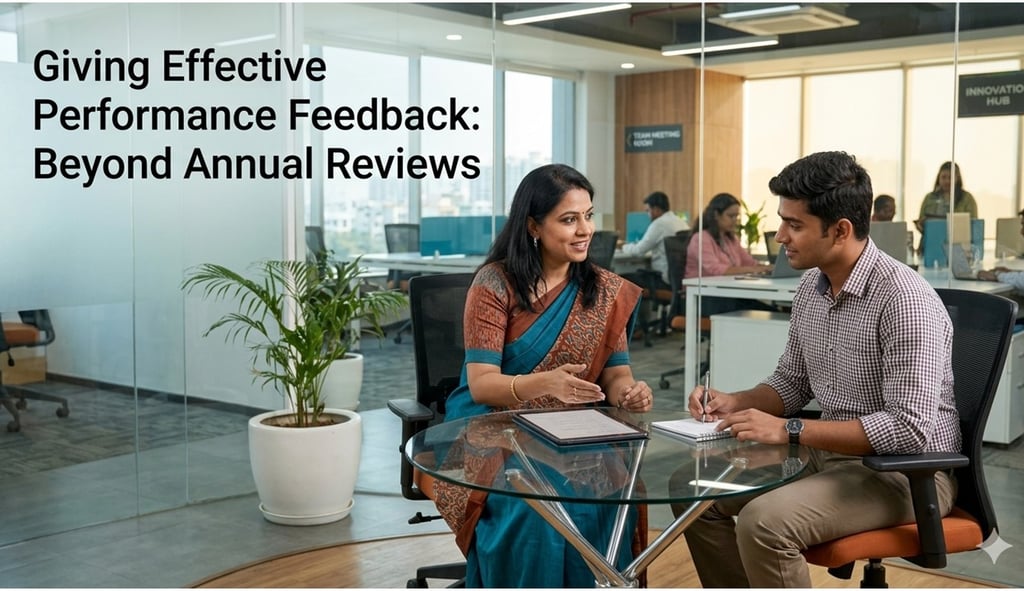
Performance feedback is one of the most influential tools managers have, yet it is often limited to formal review cycles. In Indian workplaces, delayed or unclear feedback commonly leads to confusion, disengagement, and missed development opportunities.
This article explains how HR can promote effective, ongoing feedback practices that support both performance and growth.
Why Continuous Feedback Matters
Regular feedback helps:
Correct course early
Reinforce positive behaviours
Build trust between managers and employees
Reduce anxiety around formal appraisals
Annual reviews alone are insufficient to drive improvement.
Characteristics of Effective Feedback
Good feedback is:
Timely – Given close to the event
Specific – Focused on observable behaviour
Balanced – Acknowledges strengths and gaps
Action-oriented – Includes clear next steps
Feedback should guide, not judge.
HR’s Role in Enabling Feedback Culture
HR can support feedback effectiveness by:
Training managers on feedback conversations
Providing simple conversation frameworks
Encouraging regular check-ins
Normalising feedback as a routine practice
Manager capability is a key success factor.
Handling Difficult Feedback Conversations
HR should equip managers to:
Separate behaviour from intent
Stay factual and respectful
Invite employee perspective
Agree on follow-up actions
Avoiding difficult feedback harms performance and credibility.
Common Feedback Pitfalls
Saving feedback for appraisal meetings
Being overly general or vague
Focusing only on negatives
Treating feedback as a one-way conversation
Such approaches reduce effectiveness.
Performance Feedback Checklist for HR
☐ Encourage regular check-ins
☐ Train managers in feedback skills
☐ Provide simple feedback frameworks
☐ Reinforce follow-up and documentation
☐ Review feedback quality periodically
Conclusion
Effective performance feedback is ongoing, contextual, and respectful. When HR enables managers to have better feedback conversations, performance management becomes developmental rather than punitive.
Conclusion--
Effective labour law compliance depends on how well HR operations, payroll, and business processes work together. When compliance is embedded into everyday workflows, organisations reduce risk, improve accuracy, and build sustainable governance systems. HR teams that prioritise integration over isolation are better positioned to manage compliance confidently and consistently.
Related Articles
HireDesk India © 2026 | All Rights Reserved
"Thoughtful guidance for everyday HR"


Quick Links
Topics
Connect
_______________________________________________________________________________________________________________________________________________________________________________________
HireDesk is a free HR knowledge platform focused on practical, India-specific workplace guidance. We help HR professionals, managers, and learners navigate people practices with clarity, responsibility, and real-world relevance.