
Handling Favouritism and Perceived Bias: Safeguarding Trust in Teams
EMPLOYEE EXPERIENCE & CULTURE
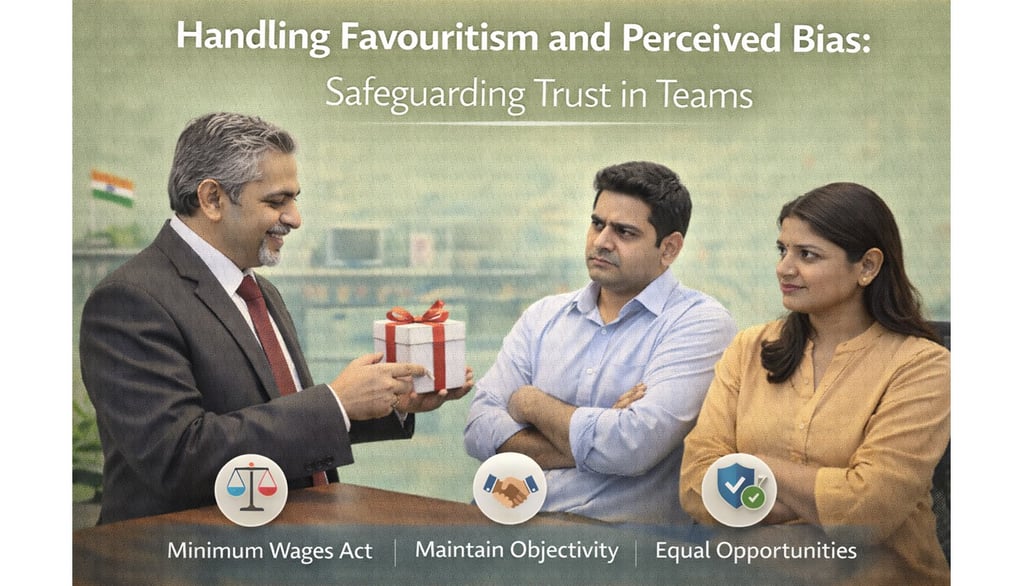

Few things damage trust in Indian workplaces as quickly as favouritism — or even the perception of it. Whether it is related to proximity to the boss, background, tenure, or personal rapport, perceived bias creates silent disengagement long before formal complaints surface.
In many organisations, managers may not intend to be biased, yet inconsistent decisions and opaque processes create exactly that impression. This article explains how HR can identify, address, and prevent favouritism while protecting trust and managerial credibility.
Why Favouritism Is a Sensitive Issue in India
Favouritism in Indian organisations is often intertwined with:
Hierarchy and deference to authority
Long-standing relationships and loyalty
Family, community, or regional familiarity
Informal access to decision-makers
Because of this, employees hesitate to speak up, fearing backlash or being labelled “political”.
How Perceived Bias Manifests at Work
Common indicators include:
Repeated allocation of opportunities to the same individuals
Unequal flexibility or leniency
Selective access to information
Uneven performance feedback
Promotions or rewards without clear rationale
Perception matters as much as intent.
The HR Responsibility: Process Over Personality
HR’s role is not to question personal relationships, but to ensure decisions are defensible.
Key HR actions include:
Defining clear criteria for decisions
Ensuring consistency across teams
Making decision rationale visible
Auditing patterns over time
Supporting managers in fair decision-making
Strong processes reduce dependence on personal discretion.
Addressing Perception Without Accusation
When bias is perceived, HR should:
Listen without dismissing concerns
Examine data and patterns calmly
Discuss behaviours and outcomes, not motives
Guide managers on corrective actions
Communicate changes transparently where appropriate
Defensiveness escalates the issue; clarity resolves it.
Building Fairness Into Everyday Management
HR can embed fairness by:
Standardising performance reviews
Using diverse panels for promotions
Rotating high-visibility assignments
Training managers on unconscious bias
Monitoring grievance themes discreetly
Fairness must be systematic, not personality-dependent.
When Escalation Is Necessary
Formal intervention is required when:
Bias is repeated despite feedback
There is evidence of discrimination
Complaints involve protected categories
Retaliation is suspected
In such cases, HR must act firmly and document outcomes.
Conclusion
In Indian workplaces, favouritism rarely announces itself openly. It operates quietly through patterns, access, and silence. HR’s effectiveness lies in creating systems where fairness is visible, decisions are explainable, and trust is protected — even when relationships exist.
Trust survives not because bias never occurs, but because it is addressed transparently and consistently.
HR Checklist: Preventing and Addressing Favouritism
🗹 Define objective criteria for key decisions
🗹 Monitor patterns across teams and time
🗹 Ensure consistency in flexibility and rewards
🗹 Make decision rationale visible where possible
🗹 Train managers on unconscious bias
🗹 Provide safe channels for concerns
🗹 Intervene early when perceptions arise
🗹 Escalate formally when fairness is compromised
Favouritism Scenarios and HR Safeguards
Conclusion--
Effective labour law compliance depends on how well HR operations, payroll, and business processes work together. When compliance is embedded into everyday workflows, organisations reduce risk, improve accuracy, and build sustainable governance systems. HR teams that prioritise integration over isolation are better positioned to manage compliance confidently and consistently.
HireDesk India © 2026 | All Rights Reserved
"Thoughtful guidance for everyday HR"


Quick Links
Topics
Connect
_______________________________________________________________________________________________________________________________________________________________________________________
HireDesk is a free HR knowledge platform focused on practical, India-specific workplace guidance. We help HR professionals, managers, and learners navigate people practices with clarity, responsibility, and real-world relevance.