
Handling Gossip, Cliques, and Informal Power Centres: Culture Below the Surface
EMPLOYEE EXPERIENCE & CULTURE
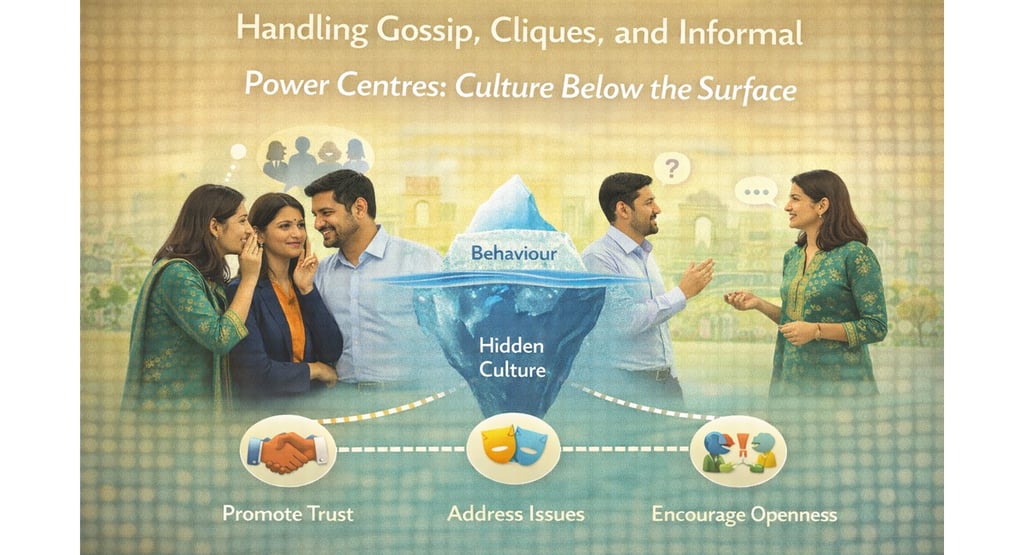
In many Indian workplaces, culture is shaped less by official structures and more by informal networks. Gossip, cliques, and informal power centres operate quietly below the surface, influencing decisions, morale, and trust. These dynamics rarely appear in org charts or policies, yet they have a direct impact on employee experience.
HR cannot eliminate informal networks — but it can prevent them from becoming toxic or unfair. This article explains how HR can identify and manage culture issues that operate outside formal authority.
Understanding Informal Power in Indian Organisations
Informal power often comes from:
Proximity to promoters or senior leaders
Long tenure or historical loyalty
Control over information or processes
Social influence and personal relationships
In Indian contexts, such power is often tolerated or ignored because it is seen as “how things work”.
When Gossip and Cliques Become Harmful
Not all informal bonding is negative. Problems arise when:
Information is selectively shared
Decisions appear pre-decided
Certain employees are excluded or sidelined
Rumours replace official communication
Trust in management declines
Over time, employees stop relying on formal systems and turn to unofficial channels.
Why HR Often Struggles to Intervene
HR faces challenges such as:
Lack of formal complaints
Fear of confronting influential groups
Difficulty proving intent or impact
Pressure to maintain surface harmony
However, ignoring these issues allows parallel power structures to solidify.
HR’s Role in Bringing Culture to the Surface
HR must focus on transparency and fairness rather than confrontation.
Practical HR actions include:
Strengthening formal communication channels
Ensuring decisions are documented and explained
Rotating responsibilities and access points
Encouraging diverse participation in meetings
Addressing exclusion patterns quietly but firmly
The goal is to reduce dependency on informal gatekeepers.
Addressing Gossip Without Policing Conversations
HR should avoid moral policing, but must set boundaries.
Effective approaches include:
Clarifying what information is confidential
Addressing rumour-driven anxiety promptly
Encouraging managers to correct misinformation
Modelling transparency from leadership
Intervening when gossip targets individuals unfairly
Silence from HR often validates rumours.
Rebalancing Power Without Disruption
Informal power centres cannot be dismantled overnight.
HR can:
Reduce over-reliance on individuals
Create multiple access points for approvals
Align leaders on behavioural expectations
Support managers who challenge unhealthy dynamics
Reinforce merit-based decisions
Gradual correction is more sustainable than sudden disruption.
Conclusion
Gossip, cliques, and informal power centres thrive where transparency is weak and communication is inconsistent. In Indian organisations, HR’s responsibility is not to suppress relationships, but to ensure they do not undermine fairness or trust.
Culture below the surface becomes healthier when formal systems are credible and consistently applied.
HR Checklist: Managing Informal Culture Risks
🗹 Identify informal influencers across teams
🗹 Monitor exclusion and information-hoarding patterns
🗹 Strengthen formal communication channels
🗹 Address rumours early with facts
🗹 Reduce over-dependence on individuals
🗹 Encourage inclusive participation
🗹 Align leaders on transparency expectations
🗹 Reinforce merit-based decision-making
Informal Culture Issues and HR Interventions
Conclusion--
Effective labour law compliance depends on how well HR operations, payroll, and business processes work together. When compliance is embedded into everyday workflows, organisations reduce risk, improve accuracy, and build sustainable governance systems. HR teams that prioritise integration over isolation are better positioned to manage compliance confidently and consistently.
HireDesk India © 2026 | All Rights Reserved
"Thoughtful guidance for everyday HR"


Quick Links
Topics
Connect
_______________________________________________________________________________________________________________________________________________________________________________________
HireDesk is a free HR knowledge platform focused on practical, India-specific workplace guidance. We help HR professionals, managers, and learners navigate people practices with clarity, responsibility, and real-world relevance.