
Handling Toxic Behaviours Without Escalating Conflict: HR’s Role in Culture Protection
EMPLOYEE EXPERIENCE & CULTURE
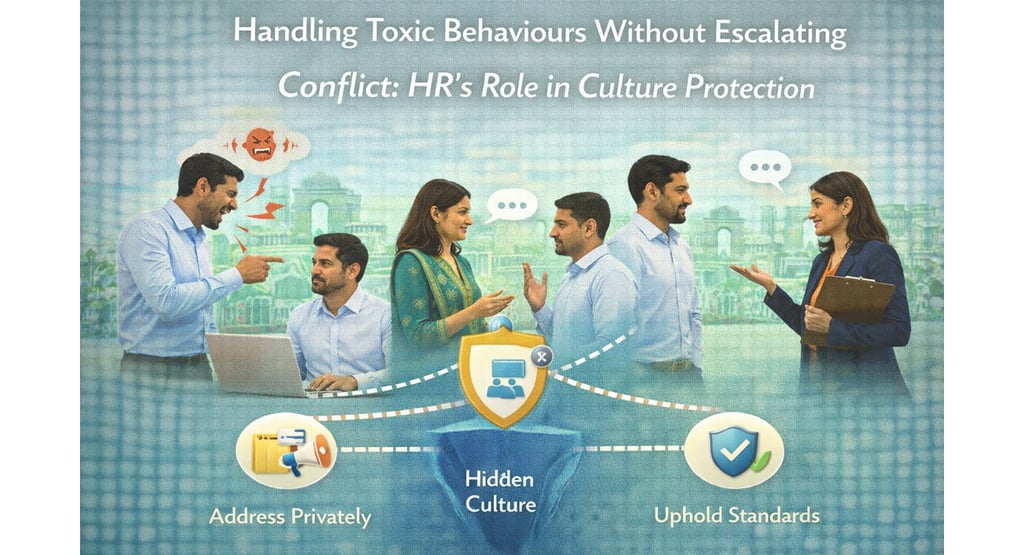
Not all toxic behaviours in Indian workplaces are loud or visible. Many are subtle — constant negativity, passive aggression, favouritism, undermining comments, exclusion from information, or misuse of influence. These behaviours slowly erode trust and morale, yet often go unaddressed because HR fears escalation, backlash, or being seen as “creating issues”.
Effective culture protection is not about dramatic interventions. It is about timely, balanced handling of toxic behaviours without turning every issue into a formal conflict. This article explains how HR can intervene early, correct behaviour, and protect culture without escalating tensions.
What Toxic Behaviour Looks Like in Indian Organisations
Toxic behaviour in India often hides behind:
Seniority or “strong performer” labels
Informal power centres and proximity to leadership
Cultural reluctance to confront
Fear of being labelled sensitive or non-adjusting
Common examples include:
Repeated negativity and demoralising talk
Undermining colleagues in subtle ways
Public sarcasm or dismissive tone
Information hoarding
Targeting certain employees consistently
Left unchecked, these behaviours become normalised.
Why Toxic Behaviour Is Rarely Addressed Early
HR hesitation usually comes from:
Lack of concrete evidence
Pressure to “maintain harmony”
Fear of retaliation from influential employees
Over-reliance on formal complaint processes
Unclear authority to intervene informally
However, delay often worsens the situation and increases the eventual fallout.
HR’s Role: Intervene Early, Not Aggressively
HR’s role is not to act as a disciplinarian at the first instance, but as a culture custodian.
Practical HR actions include:
Observing patterns, not isolated incidents
Acting on signals, not waiting for formal complaints
Using private conversations before formal escalation
Focusing on behaviour impact, not intent
Documenting interventions discreetly
Early course correction preserves dignity on all sides.
Conversations That Correct Without Confrontation
Effective HR conversations:
Are factual, calm, and specific
Avoid labels like “toxic” or “problematic”
Highlight observed behaviour and its impact
Set clear expectations for change
Offer support or coaching where needed
The objective is awareness and correction — not blame.
When Informal Handling Is Not Enough
Not all situations can be handled softly.
Escalation is required when:
Behaviour repeats despite feedback
There is power misuse or intimidation
Mental wellbeing or dignity is compromised
Legal or POSH implications arise
Retaliation against complainants is suspected
In such cases, HR must act decisively and visibly.
Protecting Culture While Maintaining Fairness
Culture protection requires balance:
Avoid overreaction that creates fear
Avoid inaction that signals tolerance
Be consistent across hierarchy
Ensure confidentiality
Reinforce standards through leadership alignment
Employees watch how HR handles “difficult people” closely.
Conclusion
Toxic behaviour does not disappear on its own. In Indian workplaces, it often grows quietly under the cover of hierarchy, performance pressure, or silence. HR’s effectiveness lies in early, measured intervention — firm enough to protect culture, calm enough to avoid unnecessary conflict.
Culture is protected not by confrontation, but by consistent courage.
HR Checklist: Managing Toxic Behaviours Without Escalation
🗹 Identify behaviour patterns, not one-off incidents
🗹 Act on early warning signs before complaints arise
🗹 Use private, respectful conversations first
🗹 Focus on impact rather than intent
🗹 Set clear expectations for behaviour change
🗹 Document interventions discreetly
🗹 Escalate only when behaviour persists or worsens
🗹 Protect affected employees from retaliation
Toxic Behaviour Scenarios and HR Response Options
Conclusion--
Effective labour law compliance depends on how well HR operations, payroll, and business processes work together. When compliance is embedded into everyday workflows, organisations reduce risk, improve accuracy, and build sustainable governance systems. HR teams that prioritise integration over isolation are better positioned to manage compliance confidently and consistently.
HireDesk India © 2026 | All Rights Reserved
"Thoughtful guidance for everyday HR"


Quick Links
Topics
Connect
_______________________________________________________________________________________________________________________________________________________________________________________
HireDesk is a free HR knowledge platform focused on practical, India-specific workplace guidance. We help HR professionals, managers, and learners navigate people practices with clarity, responsibility, and real-world relevance.