
Handling Underperformance Without Formal PIPs
PERFORMANCE & DEVELOPMENT
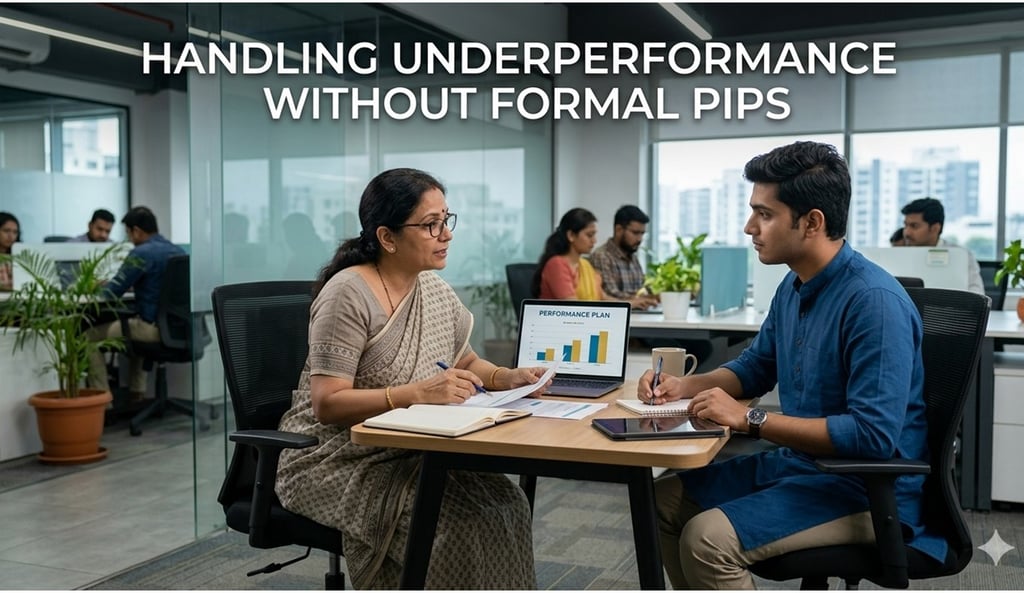

Not all performance issues require formal intervention. In many cases, underperformance can be addressed effectively through early identification, structured conversations, and targeted support, without initiating a Performance Improvement Plan (PIP).
This article explains how organisations can manage underperformance proactively and constructively, while preserving trust, engagement, and productivity.
Understanding Underperformance in Context
Underperformance does not always indicate low capability or lack of effort. It may arise due to:
Role changes or unclear expectations
Skill gaps caused by business or technology shifts
Workload imbalance or process inefficiencies
Limited feedback or delayed course correction
Treating every performance dip as a disciplinary issue often escalates problems unnecessarily.
Why Avoid Jumping Directly to PIPs
Formal PIPs are structured and documented interventions. While useful, they should be used only when informal measures have failed.
Early-stage interventions help:
Resolve issues faster
Reduce anxiety and defensiveness
Preserve employee-manager relationships
Avoid unnecessary documentation and escalation
Informal Approaches to Managing Underperformance
1. Clarifying Expectations
Many performance issues stem from unclear or shifting expectations. Managers should reconfirm:
Role priorities
Output standards
Timelines and dependencies
2. Regular Performance Check-ins
Short, frequent conversations allow managers to:
Identify issues early
Offer guidance in real time
Adjust goals if required
These discussions should be factual and forward-looking.
3. Targeted Skill Support
When gaps are capability-related, focused support is more effective than formal correction.
Examples include:
On-the-job coaching
Peer mentoring
Short training interventions
4. Workload and Process Review
Underperformance may reflect system issues, not individual failure.
Managers should review:
Task allocation
Process bottlenecks
Dependency delays
Correcting these often improves performance without further action.
Sample View: Informal Performance Support Options
Checklist: Before Escalating to a Formal PIP
☐ Performance expectations were recently clarified
☐ Regular feedback has been provided
☐ Skill gaps were identified and addressed
☐ Workload and process constraints were reviewed
☐ Employee response and effort were observed over time
If most of these are unchecked, a PIP may be premature.
Role of HR in Informal Performance Management
HR supports informal performance handling by:
Guiding managers on early interventions
Encouraging documentation of key conversations
Preventing premature escalation
Ensuring fairness and consistency
HR’s role is to enable resolution, not accelerate formality.
When Informal Methods Are No Longer Enough
Formal action may be required when:
Performance gaps persist despite support
Expectations are clear and documented
Capability is demonstrated but effort remains low
Business impact becomes significant
At this stage, a structured PIP provides clarity and fairness.
Key Takeaway
Effective performance management does not begin with formal plans. Most underperformance can be resolved through early, structured, and human conversations. Formal PIPs should be a considered step, not a default reaction.
Conclusion--
Effective labour law compliance depends on how well HR operations, payroll, and business processes work together. When compliance is embedded into everyday workflows, organisations reduce risk, improve accuracy, and build sustainable governance systems. HR teams that prioritise integration over isolation are better positioned to manage compliance confidently and consistently.
HireDesk India © 2026 | All Rights Reserved
"Thoughtful guidance for everyday HR"


Quick Links
Topics
Connect
_______________________________________________________________________________________________________________________________________________________________________________________
HireDesk is a free HR knowledge platform focused on practical, India-specific workplace guidance. We help HR professionals, managers, and learners navigate people practices with clarity, responsibility, and real-world relevance.