
Health, Safety and Welfare Provisions in Factories: HR Compliance Guide
INDUSTRIAL RELATIONS & FACTORY HR
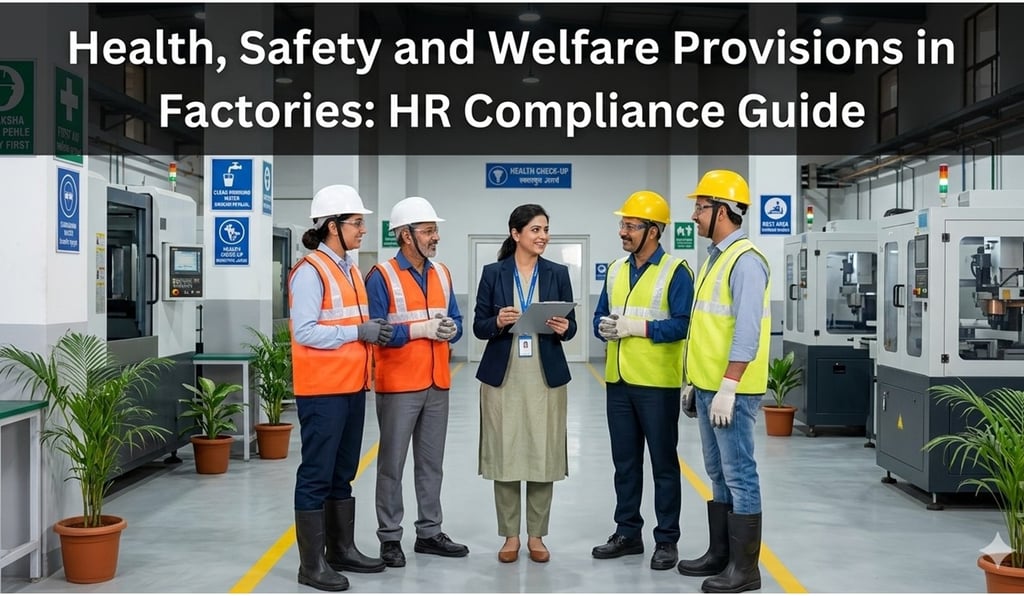
Health, safety, and welfare are the most critical pillars of factory compliance in India. Accidents, unsafe conditions, or inadequate welfare facilities not only attract strict legal action but also damage employee morale and industrial relations.
For Factory HR teams, health and safety compliance is not limited to statutory registers or inspections. It requires continuous coordination with operations, safety officers, supervisors, and contractors to ensure that legal requirements translate into safe daily practices on the shop floor.
This article explains how HR must manage health, safety, and welfare provisions effectively in Indian factories.
Legal Framework for Health, Safety and Welfare
Key legal provisions arise from:
Factories Act, 1948 and State Factory Rules
Occupational Safety, Health and Working Conditions Code
Relevant notifications and safety guidelines
These laws mandate minimum standards that factories must maintain at all times, not only during inspections.
Health Provisions: HR Responsibilities
Factory HR must ensure:
Cleanliness and hygiene across premises
Proper ventilation, lighting, and temperature control
Periodic medical examinations for workers
Monitoring of occupational health risks
HR plays a coordinating role between medical officers, safety teams, and management.
Safety Provisions in Factory Operations
Safety compliance includes:
Safe machinery, guarding, and interlocks
Issuance and enforcement of PPE
Safety training and tool-box talks
Accident reporting and investigation
Emergency preparedness and mock drills
Most safety failures occur due to weak supervision and inconsistent enforcement, not lack of policy.
Welfare Facilities and Employee Well-being
Factories are required to provide welfare facilities based on workforce strength, including:
Drinking water
Sanitation facilities
Canteens
Rest rooms and shelters
First-aid and medical rooms
HR must ensure these facilities are functional, maintained, and accessible—not merely available on paper.
Contractor and Safety Integration
Contract labour must receive:
The same level of safety training and PPE
Access to welfare facilities
Inclusion in safety drills and briefings
HR must ensure contractors do not dilute safety standards to reduce costs.
Common Compliance Gaps Observed
Frequent gaps include:
Poor maintenance of safety equipment
Inadequate safety training records
Delayed accident reporting
Neglected welfare facilities
Weak contractor safety oversight
These gaps often surface during accidents or inspections.
Conclusion
Health, safety, and welfare compliance is a shared responsibility, but HR plays a central coordinating and monitoring role. Strong systems, regular audits, and disciplined follow-through help prevent accidents, protect workers, and safeguard the organisation.
Factories that invest in safety and welfare build trust, stability, and long-term productivity.
🗹 Factory HR Checklist: Health, Safety and Welfare Compliance
🗹 Ensure workplace cleanliness and hygiene
🗹 Coordinate periodic medical check-ups
🗹 Enforce PPE usage consistently
🗹 Conduct regular safety training
🗹 Report and investigate accidents promptly
🗹 Maintain welfare facilities properly
🗹 Include contractors in safety systems
🗹 Prepare thoroughly for inspections
Health, Safety and Welfare – Key HR Responsibility Matrix
Conclusion--
Effective labour law compliance depends on how well HR operations, payroll, and business processes work together. When compliance is embedded into everyday workflows, organisations reduce risk, improve accuracy, and build sustainable governance systems. HR teams that prioritise integration over isolation are better positioned to manage compliance confidently and consistently.
HireDesk India © 2026 | All Rights Reserved
"Thoughtful guidance for everyday HR"


Quick Links
Topics
Connect
_______________________________________________________________________________________________________________________________________________________________________________________
HireDesk is a free HR knowledge platform focused on practical, India-specific workplace guidance. We help HR professionals, managers, and learners navigate people practices with clarity, responsibility, and real-world relevance.