
Health, Safety, and Welfare Provisions under Indian Labour Laws
COMPLIANCE & LABOUR LAWS
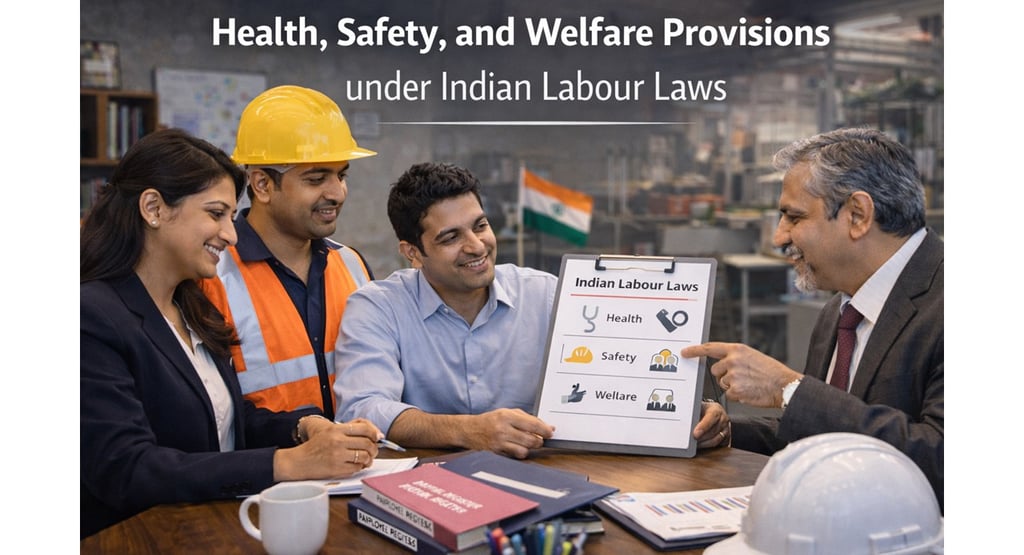
Health, safety, and welfare provisions are often seen as the domain of safety officers or admin teams. However, under Indian labour laws, HR carries a clear statutory responsibility to ensure that these provisions are not only documented but actually implemented and accessible to employees.
Multiple labour laws — including the Factories Act, Shops and Establishments Acts, Contract Labour Act, and ESIC Act — impose overlapping obligations on employers. During inspections, authorities rarely accept explanations like “this is handled by admin” or “the contractor is responsible”.
This article explains what health, safety, and welfare compliance really means for HR, across Indian labour laws, and where HR teams typically get exposed.
1. Legal Framework Governing Health, Safety, and Welfare
Key Indian labour laws covering these provisions include:
Factories Act, 1948
State Shops and Establishments Acts
Contract Labour (Regulation & Abolition) Act, 1970
Employees’ State Insurance Act, 1948
Industrial Employment (Standing Orders) Act
Occupational Safety, Health and Working Conditions Code (future-facing)
HR must understand that coverage varies by establishment type, but the duty of care principle remains constant.
2. Health Provisions: HR Accountability Areas
Health-related compliance focuses on workplace hygiene and prevention of occupational illness.
HR responsibilities typically include:
Ensuring cleanliness and waste disposal systems
Adequate ventilation, lighting, and temperature control
Safe drinking water with marked points
Sanitary facilities (toilets, urinals, washing areas)
Periodic medical examinations where prescribed
Managing health records and medical certificates
In factories, HR must coordinate with EHS teams to ensure statutory health standards are met on the shop floor, not just in office areas.
3. Safety Provisions: Beyond Safety Manuals
Safety compliance is one of the most inspected areas under Indian labour laws.
HR’s role includes ensuring:
Machinery safety guards and safe operating procedures
Display of safety instructions and signage
Provision and usage of PPE (helmets, gloves, shoes, etc.)
Accident reporting and maintenance of accident registers
Appointment of Safety Officers where required
Safety training records and induction programs
A key HR risk area is lack of documentation for safety training, even when training has actually been conducted.
4. Welfare Provisions: Facilities That Must Exist
Welfare provisions are about employee dignity and basic comfort, and inspectors physically verify these facilities.
Depending on applicability, HR must ensure availability of:
First-aid boxes or rooms
Rest rooms and seating arrangements
Canteen facilities
Crèches (where thresholds are met)
Washing and changing rooms
Shelters or lunch rooms
These facilities must be functional, accessible, and maintained, not merely shown in policy documents.
5. Contract Labour: Principal Employer Responsibility
A common compliance myth is that welfare obligations for contract workers rest only with the contractor.
In reality:
The principal employer remains responsible
Inspectors hold HR accountable for facilities provided to contract labour
Any deficiency can attract action against the principal employer
HR must therefore monitor contractor compliance as part of routine audits.
6. Common Compliance Gaps Seen by Inspectors
Across industries, inspectors frequently point out:
Non-functional first-aid boxes
Inadequate drinking water points
Missing safety signage near machinery
Poor sanitation in high-usage areas
Incomplete accident registers
Welfare facilities existing only on paper
Most of these gaps are execution failures, not policy gaps.
🗹 HR Self-Check: Health, Safety & Welfare Compliance
🗹 Are health and sanitation facilities actually usable at all times?
🗹 Are safety instructions, PPE usage, and training properly documented?
🗹 Are accident registers and incident records updated immediately?
🗹 Are welfare facilities adequate for both permanent and contract workers?
🗹 Are contractor-provided facilities periodically verified by HR?
🗹 Is HR inspection-ready for physical verification, not just paperwork?
Conclusion
Health, safety, and welfare compliance under Indian labour laws is visible compliance. Inspectors verify conditions with their eyes, not just files.
For HR teams, success lies in coordination, routine checks, and ground-level validation. When HR processes align with workplace reality, compliance becomes sustainable — and inspections become far less stressful.
Health, Safety & Welfare Provisions – HR Compliance Snapshot
Conclusion--
Effective labour law compliance depends on how well HR operations, payroll, and business processes work together. When compliance is embedded into everyday workflows, organisations reduce risk, improve accuracy, and build sustainable governance systems. HR teams that prioritise integration over isolation are better positioned to manage compliance confidently and consistently.
HireDesk India © 2026 | All Rights Reserved
"Thoughtful guidance for everyday HR"


Quick Links
Topics
Connect
_______________________________________________________________________________________________________________________________________________________________________________________
HireDesk is a free HR knowledge platform focused on practical, India-specific workplace guidance. We help HR professionals, managers, and learners navigate people practices with clarity, responsibility, and real-world relevance.