
Hiring Approvals, Budgets, and Internal Controls in Recruitment
RECRUITMENT AND HIRING
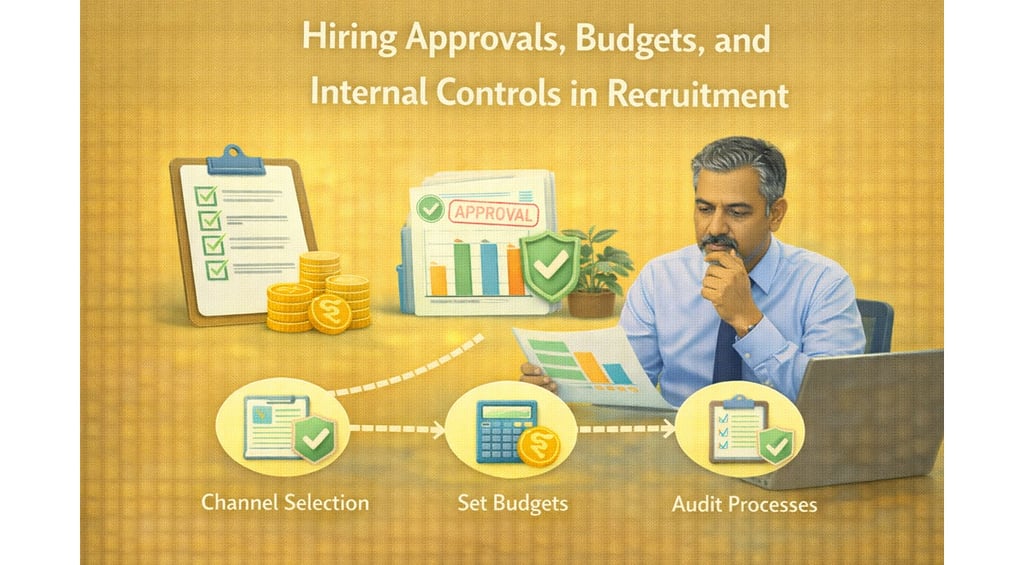
In Indian organisations, recruitment often fails not because of lack of candidates, but due to weak approval processes, budget misalignment, or inconsistent internal controls. HR teams frequently face last-minute hiring requests, inflated role scopes, or budget overshoots, particularly in SMEs and growing businesses.
A disciplined approach to approvals, budget planning, and controls ensures recruitment decisions are justified, affordable, and compliant. This safeguards the organisation from unnecessary costs, governance gaps, and misaligned hiring decisions.
The Indian Organisational Context
Recruitment approvals and budget discipline vary by organisational maturity:
Startups: Hiring decisions often informal, with founders approving roles ad hoc
SMEs: Department heads propose hiring; finance and HR approvals are required, but timelines may be long
Large organisations: Multi-level approvals, clear budgets, and policy-driven controls
Factories and frontline operations: Headcount often pre-approved per shift or production needs
Despite differences, the key principle remains: every hire must be validated for need, cost, and alignment with business priorities.
Core Components of Hiring Approvals and Controls
1. Role Justification
Before any recruitment starts, HR should ensure there is clear business justification for the role:
Is this replacement or growth hiring?
Can existing resources be redeployed or trained?
What is the expected business impact of filling this role?
Without role justification, hiring becomes reactive and uncontrolled.
2. Budget Alignment
Budgeting ensures the organisation can sustain new hires without financial strain. Key HR responsibilities include:
Checking approved headcount and compensation limits
Ensuring role levels match budgeted salary bands
Considering variable pay, benefits, and statutory contributions
In India, many hiring delays occur because budget approvals lag or are incomplete — HR must proactively verify and track budgets.
3. Approval Workflow
A standardised approval workflow reduces ambiguity and prevents ad hoc hiring. Typically, HR should:
Collect role request and justification from the manager
Validate against manpower plan and budget
Obtain approval from functional heads, finance, and HR
Document approvals for audit and governance
This provides a clear audit trail and accountability for every hire.
4. Internal Controls
Internal controls prevent misuse of recruitment authority and ensure transparency. HR should enforce:
Role-level authority for approvals
Caps on compensation or hiring outside approved grades
Periodic review of recruitment requests vs actual hiring
Exception handling with proper documentation
Controls are particularly important in organisations with multiple hiring managers or high-volume recruitment.
5. HR’s Practical Perspective
HR acts as both facilitator and gatekeeper in recruitment:
Advising managers on realistic budgets and role levels
Challenging unapproved or unjustified hiring requests
Maintaining central records of approvals, budgets, and exceptions
Linking approvals to manpower plans for long-term workforce planning
Strong HR judgement ensures hiring is disciplined without blocking legitimate business needs.
Conclusion
Approval workflows, budget discipline, and internal controls are the backbone of effective recruitment in Indian organisations. They prevent unplanned hires, cost overruns, and misaligned expectations.
When HR ensures every recruitment request is justified, budgeted, and authorised, hiring becomes predictable, auditable, and aligned with organisational priorities.
🗹 Hiring Approvals & Controls Checklist
🗹 Verify role necessity and business justification
🗹 Check approved manpower plan before processing requests
🗹 Align role level with budgeted compensation band
🗹 Follow standardised multi-level approval workflow
🗹 Document approvals for audit and governance
🗹 Apply internal control limits on compensation and headcount
🗹 Track exceptions with proper justification
🗹 Coordinate with finance and HR for budget validation
🗹 Periodically review approvals vs actual hiring outcomes
Key Hiring Approvals & Controls Framework
Conclusion--
Effective labour law compliance depends on how well HR operations, payroll, and business processes work together. When compliance is embedded into everyday workflows, organisations reduce risk, improve accuracy, and build sustainable governance systems. HR teams that prioritise integration over isolation are better positioned to manage compliance confidently and consistently.
HireDesk India © 2026 | All Rights Reserved
"Thoughtful guidance for everyday HR"


Quick Links
Topics
Connect
_______________________________________________________________________________________________________________________________________________________________________________________
HireDesk is a free HR knowledge platform focused on practical, India-specific workplace guidance. We help HR professionals, managers, and learners navigate people practices with clarity, responsibility, and real-world relevance.