
Hiring on a Budget: Smart Recruitment Practices for SMEs
SME HR OPERATIONS
Introduction--
Once a candidate accepts an offer, the period between acceptance and joining becomes a critical phase in the recruitment lifecycle. This pre-joining window influences whether a candidate actually joins, how prepared they feel on Day One, and how quickly they settle into the organisation. For HR, effective pre-joining engagement and onboarding planning are essential to convert offers into confident, committed employees.
This article outlines practical approaches HR teams can adopt to manage pre-joining engagement and establish strong onboarding foundations—without overcomplicating the process.
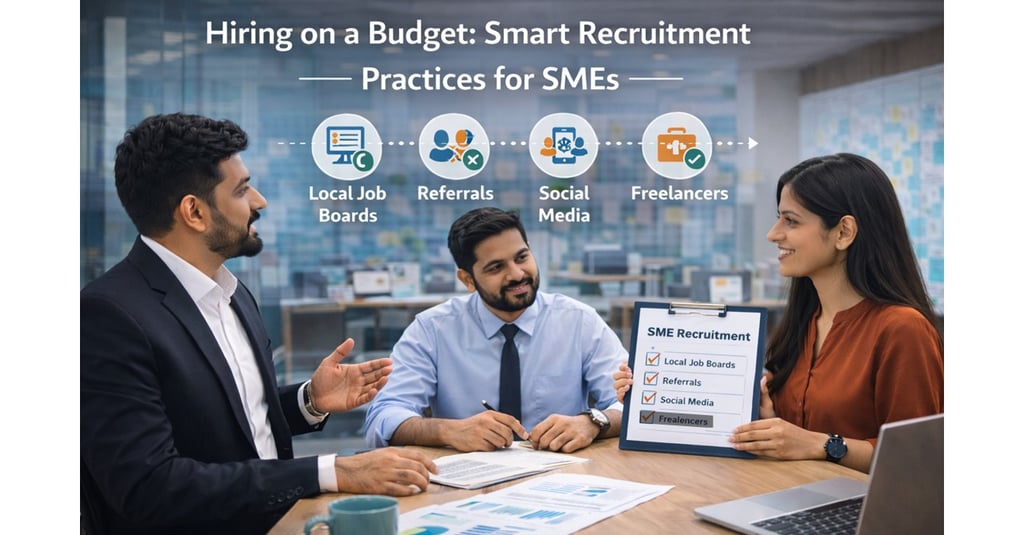
Most Indian SMEs operate with tight hiring budgets and limited brand visibility. Unlike large organisations, they cannot afford expensive recruitment agencies or prolonged hiring cycles. Yet, the quality of hires directly impacts productivity, culture, and business continuity.
For SMEs, smart recruitment is about clarity, speed, and practicality — not expensive tools. This article explains how HR teams in Indian SMEs can hire effectively without overspending, while maintaining fairness and quality.
Understanding Budget Constraints in SME Hiring
SMEs typically face:
Limited recruitment budgets
No dedicated recruitment team
Urgent hiring needs
High dependence on referrals
Recognising these constraints helps HR design realistic hiring strategies instead of copying large-company practices.
Defining Clear Hiring Requirements
Before advertising a role, HR should ensure:
Job roles and responsibilities are clearly defined
Must-have vs good-to-have skills are identified
Budget and compensation range are finalised
Reporting structure and expectations are clear
Clear role definition reduces interview cycles and poor-fit hires.
Cost-Effective Sourcing Channels for SMEs
Affordable recruitment channels include:
Employee referrals
Free or low-cost job portals
LinkedIn networking and direct outreach
Local hiring networks and institutes
A mix of channels works better than reliance on a single source.
Screening and Interviewing Efficiently
SMEs should streamline interviews by:
Using structured interview questions
Limiting interview rounds
Involving decision-makers early
Avoiding unnecessary assessments
Speed and decisiveness are competitive advantages for SMEs.
Balancing Cost and Candidate Experience
Even on a budget, HR must ensure:
Timely communication with candidates
Clear offer terms
Professional interview conduct
A respectful hiring process strengthens employer reputation without additional cost.
HR’s Role in Budget-Conscious Hiring
HR should focus on:
Managing hiring timelines tightly
Tracking source-wise hiring effectiveness
Preventing last-minute compensation negotiations
Ensuring documentation and offer clarity
Smart hiring is about discipline, not expense.
Conclusion
Hiring on a budget does not mean compromising on quality. Indian SMEs that define roles clearly, use cost-effective sourcing, and move quickly can build strong teams without high recruitment spend.
Recruitment success in SMEs depends more on process clarity and decision-making speed than on budget size.
Checklist: Budget-Smart Hiring for SMEs
🗹 Define clear role requirements before sourcing
🗹 Finalise compensation range upfront
🗹 Use employee referrals and low-cost job portals
🗹 Keep interview rounds limited and structured
🗹 Involve decision-makers early in the process
🗹 Communicate promptly with candidates
🗹 Avoid unnecessary assessments and delays
🗹 Track hiring sources and outcomes
🗹 Ensure clear and compliant offer documentation
Cost-Effective Recruitment Channels for SMEs
Conclusion--
Effective labour law compliance depends on how well HR operations, payroll, and business processes work together. When compliance is embedded into everyday workflows, organisations reduce risk, improve accuracy, and build sustainable governance systems. HR teams that prioritise integration over isolation are better positioned to manage compliance confidently and consistently.
HireDesk India © 2026 | All Rights Reserved
"Thoughtful guidance for everyday HR"


Quick Links
Topics
Connect
_______________________________________________________________________________________________________________________________________________________________________________________
HireDesk is a free HR knowledge platform focused on practical, India-specific workplace guidance. We help HR professionals, managers, and learners navigate people practices with clarity, responsibility, and real-world relevance.