
HR Analytics and Workforce Metrics for Factory Operations
INDUSTRIAL RELATIONS & FACTORY HR
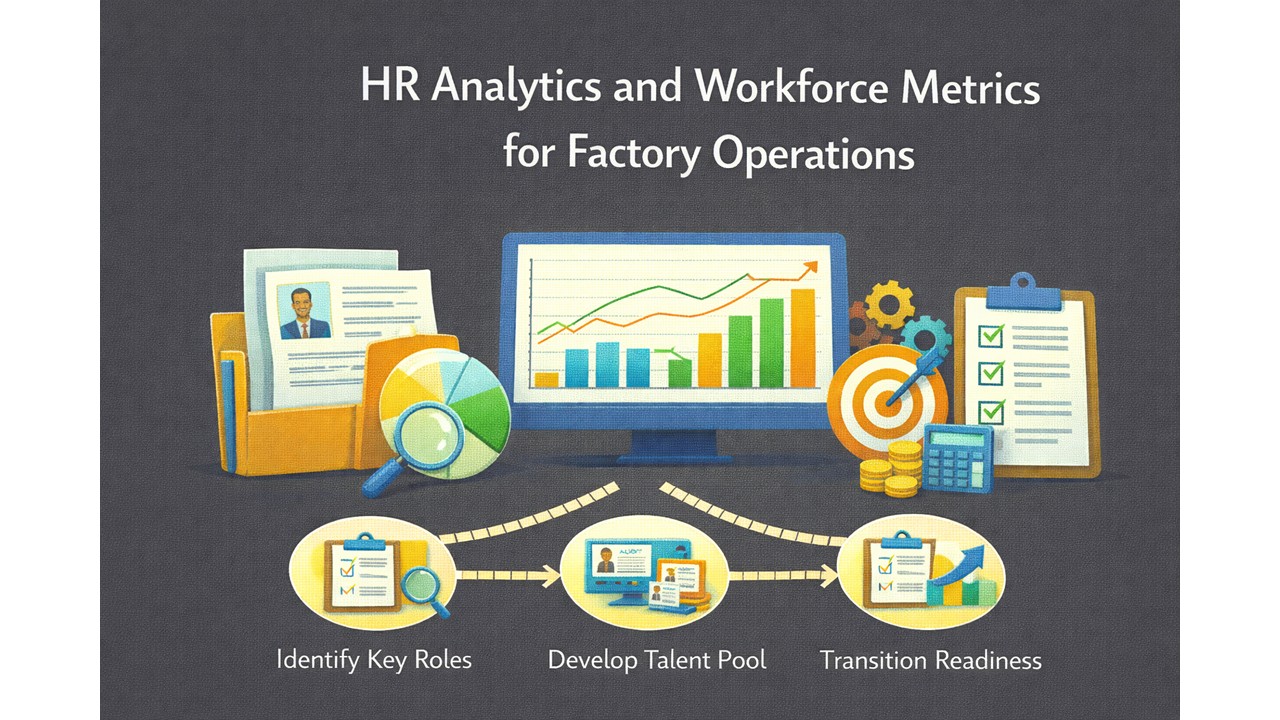
In modern Indian factories, HR decisions are increasingly data-driven. Tracking workforce metrics—such as attendance, productivity, absenteeism, skill levels, and safety compliance—enables HR teams to proactively manage operations, improve efficiency, and support industrial harmony.
For Factory HR teams, analytics is not about complex AI tools alone. It is about collecting, interpreting, and acting on practical metrics that influence day-to-day workforce management. Properly used, HR analytics reduces disputes, identifies trends early, and strengthens management-labour collaboration.
Key Workforce Metrics for Factories
Some critical metrics that HR must track include:
Attendance & Punctuality – Daily, weekly, and monthly absenteeism patterns
Overtime & Shift Efficiency – Productivity vs. extra hours logged
Skill & Training Coverage – Percentage of workforce trained for specific machinery or safety processes
Attrition & Retention – Resignation rates, retirement, and VRS impact
Safety & Compliance – Incidents reported, near-misses, PPE adherence
Disciplinary Trends – Frequency and type of misconduct, resolution times
Union Engagement Metrics – Feedback from forums, grievance resolution timelines
HR teams can use these metrics to forecast workforce needs, plan interventions, and maintain operational balance.
HR Role in Analytics
HR’s responsibilities in factory analytics include:
Designing simple and actionable dashboards
Ensuring data accuracy and timeliness
Translating metrics into practical interventions (training, counselling, redeployment)
Monitoring trends over time rather than isolated events
Reporting metrics to management and union representatives to enhance transparency
Analytics without action has little value.
Practical Uses of HR Metrics
Proactive Absenteeism Management – Early identification of patterns to prevent productivity loss
Training & Skill Planning – Tracking skill gaps for upskilling and safety compliance
Industrial Relations – Using grievance and disciplinary trends to prevent escalation
Shift & Capacity Planning – Aligning workforce deployment with production demand
Safety & Compliance Audits – Identifying areas of repeated safety lapses
Metrics must always be interpreted in context and not used punitively.
Common HR Challenges
Poor data capture (manual logs, missing records)
Lack of standardized metrics across shifts or departments
Misinterpretation of trends as individual blame
Resistance from supervisors unfamiliar with metrics
Overreliance on technology without process alignment
HR must combine human judgement with data for effective outcomes.
Conclusion
HR analytics in factories is a practical tool to support operational efficiency, safety, and workforce engagement. By monitoring key metrics and acting on insights, HR ensures smoother operations, better compliance, and healthier industrial relations.
Factories that integrate data into HR decisions reduce disputes, improve productivity, and foster a transparent, trust-based work environment.
🗹 Factory HR Checklist: HR Analytics
🗹 Identify key workforce metrics relevant to factory operations
🗹 Collect data consistently across shifts and departments
🗹 Maintain accuracy and timeliness of records
🗹 Create simple dashboards and reports
🗹 Analyse trends rather than single incidents
🗹 Share insights with management and unions where appropriate
🗹 Use analytics to inform training, safety, and redeployment decisions
🗹 Document interventions and outcomes for audit and compliance
HR Analytics for Factories – HR Reference Table
Conclusion--
Effective labour law compliance depends on how well HR operations, payroll, and business processes work together. When compliance is embedded into everyday workflows, organisations reduce risk, improve accuracy, and build sustainable governance systems. HR teams that prioritise integration over isolation are better positioned to manage compliance confidently and consistently.
HireDesk India © 2026 | All Rights Reserved
"Thoughtful guidance for everyday HR"


Quick Links
Topics
Connect
_______________________________________________________________________________________________________________________________________________________________________________________
HireDesk is a free HR knowledge platform focused on practical, India-specific workplace guidance. We help HR professionals, managers, and learners navigate people practices with clarity, responsibility, and real-world relevance.