
HR Analytics Basics: From Reports to Insights
Many HR teams generate reports, but far fewer derive meaningful insights from them. HR analytics bridges this gap by helping HR professionals understand workforce patterns, identify issues early, and support better decision-making.
HR TECH & ANALYTICS
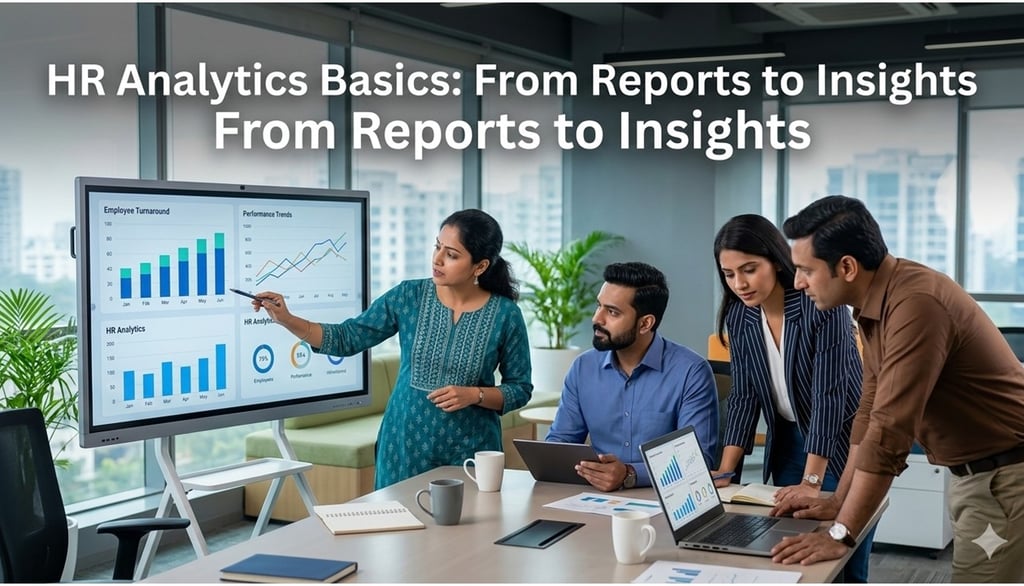
Many HR teams generate reports, but far fewer derive meaningful insights from them. HR analytics bridges this gap by helping HR professionals understand workforce patterns, identify issues early, and support better decision-making.
For Indian organisations, HR analytics does not have to be complex or technology-heavy. Even simple, well-maintained data can provide valuable insights when used correctly.
What Is HR Analytics?
HR analytics refers to the systematic use of workforce data to understand trends, patterns, and outcomes related to people management.
It moves HR beyond descriptive reporting towards insight-based analysis, enabling informed decisions on hiring, retention, performance, and workforce costs.
Reports vs Analytics: Understanding the Difference
Many organisations confuse HR reports with HR analytics.
HR Reports answer “What happened?”
Example: Number of employees who resigned last quarterHR Analytics answers “Why did it happen and what can we do?”
Example: Attrition trends by department, tenure, or role
Analytics adds interpretation and context to data, making it useful for action.
Common HR Data Used for Analytics
Most HR analytics relies on data that organisations already have, such as:
Employee headcount
Attrition and turnover data
Hiring timelines and costs
Attendance and leave records
Performance ratings
Training participation and outcomes
The value lies not in data volume, but in data accuracy and relevance.
Key HR Analytics Areas for Indian Organisations
1. Attrition and Retention Analysis
Identifying high-risk groups
Understanding exit trends by role, tenure, or location
Supporting retention strategies
2. Recruitment Analytics
Time-to-fill and cost-per-hire
Source effectiveness
Offer acceptance and joining ratios
3. Workforce Cost Analysis
Salary distribution
Overtime and contract labour costs
Impact of attrition on hiring budgets
4. Attendance and Absenteeism Patterns
Absence trends across teams
Correlation with productivity or engagement
HR Analytics Does Not Require Advanced Tools
A common misconception is that analytics requires sophisticated software.
In reality:
Many insights can be derived using spreadsheets
Consistent data entry is more important than tools
Simple trend analysis often delivers high value
HR analytics maturity develops gradually over time.
HR’s Role in Making Analytics Useful
HR plays a critical role in ensuring analytics leads to action:
Identifying relevant questions before analysing data
Ensuring data quality and consistency
Interpreting results in organisational context
Presenting insights clearly to management
Avoiding misuse or over-interpretation of data
Analytics should support judgement, not replace it.
Common Challenges in HR Analytics
HR teams often face challenges such as:
Incomplete or inconsistent data
Over-focus on dashboards without insights
Lack of analytical skills
Difficulty linking data to business decisions
These challenges can be addressed through training, prioritisation, and practical use cases.
Ethical and Responsible Use of HR Data
HR analytics involves sensitive people data. Responsible use includes:
Limiting access to authorised users
Avoiding intrusive or unfair analysis
Maintaining confidentiality
Communicating purpose and intent clearly
Trust is essential for sustainable analytics adoption.
A Practical Starting Point for HR Teams
For most Indian organisations, the best approach is:
Start with 2–3 priority metrics
Use existing data sources
Focus on trends, not perfection
Review insights periodically
Link findings to specific HR actions
Small steps often deliver better results than large, complex initiatives.
Conclusion
HR analytics helps transform data into meaningful insights that support better people decisions. By moving beyond reports and focusing on interpretation, HR teams can play a stronger strategic role.
When applied thoughtfully and ethically, HR analytics becomes a practical tool for improving workforce outcomes rather than a technical exercise.
Checklist: HR Analytics Basics: From Reports to Insights
🗹 Collect accurate, relevant workforce data from multiple sources.
🗹 Focus on actionable metrics, not just volume of data.
🗹 Use analytics to identify trends in attrition, productivity, and hiring.
🗹 Present insights in an understandable format for managers.
🗹 Ensure ethical use of employee data.
🗹 Align analytics initiatives with organisational priorities.
🗹 Regularly review analytics for accuracy and relevance.
Conclusion--
Effective labour law compliance depends on how well HR operations, payroll, and business processes work together. When compliance is embedded into everyday workflows, organisations reduce risk, improve accuracy, and build sustainable governance systems. HR teams that prioritise integration over isolation are better positioned to manage compliance confidently and consistently.
HireDesk India © 2026 | All Rights Reserved
"Thoughtful guidance for everyday HR"


Quick Links
Topics
Connect
_______________________________________________________________________________________________________________________________________________________________________________________
HireDesk is a free HR knowledge platform focused on practical, India-specific workplace guidance. We help HR professionals, managers, and learners navigate people practices with clarity, responsibility, and real-world relevance.