
HR Compliance for Indian SMEs: A Practical Checklist Approach
SME HR OPERATIONS
Introduction--
Once a candidate accepts an offer, the period between acceptance and joining becomes a critical phase in the recruitment lifecycle. This pre-joining window influences whether a candidate actually joins, how prepared they feel on Day One, and how quickly they settle into the organisation. For HR, effective pre-joining engagement and onboarding planning are essential to convert offers into confident, committed employees.
This article outlines practical approaches HR teams can adopt to manage pre-joining engagement and establish strong onboarding foundations—without overcomplicating the process.
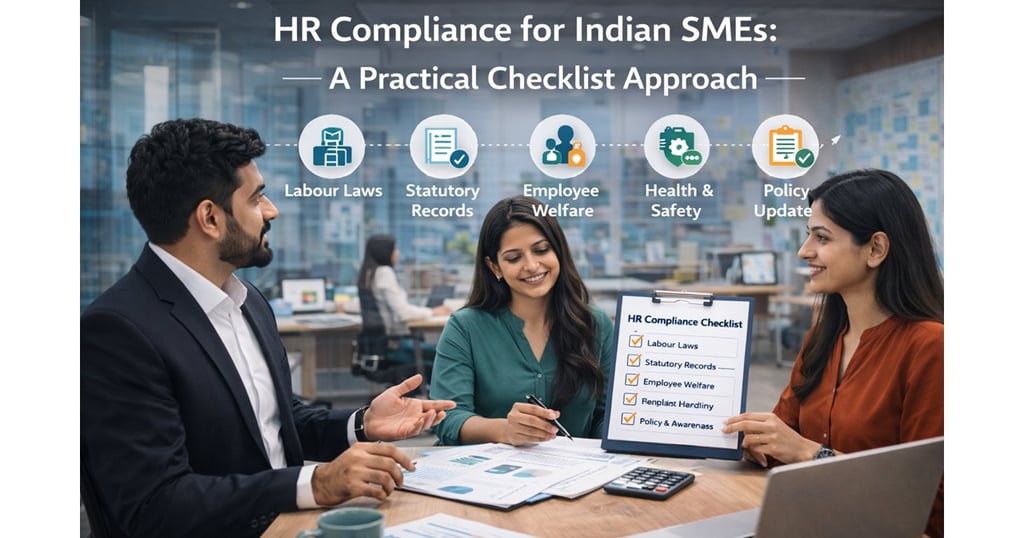
For Indian SMEs, HR compliance often feels overwhelming — multiple labour laws, frequent changes, inspections, and documentation requirements. As a result, compliance is either ignored until a problem arises or handled in an overly cautious, paperwork-heavy manner.
In reality, SME compliance does not require deep legal expertise or complex systems. What it needs is a clear checklist-driven approach, ownership, and basic discipline. This article explains how Indian SMEs can manage HR compliance practically and proportionately, without disrupting business operations.
Why HR Compliance Is Critical for SMEs
HR compliance affects SMEs in very real ways:
Risk of penalties, notices, and inspections
Disruption during audits or labour enquiries
Loss of credibility with employees and authorities
Founder and management time diverted to firefighting
Most SME compliance failures happen due to missed basics, not legal interpretation issues.
Key Compliance Areas SMEs Must Track
Indian SME HR compliance broadly falls into five areas:
Employment documentation
Wages and payroll compliance
Statutory benefits and social security
Working hours, leave, and attendance
Employee relations and workplace conduct
Clarity on these buckets helps HR avoid scattered efforts.
Employment Documentation Basics
SMEs must ensure that core documents are in place for every employee, including:
Appointment or employment letters
Wage structure clarity
Policy acknowledgements
Personal and statutory details
Poor documentation is one of the most common triggers for disputes.
Payroll and Wage Compliance
Payroll compliance is not just salary payment. It includes:
Minimum wages adherence
Timely salary disbursement
Proper payslips
Accurate deductions
Errors here quickly attract employee complaints and legal risk.
Statutory and Social Security Compliance
SMEs must track applicability and compliance for:
EPF
ESI
Gratuity
Professional Tax (state-specific)
Once applicable, compliance continues even if employee count fluctuates.
Working Hours, Leave, and Attendance
SMEs should clearly define and track:
Working hours and weekly offs
Leave eligibility and accrual
Overtime (where applicable)
Attendance records
Informal practices without records expose SMEs during inspections.
Employee Relations and Workplace Discipline
Compliance also includes how SMEs handle:
Misconduct
Complaints and grievances
POSH requirements (where applicable)
Terminations and exits
Procedural fairness matters as much as intent.
HR’s Role in Compliance Management
HR’s role is to act as the compliance coordinator, not a legal expert. This includes:
Maintaining compliance calendars
Ensuring documentation consistency
Coordinating with consultants or payroll partners
Preparing for inspections and audits
Ownership is more important than complexity.
Conclusion
HR compliance for Indian SMEs works best when treated as a checklist-driven operational activity, not a legal project. By focusing on core obligations, maintaining basic records, and reviewing compliance periodically, SMEs can stay legally safe without over-engineering HR processes.
Checklist: Practical HR Compliance for Indian SMEs
🗹 Issue appointment letters and maintain employee records
🗹 Define wages in line with minimum wage requirements
🗹 Ensure timely salary payment and payslip issuance
🗹 Track EPF, ESI, gratuity, and PT applicability correctly
🗹 Maintain attendance, leave, and working hour records
🗹 Document employee exits and settlements properly
🗹 Address complaints and misconduct through fair process
🗹 Maintain a simple compliance calendar and review monthly
Core HR Compliance Areas for Indian SMEs
Conclusion--
Effective labour law compliance depends on how well HR operations, payroll, and business processes work together. When compliance is embedded into everyday workflows, organisations reduce risk, improve accuracy, and build sustainable governance systems. HR teams that prioritise integration over isolation are better positioned to manage compliance confidently and consistently.
HireDesk India © 2026 | All Rights Reserved
"Thoughtful guidance for everyday HR"


Quick Links
Topics
Connect
_______________________________________________________________________________________________________________________________________________________________________________________
HireDesk is a free HR knowledge platform focused on practical, India-specific workplace guidance. We help HR professionals, managers, and learners navigate people practices with clarity, responsibility, and real-world relevance.