HR Dashboards: What HR Should Really Track
HR TECH & ANALYTICS
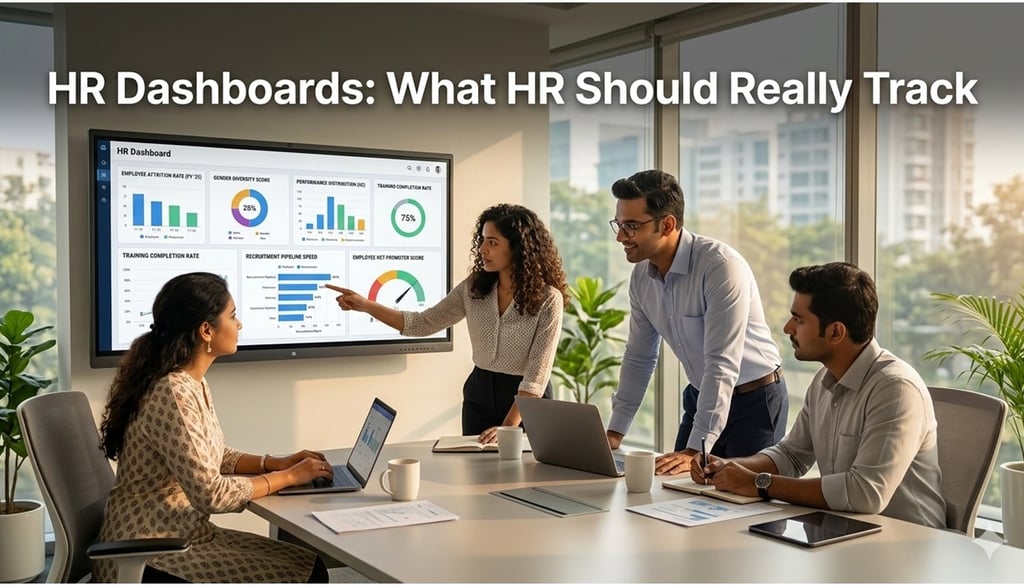
In Indian organisations, HR is increasingly expected to provide data-driven insights rather than just reports. HR dashboards consolidate workforce data in a visual, actionable way, helping HR leaders and business managers make informed decisions about talent, performance, and engagement.
A well-designed dashboard helps track key metrics, identifies trends early, and aligns HR interventions with business priorities. This article explains the purpose of HR dashboards, what metrics to track, and practical considerations for Indian HR teams.
The Purpose of HR Dashboards
HR dashboards help organisations:
Monitor workforce trends: Track headcount, attrition, and employee demographics.
Identify performance gaps: Link learning, development, and appraisal data.
Measure engagement: Observe patterns in attendance, leave, and participation in HR programmes.
Support decision-making: Provide managers with real-time insights for planning and interventions.
Ensure compliance: Track statutory and mandatory requirements systematically.
A dashboard should simplify information, highlight actionable insights, and support HR strategy rather than just display data.
Key Metrics Indian HR Should Track
Workforce Composition
Headcount, diversity, gender ratio, employee distribution across locations and functions.
Recruitment and Attrition
Time to hire, cost per hire, turnover trends, and reasons for exit.
Performance and Learning
Completion of training programmes, appraisal ratings, and skill gap analysis.
Engagement and Wellbeing
Employee satisfaction scores, participation in engagement initiatives, absenteeism.
Compliance and Statutory Reporting
PF, ESIC, statutory training completion, and policy acknowledgements.
Dashboards should focus on metrics that are actionable, relevant to business priorities, and easy to interpret.
Designing Dashboards for Indian Organisations
When designing HR dashboards, consider:
Simplicity and clarity: Avoid clutter; focus on key indicators.
Role-specific views: Tailor dashboards for HR leaders, line managers, and executives.
Integration with HRMS: Pull data directly from HR systems to maintain accuracy.
Timely updates: Ensure real-time or periodic data refresh to support decisions.
Visualisation: Use graphs, charts, and colour coding to highlight trends and anomalies.
The goal is quick comprehension, enabling managers to act rather than analyze raw data.
Challenges to Consider
Data quality issues: Incomplete or inconsistent records reduce reliability.
Overloading with metrics: Too many indicators can obscure focus areas.
Low adoption: Managers may ignore dashboards if not intuitive or actionable.
Privacy concerns: Ensure sensitive employee data is protected.
These challenges can be mitigated through data governance, training, and phased rollout.
Best Practices
Align dashboard metrics with business outcomes.
Regularly review and update dashboards based on changing HR priorities.
Keep visualisation consistent across the organisation.
Combine quantitative metrics with contextual insights for interpretation.
Use dashboards to proactively guide HR interventions rather than react to issues.
Conclusion
HR dashboards are powerful tools for Indian organisations to monitor workforce trends, measure HR initiatives, and support decision-making. The effectiveness of a dashboard lies not in the number of metrics displayed but in the actionable insights it provides.
A well-planned, user-friendly HR dashboard enhances HR credibility, helps managers make informed decisions, and ensures HR interventions are timely and relevant.
Checklist: HR Dashboards: What HR Should Really Track
🗹 Identify the key HR metrics aligned with business priorities.
🗹 Ensure data accuracy and consistency across all HR systems.
🗹 Design dashboards that are clear, visually intuitive, and role-specific.
🗹 Provide actionable insights rather than just raw data.
🗹 Integrate dashboards with HRMS, payroll, and performance data.
🗹 Update metrics regularly to reflect changing organisational needs.
🗹 Protect sensitive employee information and maintain confidentiality.
🗹 Train managers to interpret and use dashboards effectively.
Sample: Key HR Dashboard Metrics
Conclusion--
Effective labour law compliance depends on how well HR operations, payroll, and business processes work together. When compliance is embedded into everyday workflows, organisations reduce risk, improve accuracy, and build sustainable governance systems. HR teams that prioritise integration over isolation are better positioned to manage compliance confidently and consistently.
HireDesk India © 2026 | All Rights Reserved
"Thoughtful guidance for everyday HR"


Quick Links
Topics
Connect
_______________________________________________________________________________________________________________________________________________________________________________________
HireDesk is a free HR knowledge platform focused on practical, India-specific workplace guidance. We help HR professionals, managers, and learners navigate people practices with clarity, responsibility, and real-world relevance.