
HR Data Governance: Policies, Ownership, and Controls in Indian Organisations
HR TECH & ANALYTICS
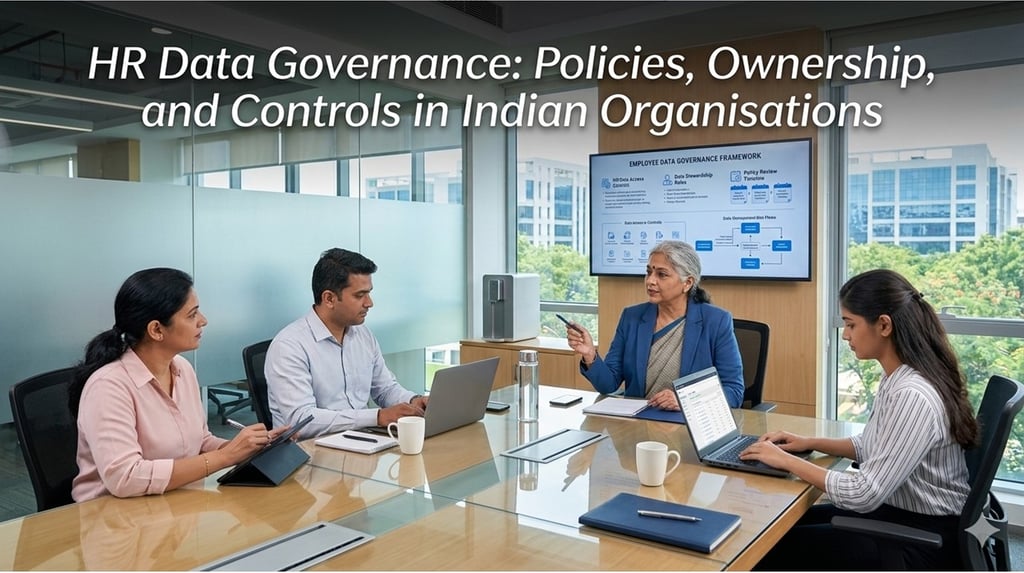

As HR systems become more interconnected and data-driven, organisations increasingly rely on workforce data for operations, compliance, and strategic decisions. However, without clear governance, even good systems can produce unreliable, risky, or misused data.
HR data governance provides the structure, discipline, and accountability required to ensure that people data is accurate, secure, and used responsibly. In the Indian context, governance is especially important due to compliance requirements, workforce scale, and data privacy expectations.
What Is HR Data Governance?
HR data governance refers to the framework of policies, roles, standards, and controls that guide how employee data is collected, maintained, accessed, and used across the organisation.
Effective governance ensures that:
Data is reliable and consistent
Ownership and accountability are clearly defined
Access is controlled and appropriate
Legal and ethical requirements are met
Governance is not about restricting data use—it is about enabling safe and confident use of data.
Why HR Data Governance Matters
Compliance and Risk Management
Supports statutory compliance (PF, ESI, tax, labour laws)
Reduces audit observations and legal exposure
Ensures readiness for evolving data protection regulations
Data Quality and Decision Confidence
Improves trust in HR reports and analytics
Reduces manual corrections and data disputes
Enables meaningful people insights
Operational Efficiency
Minimises duplication and inconsistencies
Clarifies responsibilities for data maintenance
Improves integration across HR systems
Core Elements of HR Data Governance
1. Policies and Standards
HR data policies define:
What data is collected
How it should be recorded
Who can access and modify it
How long it is retained
Standard definitions ensure consistency across systems and reports.
2. Data Ownership and Roles
Clear roles are essential:
Data Owners: Accountable for data accuracy and usage
Data Stewards: Responsible for maintaining data quality
System Administrators: Manage technical access and controls
Users: Follow defined data entry and usage guidelines
3. Access and Security Controls
Role-based access to sensitive data
Approval workflows for changes
Audit trails for updates and overrides
4. Monitoring and Review Mechanisms
Periodic data audits
Exception reporting
Governance reviews aligned with system or policy changes
HR’s Role in Data Governance
HR acts as the custodian of people data by:
Defining governance frameworks and policies
Partnering with IT and legal teams
Training users on data responsibilities
Reviewing data usage and analytics requests
Addressing data-related concerns and escalations
Strong governance reinforces HR’s credibility as a strategic and responsible function.
Common Governance Gaps in Indian Organisations
Informal data ownership
Inconsistent definitions across systems
Excessive access to sensitive data
Lack of documented policies
Governance seen as an IT responsibility only
Closing these gaps requires HR leadership and sustained discipline.
Conclusion
HR data governance is the foundation on which reliable HR operations, analytics, and decision-making are built. For Indian organisations, governance enables compliance, protects employee trust, and supports confident use of people data.
When HR establishes clear policies, ownership, and controls, data becomes a strategic organisational asset rather than a risk.
Checklist: HR Data Governance Essentials
🗹 Define clear HR data governance policies and standards.
🗹 Establish ownership and stewardship for all HR data elements.
🗹 Standardise data definitions across HR systems.
🗹 Implement role-based access and approval controls.
🗹 Maintain audit trails for data changes and overrides.
🗹 Conduct periodic data quality and access reviews.
🗹 Align governance with legal and compliance requirements.
🗹 Train HR teams and users on data responsibilities.
🗹 Review governance practices when systems or processes change.
🗹 Treat data governance as an ongoing discipline, not a one-time exercise.
Sample Table: HR Data Governance Framework
Conclusion--
Effective labour law compliance depends on how well HR operations, payroll, and business processes work together. When compliance is embedded into everyday workflows, organisations reduce risk, improve accuracy, and build sustainable governance systems. HR teams that prioritise integration over isolation are better positioned to manage compliance confidently and consistently.
HireDesk India © 2026 | All Rights Reserved
"Thoughtful guidance for everyday HR"


Quick Links
Topics
Connect
_______________________________________________________________________________________________________________________________________________________________________________________
HireDesk is a free HR knowledge platform focused on practical, India-specific workplace guidance. We help HR professionals, managers, and learners navigate people practices with clarity, responsibility, and real-world relevance.