
HR Knowledge, Resources and Community Learning in India: Building, Sharing and Contributing Responsibly
HR knowledge develops through experience, reflection, and collective learning. Communities, curated resources, and shared perspectives play an important role in strengthening HR practice across organisations.
RESOURCES, COMMUNITY & CONTRIBUTION
Introduction
Human Resources is a field that continuously evolves alongside changes in workplaces, workforce expectations, labour regulations, technology, business models, and organisational practices. As a result, HR professionals, managers, business owners, students, and learners often need access to reliable information, practical resources, and opportunities for continuous learning.
In India, HR professionals frequently encounter situations where theoretical knowledge alone may not provide sufficient guidance. Workplace realities often require balancing compliance obligations, business requirements, employee expectations, organisational culture, and operational constraints. Learning therefore becomes an ongoing process that extends beyond formal education, training programmes, and certifications.
Access to practical knowledge, structured resources, workplace experiences, and professional perspectives can help individuals make better-informed decisions and develop stronger HR capability over time.
This article provides an overview of the importance of HR knowledge sharing, professional learning, practical resources, community participation, and responsible contribution in the Indian context. It also explains how knowledge platforms, shared experiences, checklists, templates, and collaborative learning can support stronger HR practices and better-managed workplaces.
The objective is not to present HR knowledge as static information, but as a continuously evolving body of learning that benefits from responsible sharing, practical application, and professional collaboration.
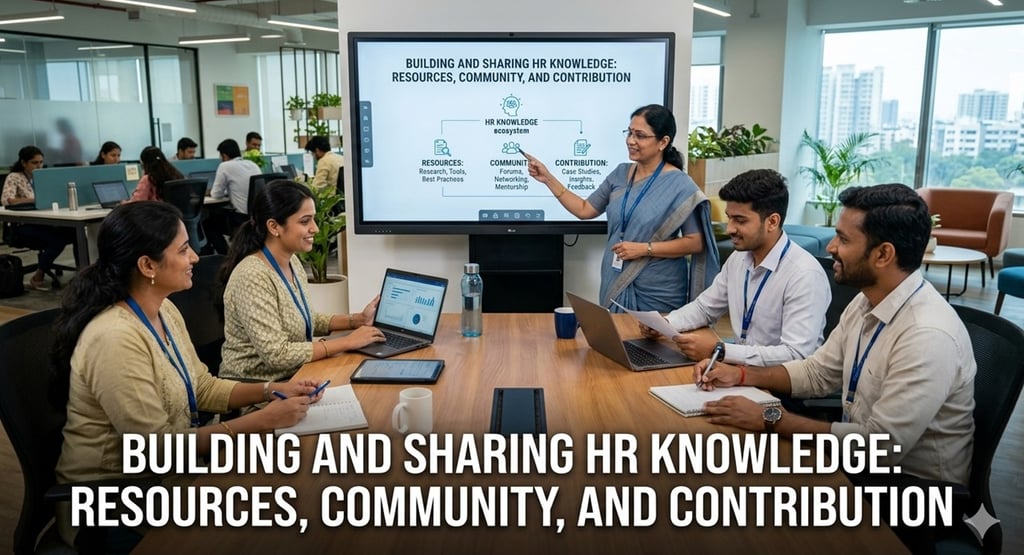
Why HR Knowledge Matters
Every HR decision has the potential to influence:
employees
managers
organisational culture
compliance outcomes
business performance
workplace relationships
Whether dealing with recruitment, performance management, payroll, labour compliance, employee engagement, industrial relations, or workplace policies, HR professionals are often expected to make decisions that balance both organisational and employee interests.
The quality of those decisions is frequently influenced by the quality of information available.
Access to practical, reliable, and contextual knowledge helps organisations:
improve consistency
reduce avoidable errors
strengthen compliance
improve workforce management
build organisational capability
Learning therefore becomes an important part of professional HR practice.
__________________________________________________________________________________________________
Learning Beyond Formal Education
Many HR professionals enter the profession through:
academic programmes
certifications
specialised courses
professional training
While formal education provides important foundations, workplace realities often introduce situations that require practical understanding and judgment.
For example:
managing employee grievances
handling disciplinary issues
interpreting workplace policies
supporting managers
addressing retention concerns
managing compliance challenges
These situations are often learned through:
workplace exposure
practical experience
professional discussions
case-based learning
shared knowledge
Continuous learning therefore remains important throughout an HR professional’s career.
__________________________________________________________________________________________________
The Value of Practical HR Resources
HR professionals often require access to practical tools that support day-to-day work.
These may include:
checklists
templates
formats
policy references
process guides
compliance calendars
quick-reference resources
implementation frameworks
Practical resources help translate concepts into action.
For example:
a recruitment checklist can support hiring consistency
a compliance checklist can improve statutory preparedness
an onboarding framework can improve employee integration
a performance review guide can improve manager effectiveness
Resources are often most valuable when they remain simple, practical, and adaptable to workplace realities.
__________________________________________________________________________________________________
Building Capability Through Shared Learning
Many workplace challenges are not unique to a single organisation.
Across industries, HR professionals often encounter similar concerns relating to:
recruitment difficulties
employee retention
performance management
workplace communication
compliance interpretation
employee engagement
industrial relations
organisational change
Sharing experiences and insights can help professionals learn from situations already encountered by others.
Responsible knowledge sharing encourages:
broader understanding
practical learning
professional growth
improved decision-making
Shared learning does not replace organisational judgment, but it can provide useful perspectives and learning opportunities.
__________________________________________________________________________________________________
The Role of Professional Communities
Professional communities create opportunities for:
learning
discussion
collaboration
knowledge exchange
capability development
Communities help professionals:
discover different viewpoints
understand emerging workplace trends
learn from practical experiences
expand professional networks
Strong professional communities often contribute to the development of better workplace practices across industries and organisations.
At their best, communities encourage constructive discussion, professional respect, and responsible sharing of knowledge.
__________________________________________________________________________________________________
Responsible Knowledge Sharing in HR
HR knowledge often involves topics that affect:
employees
organisations
legal obligations
workplace relationships
organisational decision-making
As a result, responsible knowledge sharing is important.
Useful HR content should ideally be:
accurate
practical
balanced
contextual
professionally presented
It should also recognise that:
laws may change
organisational circumstances differ
workplace situations vary
multiple approaches may exist
Responsible contributors generally share knowledge to inform learning rather than provide definitive solutions for every situation.
__________________________________________________________________________________________________
The Importance of Contribution
Many valuable HR insights originate from:
workplace experiences
operational challenges
lessons learned
implementation efforts
practical problem-solving
By sharing experiences responsibly, HR professionals can contribute to collective learning within the profession.
Contributions may take many forms, including:
articles
practical insights
checklists
templates
workplace observations
implementation experiences
learning resources
Thoughtful contributions help strengthen the quality and diversity of professional knowledge available to others.
__________________________________________________________________________________________________
Resources That Support HR Practice
Effective HR learning often combines conceptual understanding with practical application.
Useful resources may include:
topic guides
workplace checklists
implementation frameworks
policy references
process maps
practical examples
templates and formats
learning pathways
curated reference materials
Such resources help bridge the gap between understanding a concept and applying it in real workplace situations.
__________________________________________________________________________________________________
Knowledge, Resources and Workplace Improvement
Stronger workplaces are often supported by:
better information
informed decision-making
practical learning
continuous improvement
professional collaboration
Knowledge alone does not solve workplace challenges.
However, organisations are generally better positioned to address people-related issues when decision-makers have access to reliable information, practical resources, and opportunities to learn from experience.
Building HR capability therefore contributes not only to individual professional growth but also to organisational effectiveness.
__________________________________________________________________________________________________
The Role of HireDesk
HireDesk has been created as a practical HR knowledge platform focused on Indian workplaces.
Through articles, guides, resources, checklists, templates, and community contributions, the platform seeks to support:
HR professionals
managers
business owners
students
learners
workplace practitioners
The objective is to simplify complex HR topics, promote responsible knowledge sharing, and provide practical guidance that supports better-informed workplace decisions.
As the platform evolves, contributions from practitioners, learners, and professionals can help expand the breadth of perspectives and experiences available to the wider HR community.
__________________________________________________________________________________________________
Explore Related Resources and Learning Guides
This section includes practical resources and supporting articles designed to help HR professionals, managers, students, contributors, and learners make the most of HireDesk and continue building their HR capability.
Topics covered include:
1. Getting Started: How to Navigate HireDesk: Finding Practical HR Guidance by Topic
2. Learning Paths: Learning HR Through HireDesk: Suggested Reading Paths for Different Audiences
3. HR Resources: Building Your HR Knowledge Library: Recommended Resources and Reference Materials
4. Shared Learning: Why Shared HR Learning Matters in Indian Workplaces
5. Workplace Experience: Learning from Workplace Experiences: Turning Challenges into Practical HR Knowledge
6. Responsible Sharing: Responsible Knowledge Sharing in HR: Balancing Experience, Compliance and Context
7. Contributions: Contributing to HireDesk: What We Welcome and How It Works
8. Knowledge Publishing: From Workplace Experience to Published Insight: How HR Professionals Can Share Knowledge
9. Content Writing: Writing Practical HR Content: Principles for Useful Knowledge Sharing
10. Editorial Review: How HireDesk Reviews and Publishes Contributions
11. Trust & Credibility: Accuracy, Independence and Responsible HR Guidance
12. Professional Boundaries: Educational Content vs Professional Advice: Understanding the Difference
13. Checklists: Practical HR Checklists for Indian Workplaces
14. Templates: Essential HR Templates and Formats for HR Practitioners
15. Community Building: Building an HR Community of Practice in India
Together, these resources aim to support continuous learning, practical application, professional growth, responsible contribution, and knowledge sharing across the Indian HR community.
__________________________________________________________________________________________________
Conclusion
HR knowledge develops through a combination of learning, experience, observation, discussion, and practical application. As workplaces continue to evolve, HR professionals increasingly benefit from access to reliable information, useful resources, shared experiences, and opportunities for continuous learning.
In Indian workplaces, better people decisions are often supported by stronger knowledge, practical tools, and thoughtful professional dialogue. Checklists, templates, guides, workplace insights, and community contributions can all play a valuable role in helping professionals navigate complex situations with greater confidence and clarity.
While no single resource can answer every workplace question, organisations and professionals are generally better equipped to manage people-related challenges when they engage in continuous learning and responsible knowledge sharing.
Ultimately, the purpose of HR knowledge is not simply to accumulate information, but to support better decisions, stronger workplaces, and more effective people management practices.
Related Articles
HireDesk India © 2026 | All Rights Reserved
"Thoughtful guidance for everyday HR"


Quick Links
Topics
Connect
_______________________________________________________________________________________________________________________________________________________________________________________
HireDesk is a free HR knowledge platform focused on practical, India-specific workplace guidance. We help HR professionals, managers, and learners navigate people practices with clarity, responsibility, and real-world relevance.