
HR Metrics That Matter for SMEs: What to Track and Why
SME HR OPERATIONS
Introduction--
Once a candidate accepts an offer, the period between acceptance and joining becomes a critical phase in the recruitment lifecycle. This pre-joining window influences whether a candidate actually joins, how prepared they feel on Day One, and how quickly they settle into the organisation. For HR, effective pre-joining engagement and onboarding planning are essential to convert offers into confident, committed employees.
This article outlines practical approaches HR teams can adopt to manage pre-joining engagement and establish strong onboarding foundations—without overcomplicating the process.
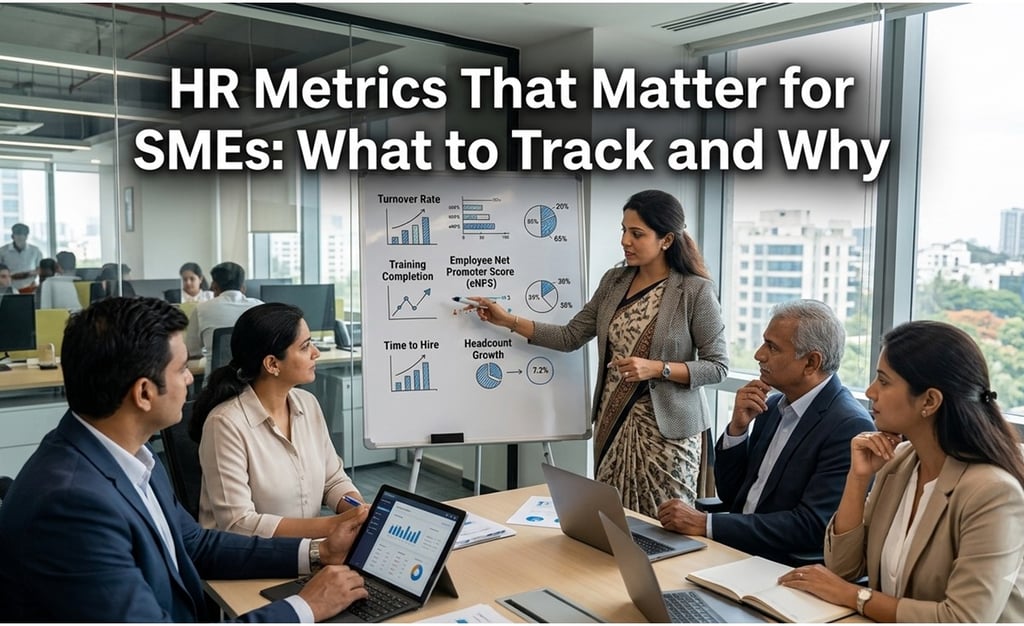
Many Indian SMEs either track no HR data at all or attempt to copy enterprise-level dashboards that add little value. Both approaches are problematic. HR metrics in SMEs should be few, meaningful, and decision-oriented.
This article explains which HR metrics actually matter for SMEs, why they matter, and how HR can track them without complex systems or analytics overload.
Why SMEs Need HR Metrics
HR metrics help SMEs move from intuition to informed action.
Simple metrics enable HR to:
Identify people-related risks early
Support founders with data-backed insights
Improve consistency in decision-making
Track whether HR processes are working
Metrics should support action, not reporting vanity.
Common Mistakes SMEs Make With HR Metrics
HR in SMEs often struggles due to:
Tracking too many metrics with no purpose
Focusing only on compliance numbers
Chasing global benchmarks irrelevant to SMEs
Inaccurate or incomplete data
Metrics owned by no one
HR must prioritise accuracy and relevance over volume.
Core HR Metrics Every SME Should Track
SMEs should focus on foundational people metrics.
High-impact areas include:
Hiring efficiency
Attendance and leave patterns
Attrition and retention
Payroll accuracy
Compliance adherence
These metrics directly affect cost, continuity, and culture.
How HR Can Track Metrics Without Complex Tools
SMEs do not need advanced HR analytics platforms.
Practical tracking methods include:
Simple spreadsheets
Payroll and attendance reports
Basic HRIS dashboards
Monthly HR review notes
Consistency matters more than sophistication.
Using Metrics to Influence Business Decisions
Metrics are valuable only when used.
HR should:
Highlight trends, not just numbers
Flag risks early to founders
Link people data to operational outcomes
Recommend actions based on insights
HR metrics should support business conversations.
Data Ethics and Responsibility in SMEs
Even small organisations handle sensitive data.
HR must ensure:
Accuracy and confidentiality
Limited access to HR data
No misuse for bias or targeting
Transparency in how data is used
Responsible data handling builds trust.
Conclusion
For SMEs, HR metrics should be simple, focused, and actionable. Tracking the right data helps HR anticipate problems, improve decision-making, and support business growth — without turning HR into a reporting function.
Checklist: Practical HR Metrics Approach for SMEs
🗹 Track only metrics that influence decisions
🗹 Keep the number of metrics manageable
🗹 Ensure data accuracy and consistency
🗹 Review metrics regularly, not sporadically
🗹 Share insights with founders and managers
🗹 Use trends, not isolated numbers
🗹 Protect employee data confidentiality
HR Metrics That Matter for Indian SMEs
Conclusion--
Effective labour law compliance depends on how well HR operations, payroll, and business processes work together. When compliance is embedded into everyday workflows, organisations reduce risk, improve accuracy, and build sustainable governance systems. HR teams that prioritise integration over isolation are better positioned to manage compliance confidently and consistently.
HireDesk India © 2026 | All Rights Reserved
"Thoughtful guidance for everyday HR"


Quick Links
Topics
Connect
_______________________________________________________________________________________________________________________________________________________________________________________
HireDesk is a free HR knowledge platform focused on practical, India-specific workplace guidance. We help HR professionals, managers, and learners navigate people practices with clarity, responsibility, and real-world relevance.