
HR Operations in Small and Medium Enterprises: A Practical Guide for Indian Organisations
HR operations in SMEs are often handled by small teams or individual HR practitioners. Without clear processes, everyday HR activities can become reactive and difficult to scale.
SME HR OPERATIONS
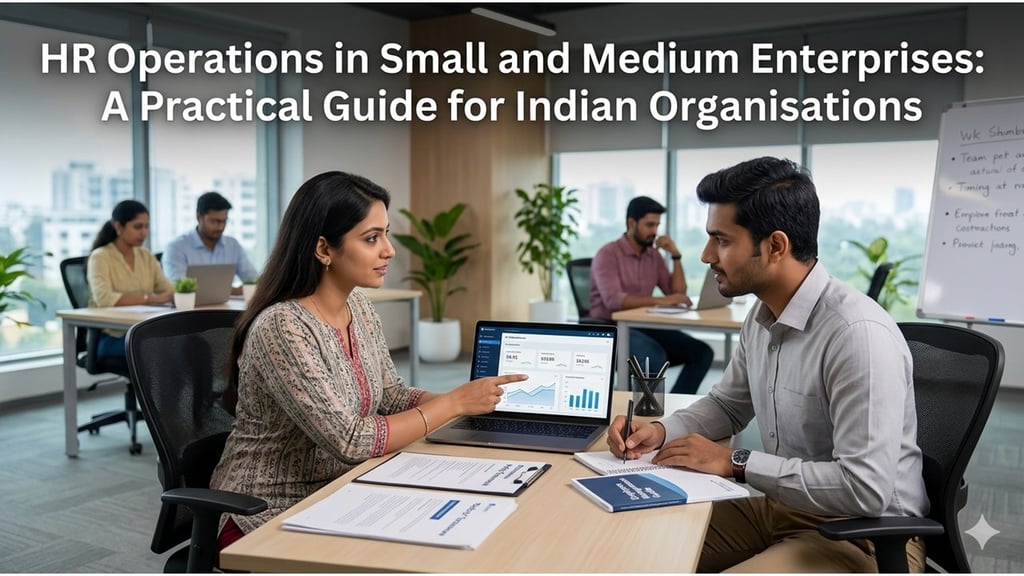
This article explains key aspects of managing HR operations in SMEs, outlining practical approaches to structuring core HR processes in growing organisations.
Understanding HR Operations in SMEs
HR operations refer to the day-to-day people processes that ensure smooth functioning of the organisation. In SMEs, these typically include:
Recruitment coordination and onboarding
Payroll and statutory compliance
Attendance and leave management
Employee documentation
Policy communication and implementation
These operational elements form the foundation of effective people management.
The SME Context in India
Indian SMEs operate under diverse conditions:
Rapid growth or frequent changes in roles
Limited HR manpower or single-person HR teams
Founder-driven decision-making
Strong compliance obligations despite small size
Because of these realities, HR operations in SMEs must be practical, adaptable, and easy to manage.
Establishing Core HR Processes
SMEs benefit from focusing first on essential processes rather than attempting to implement full-scale HR systems.
Priority areas include:
Clear employment documentation
Accurate payroll processing
Statutory compliance management
Basic attendance and leave tracking
Establishing these basics early reduces confusion and risk.
HR’s Role in SME Operations
In SMEs, HR often plays multiple roles—administrator, advisor, and facilitator.
Key HR responsibilities include:
Ensuring compliance with labour laws
Supporting managers and founders on people matters
Maintaining employee records and communication
Addressing employee concerns promptly
HR credibility in SMEs is built through reliability and consistency.
Balancing Structure and Flexibility
Excessive formality can slow SMEs down, while lack of structure can create confusion. HR must:
Introduce policies that are simple and relevant
Communicate expectations clearly
Adapt processes as the organisation grows
Right-sized HR systems support growth without burdening operations.
Common Challenges Faced by SME HR Teams
HR professionals in SMEs often encounter:
Time and resource constraints
Informal practices becoming difficult to scale
Compliance awareness gaps
High dependence on individual managers
Addressing these challenges requires prioritisation and clear communication.
Scaling HR Operations Gradually
As SMEs grow, HR operations should evolve gradually:
Formalising policies when required
Introducing simple digital tools
Strengthening documentation and reporting
Incremental improvements are more sustainable than sudden overhauls.
A Practical Perspective for HR Professionals
Effective HR operations in SMEs are built on:
Clear priorities
Simple, repeatable processes
Compliance discipline
Trust-based employee communication
HR’s role is to enable stability while supporting growth.
Conclusion
HR operations are essential to the functioning and credibility of small and medium enterprises. By focusing on practical processes, compliance, and consistent communication, HR can help SMEs create a stable and supportive work environment.
In Indian SMEs, well-managed HR operations provide a strong foundation for sustainable growth and people development.
Related Articles
Setting Up Core HR Processes in a Growing Organisation
HR Priorities for Small and Medium Enterprises
This article is published for educational purposes as part of HireDesk’s HR knowledge resources.
Conclusion--
Effective labour law compliance depends on how well HR operations, payroll, and business processes work together. When compliance is embedded into everyday workflows, organisations reduce risk, improve accuracy, and build sustainable governance systems. HR teams that prioritise integration over isolation are better positioned to manage compliance confidently and consistently.
Related Articles
HireDesk India © 2026 | All Rights Reserved
"Thoughtful guidance for everyday HR"


Quick Links
Topics
Connect
_______________________________________________________________________________________________________________________________________________________________________________________
HireDesk is a free HR knowledge platform focused on practical, India-specific workplace guidance. We help HR professionals, managers, and learners navigate people practices with clarity, responsibility, and real-world relevance.