
HR Priorities for Small and Medium Enterprises
Small and medium enterprises operate in dynamic environments where HR must focus on the most critical people priorities. With limited resources and growing demands, identifying what deserves attention at each stage of growth is essential.
SME HR OPERATIONS
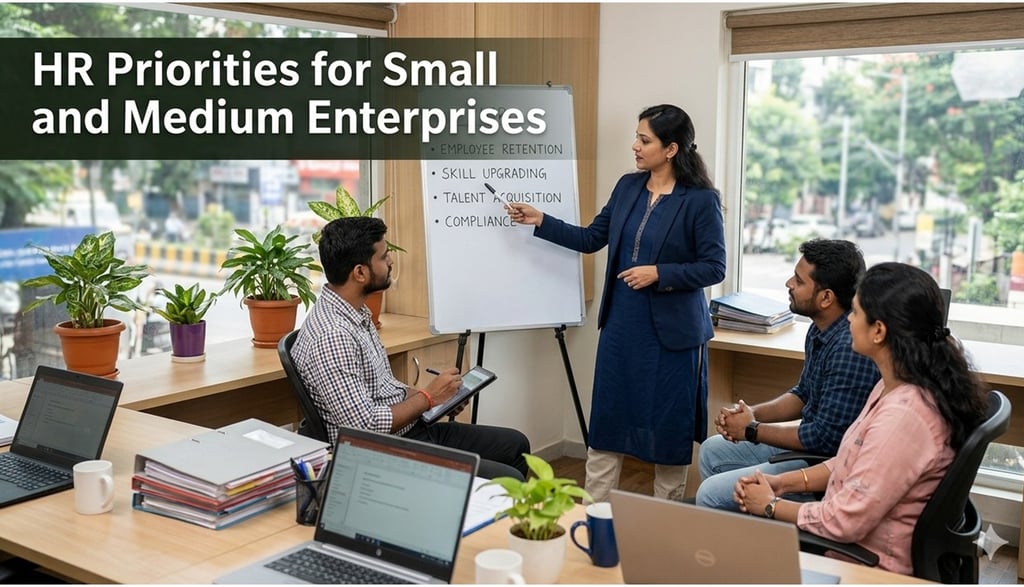
This article outlines key HR priorities for small and medium enterprises, helping HR professionals focus on areas that support operational stability, compliance, and sustainable growth.
Key HR Priorities for SMEs
HR in SMEs should prioritise:
Statutory compliance and documentation
Clear employment terms and communication
Timely payroll processing
Employee grievance handling
These areas directly affect organisational stability and trust.
Managing Trade-Offs Effectively
HR teams must often make trade-offs between:
Speed and structure
Flexibility and consistency
Immediate needs and long-term planning
Being intentional about priorities helps manage expectations.
Supporting Founders and Managers
In SMEs, HR works closely with founders and managers. HR should:
Provide clear guidance on people matters
Highlight compliance risks
Offer practical solutions rather than policies alone
Strong collaboration improves HR effectiveness.
Building HR Maturity Over Time
HR maturity grows gradually through:
Improved documentation
Better process clarity
Increased manager capability
Incremental progress is more sustainable than rapid expansion.
Conclusion
Effective HR management in SMEs depends on clear priorities, practical processes, and strong communication. By focusing on essentials, HR can support both people and business growth effectively.
This article supports HireDesk’s pillar on HR Operations in Small and Medium Enterprises.
Conclusion--
Effective labour law compliance depends on how well HR operations, payroll, and business processes work together. When compliance is embedded into everyday workflows, organisations reduce risk, improve accuracy, and build sustainable governance systems. HR teams that prioritise integration over isolation are better positioned to manage compliance confidently and consistently.
HireDesk India © 2026 | All Rights Reserved
"Thoughtful guidance for everyday HR"


Quick Links
Topics
Connect
_______________________________________________________________________________________________________________________________________________________________________________________
HireDesk is a free HR knowledge platform focused on practical, India-specific workplace guidance. We help HR professionals, managers, and learners navigate people practices with clarity, responsibility, and real-world relevance.