
HR Tech Implementation and Change Management: Ensuring Adoption and Value
HR TECH & ANALYTICS
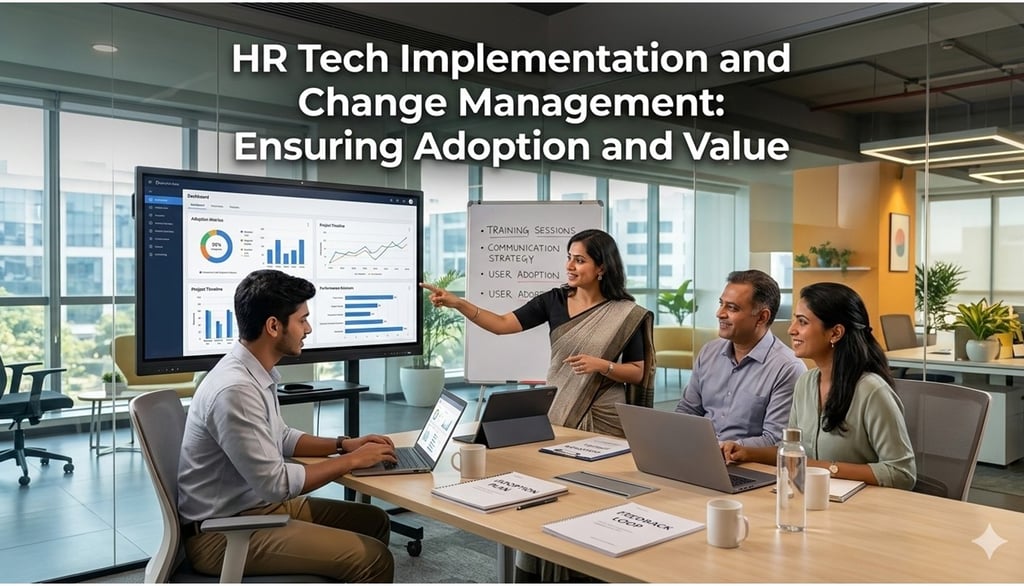
Implementing HR technology is not merely a system rollout; it is an organisational change initiative. Many Indian organisations invest in capable HR platforms but struggle to realise value due to weak implementation planning and poor change management. Technology delivers benefits only when employees, managers, and HR teams adopt it consistently and correctly.
This article focuses on how HR can ensure successful HR technology implementation by combining structured project execution with practical change management.
Why HR Tech Implementations Fail
Common reasons for failure include:
Treating implementation as an IT exercise
Insufficient involvement of HR and business users
Poor communication and training
Inadequate data preparation
Lack of post-go-live support
These issues are organisational, not technical, and therefore require HR leadership.
HR’s Role in Implementation Ownership
HR must act as the process owner throughout implementation. This includes:
Defining workflows and approvals
Validating configurations and rules
Ensuring policy alignment
Championing adoption across levels
When HR abdicates ownership, systems often replicate old inefficiencies in digital form.
Preparing the Organisation for Change
Stakeholder Alignment
Early engagement with leadership, managers, and employees helps clarify expectations and reduce resistance. Stakeholders should understand:
Why the system is being introduced
What will change for them
How it will make work easier
Data Readiness
Data migration is one of the most underestimated tasks. HR must:
Clean legacy data
Standardise formats
Validate accuracy before migration
Poor data undermines trust in the system from day one.
Training and Communication
Training should be role-based rather than generic:
HR administrators need deep functional training
Managers require decision and approval-focused guidance
Employees need simple, task-oriented instructions
Clear communication before and after go-live reinforces confidence and adoption.
Managing the Go-Live Phase
The go-live period determines first impressions. HR should:
Keep support channels active
Address issues quickly
Monitor usage patterns
Reinforce correct behaviours
Small early frustrations, if unresolved, can permanently affect adoption.
Sustaining Adoption Post Implementation
Post go-live efforts should include:
Periodic refresher training
Usage and compliance reviews
Feedback collection
Process and configuration fine-tuning
HR technology maturity grows over time and requires continuous attention.
Measuring Value and Outcomes
HR should evaluate implementation success using:
Adoption and login frequency
Reduction in manual effort
Process turnaround time improvements
Data accuracy and reporting quality
Manager and employee satisfaction
Value is reflected in outcomes, not system uptime.
Conclusion
Successful HR technology implementation depends as much on people management as on technology. In Indian organisations, where work practices and digital comfort levels vary widely, HR-led change management is critical.
By combining disciplined implementation planning with consistent communication, training, and follow-through, HR can ensure that technology investments translate into real organisational value.
Checklist: HR Tech Implementation and Change Management
🗹 Establish HR ownership of process design and configuration.
🗹 Align stakeholders early and set clear expectations.
🗹 Prepare and validate data before migration.
🗹 Develop role-based training programmes.
🗹 Communicate clearly before and after go-live.
🗹 Provide strong support during the initial rollout.
🗹 Monitor adoption and usage patterns.
🗹 Address issues promptly to build confidence.
🗹 Review outcomes against defined success metrics.
🗹 Treat implementation as an ongoing improvement cycle.
Sample Table: HR Tech Implementation Phases and Focus Areas
Conclusion--
Effective labour law compliance depends on how well HR operations, payroll, and business processes work together. When compliance is embedded into everyday workflows, organisations reduce risk, improve accuracy, and build sustainable governance systems. HR teams that prioritise integration over isolation are better positioned to manage compliance confidently and consistently.
HireDesk India © 2026 | All Rights Reserved
"Thoughtful guidance for everyday HR"


Quick Links
Topics
Connect
_______________________________________________________________________________________________________________________________________________________________________________________
HireDesk is a free HR knowledge platform focused on practical, India-specific workplace guidance. We help HR professionals, managers, and learners navigate people practices with clarity, responsibility, and real-world relevance.