
HR Technology and People Analytics in India: Concepts, Applications and the Role of HR
HR TECH & ANALYTICS
Introduction
Technology has become an integral part of modern HR management. As organisations grow, workforce processes become more complex, employee expectations evolve, compliance requirements increase, and business leaders seek better workforce visibility and decision-making support. HR technology and people analytics help organisations manage these challenges more effectively through improved efficiency, data management, automation, and workforce insights.
In Indian workplaces, HR teams increasingly rely on technology to support recruitment, onboarding, attendance management, payroll processing, performance management, employee communication, learning initiatives, workforce planning, and compliance administration.
At the same time, HR technology is not simply about software implementation. Technology delivers value only when it supports practical business needs, improves employee experiences, strengthens workforce processes, and enables better decision-making.
People analytics extends this capability further by helping organisations understand workforce trends, identify risks, monitor outcomes, and make more informed HR decisions using data.
This article provides a practical overview of HR technology and people analytics in the Indian context — covering HR systems, automation, workforce data, analytics applications, implementation considerations, common challenges, and the role of HR in building technology-enabled people practices.
The objective is not to promote technology adoption for its own sake, but to help organisations understand how HR technology and analytics can support better workforce management and organisational effectiveness.
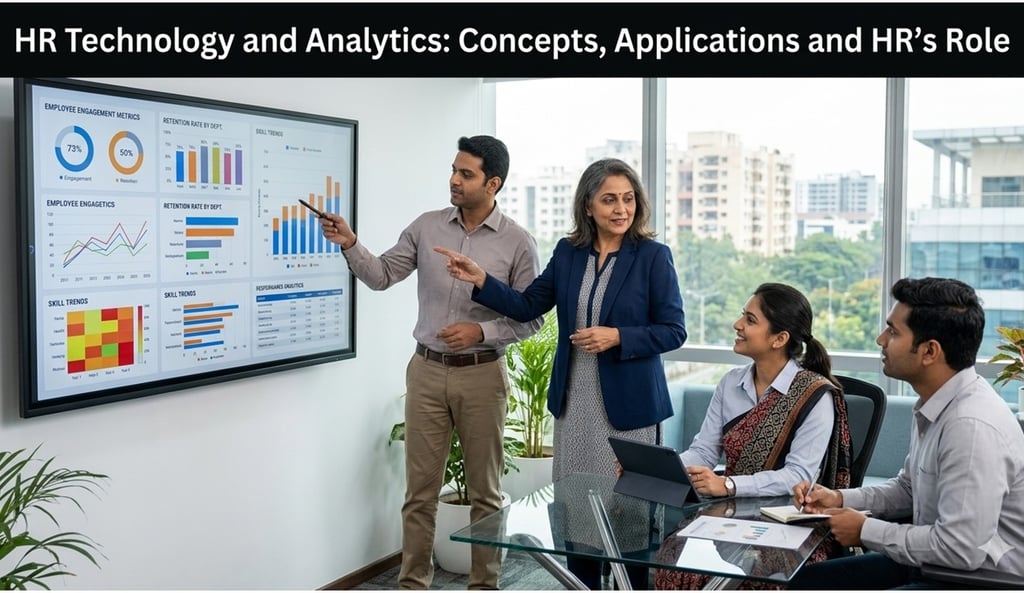
Understanding HR Technology and People Analytics
HR technology refers to the systems, platforms, tools, and digital solutions used to support HR processes and workforce management activities.
These technologies may assist organisations in:
maintaining employee records
managing recruitment processes
processing payroll
tracking attendance
administering employee benefits
managing performance systems
supporting learning initiatives
facilitating employee communication
generating workforce reports
People analytics refers to the collection, analysis, interpretation, and use of workforce-related data to support decision-making and organisational planning.
Together, HR technology and analytics help organisations:
improve efficiency
strengthen workforce visibility
reduce administrative workload
support compliance
improve reporting accuracy
enable data-driven decision-making
__________________________________________________________________________________________________
Why HR Technology Matters in Indian Organisations
Indian organisations often operate in environments characterised by:
workforce growth
geographic expansion
compliance requirements
hybrid work arrangements
multiple workforce categories
increasing employee expectations
productivity pressures
Manual HR processes may become difficult to manage as organisations grow.
Technology helps organisations:
reduce repetitive administrative work
improve data accuracy
streamline workflows
improve employee access to information
strengthen workforce record management
improve operational consistency
However, technology should support HR effectiveness rather than replace sound HR practices and professional judgment.
__________________________________________________________________________________________________
Key Areas of HR Technology Application
HR technology supports multiple aspects of workforce management.
1. Human Resource Information Systems (HRIS)
HRIS platforms help organisations manage:
employee records
personal information
organisational structures
workforce documentation
employee lifecycle data
A well-maintained HRIS often serves as the foundation for other HR systems and processes.
2. Recruitment and Applicant Tracking Systems
Technology can support recruitment through:
job posting management
candidate applications
applicant tracking
interview coordination
hiring workflow management
recruitment reporting
Recruitment technology helps organisations improve hiring process visibility and candidate management efficiency.
3. Attendance and Leave Management Systems
Attendance technologies may support:
attendance tracking
shift scheduling
leave administration
overtime management
workforce availability monitoring
Such systems are particularly important in manufacturing, retail, logistics, healthcare, and shift-based environments.
4. Payroll and Benefits Administration
Payroll technologies help organisations manage:
salary processing
statutory deductions
tax calculations
employee benefits
payroll reporting
compliance-related records
Automation can reduce payroll errors while improving processing efficiency.
5. Performance Management Systems
Performance-related technologies may support:
goal management
appraisal workflows
feedback processes
development planning
performance tracking
Technology can improve process consistency, although meaningful performance discussions still depend on managers and leadership teams.
6. Learning and Development Platforms
Learning technologies may assist organisations in:
delivering training programmes
tracking learning completion
managing certifications
supporting skill development
facilitating self-learning
These systems help organisations strengthen workforce capability and learning accessibility.
7. Employee Self-Service and Communication Platforms
Many organisations use technology to provide employees with access to:
payslips
leave applications
attendance records
policy documents
benefit information
internal communications
Self-service systems improve employee convenience while reducing administrative workload.
__________________________________________________________________________________________________
Understanding People Analytics
People analytics focuses on using workforce data to understand organisational patterns and support decision-making.
Examples of workforce data may include:
headcount trends
attrition patterns
absenteeism rates
recruitment outcomes
training participation
performance data
employee engagement indicators
Analytics can help organisations move beyond assumptions and make more informed workforce decisions.
However, data should be interpreted carefully and within the context of organisational realities.
__________________________________________________________________________________________________
Common Applications of People Analytics
People analytics may support:
Workforce Planning
manpower forecasting
workforce availability analysis
staffing trend identification
Recruitment Analysis
hiring effectiveness
source performance
recruitment timelines
candidate conversion rates
Employee Retention
attrition analysis
turnover patterns
workforce stability indicators
Learning and Development
training effectiveness
skill gap identification
learning participation tracking
Employee Experience
engagement trends
feedback analysis
workplace sentiment indicators
Productivity and Performance
workforce productivity measures
performance trends
operational workforce insights
Analytics becomes most useful when linked to practical business questions and workforce challenges.
__________________________________________________________________________________________________
HR Technology in Indian Organisations
Technology adoption varies significantly depending on:
organisation size
industry
workforce composition
operational complexity
budget availability
digital maturity
For example:
startups may use simpler cloud-based HR platforms
factories may prioritise attendance and workforce tracking systems
service organisations may focus on employee experience platforms
large enterprises may operate integrated HR technology ecosystems
There is no single technology solution suitable for every organisation.
Technology decisions should align with actual workforce and business requirements.
__________________________________________________________________________________________________
Common HR Technology Challenges
Many organisations encounter challenges such as:
poor system adoption
inaccurate employee data
fragmented systems
implementation delays
inadequate training
excessive dependence on manual workarounds
reporting inconsistencies
employee resistance to change
technology investments without clear business purpose
Technology alone rarely solves HR problems. Effective implementation requires process discipline, user adoption, and organisational support.
__________________________________________________________________________________________________
Data Privacy, Ethics and Responsible Use
As workforce data becomes increasingly accessible, organisations must handle employee information responsibly.
Important considerations include:
data accuracy
confidentiality
appropriate access controls
compliance with legal requirements
ethical use of employee information
responsible reporting practices
Trust is an essential component of technology-enabled HR systems.
Employees should feel confident that workforce information is managed responsibly and professionally.
__________________________________________________________________________________________________
The Role of HR in Technology and Analytics
HR plays an important role in ensuring that technology supports people and business objectives.
Key responsibilities may include:
identifying business requirements
supporting system implementation
maintaining workforce data quality
improving process adoption
interpreting workforce insights
facilitating manager usage
supporting employee communication
ensuring responsible data practices
HR should act not merely as a system administrator, but as a bridge between technology, workforce needs, and organisational goals.
__________________________________________________________________________________________________
Building Sustainable HR Technology Practices
Organisations benefit from:
reliable workforce data
clear process ownership
practical system selection
employee training
manager adoption
reporting consistency
periodic system review
data governance practices
continuous improvement approaches
Technology investments generally create greater value when supported by strong HR processes and organisational discipline.
__________________________________________________________________________________________________
Technology Should Enable Better HR Decisions
Technology and analytics are most effective when they help organisations improve workforce understanding, simplify processes, strengthen compliance, and support better decision-making.
In Indian workplaces, HR technology initiatives generally succeed when they remain:
practical
employee-focused
business-aligned
data-informed
operationally realistic
supported by strong processes
The goal of HR technology is not digitalisation for its own sake, but creating systems that help organisations manage people more effectively and responsibly.
__________________________________________________________________________________________________
Explore Related Topics and Guides
Several related articles within the HR Technology & Analytics section explore HR software systems, HRIS implementation, recruitment technology, attendance management, payroll automation, people analytics, workforce dashboards, employee self-service platforms, HR reporting, data governance, and digital HR transformation through more specific workplace situations and practical HR perspectives.
Together, these resources aim to help organisations use technology and workforce data in ways that improve efficiency, support decision-making, strengthen compliance, and enhance workforce management practices.
__________________________________________________________________________________________________
Sample View: HR Tech Applications Across HR Functions
Conclusion
HR technology and people analytics have become important enablers of modern workforce management. When implemented thoughtfully, they help organisations improve efficiency, strengthen workforce visibility, support compliance, and make better-informed people decisions.
In Indian organisations, technology is increasingly influencing recruitment, attendance management, payroll, performance systems, employee communication, learning initiatives, and workforce planning. At the same time, successful HR technology adoption depends as much on people, processes, and organisational discipline as it does on software and systems.
There is no single technology model suitable for every organisation. However, organisations generally achieve better outcomes when HR technology practices remain:
practical
data-informed
employee-focused
operationally aligned
responsibly managed
linked to genuine business needs
As organisations continue to evolve, HR technology and analytics should increasingly be viewed not merely as administrative tools, but as important contributors to workforce effectiveness, organisational capability, and informed decision-making.
Related Articles
HireDesk India © 2026 | All Rights Reserved
"Thoughtful guidance for everyday HR"


Quick Links
Topics
Connect
_______________________________________________________________________________________________________________________________________________________________________________________
HireDesk is a free HR knowledge platform focused on practical, India-specific workplace guidance. We help HR professionals, managers, and learners navigate people practices with clarity, responsibility, and real-world relevance.