
HR Technology Vendor Selection: What HR Should Evaluate Before Buying
HR TECH & ANALYTICS
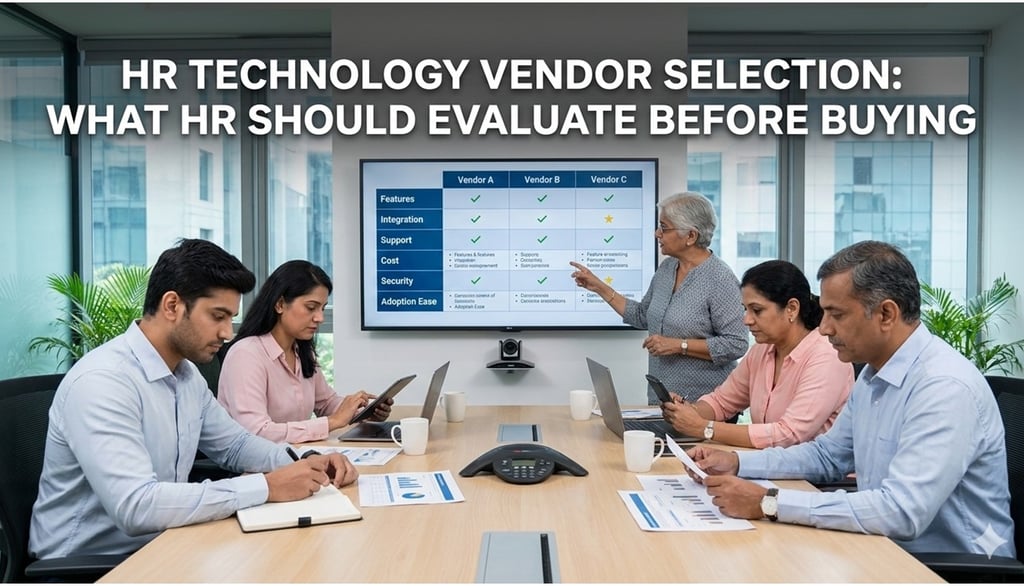
Selecting an HR technology vendor is a critical decision for Indian organisations. Once implemented, HR systems often remain in place for several years and influence day-to-day operations, compliance, employee experience, and decision-making. A poor choice can lead to low adoption, process inefficiencies, and recurring costs, while a well-chosen system can significantly strengthen HR effectiveness.
HR technology buying should not be driven by features alone. It requires a clear understanding of organisational needs, long-term scalability, and practical usability. This article outlines what HR teams should evaluate before selecting an HR technology vendor.
Why HR Must Lead the Vendor Selection Process
While IT and procurement play important roles, HR must lead the evaluation because:
HR understands process realities and pain points
HR is accountable for user adoption and data accuracy
HR ensures alignment with people policies and practices
When HR ownership is weak, organisations risk buying tools that look impressive but fail in daily usage.
Clarifying Requirements Before Engaging Vendors
Before speaking to vendors, HR should define:
Core HR processes that need improvement
Problems the technology is expected to solve
User groups (HR, managers, employees) and their needs
Reporting, analytics, and compliance requirements
Budget constraints and internal capability
Clear requirements prevent scope creep and unrealistic expectations.
Key Evaluation Areas for HR Technology Vendors
Functional Fit
The system should support required HR processes without excessive customisation. Over-customisation increases cost and implementation risk.
Usability and Adoption
A good HR system should be intuitive for employees and managers. Poor user experience directly affects data quality and adoption.
Scalability and Flexibility
Indian organisations often grow or restructure rapidly. The system should support:
Increase in headcount
Multi-location operations
Policy and process changes
Integration Capabilities
The solution should integrate smoothly with:
Payroll and statutory systems
Performance and learning platforms
Existing enterprise systems
Disconnected systems lead to duplication and errors.
Data Security and Compliance
HR must evaluate:
Data storage and access controls
Compliance with Indian data protection requirements
Audit trails and role-based permissions
Data protection is not negotiable.
Vendor Stability and Support
Assess the vendor’s:
Market presence and client base
Support structure and response timelines
Implementation and post-go-live support
Strong support is often more valuable than advanced features.
Avoiding Common Pitfalls
HR teams should be cautious of:
Overpromising during demos
Buying features without clear use cases
Ignoring internal readiness and change management
Treating implementation as purely technical
A structured evaluation reduces these risks.
Measuring Vendor Success Post-Implementation
After go-live, HR should review:
User adoption and satisfaction
Process efficiency improvements
Accuracy and reliability of data
Responsiveness of vendor support
Vendor evaluation does not end at purchase—it continues throughout usage.
Conclusion
Choosing the right HR technology vendor is a strategic HR decision, not a procurement exercise alone. Indian HR teams must balance functionality, usability, scalability, and ethics while ensuring the solution fits organisational realities.
By following a disciplined evaluation approach, HR can select vendors that genuinely support people processes, strengthen compliance, and enhance decision-making.
Checklist: HR Technology Vendor Selection
🗹 Clearly define HR process requirements before engaging vendors.
🗹 Involve HR, IT, and key stakeholders in evaluation discussions.
🗹 Assess functional fit against actual HR workflows.
🗹 Evaluate ease of use for employees and managers.
🗹 Review scalability for future growth and changes.
🗹 Check integration capability with existing systems.
🗹 Verify data security, privacy, and compliance measures.
🗹 Assess vendor stability, support quality, and references.
🗹 Plan for implementation effort and change management.
🗹 Review vendor performance periodically after implementation.
Sample Table: HR Technology Vendor Evaluation Criteria
Conclusion--
Effective labour law compliance depends on how well HR operations, payroll, and business processes work together. When compliance is embedded into everyday workflows, organisations reduce risk, improve accuracy, and build sustainable governance systems. HR teams that prioritise integration over isolation are better positioned to manage compliance confidently and consistently.
HireDesk India © 2026 | All Rights Reserved
"Thoughtful guidance for everyday HR"


Quick Links
Topics
Connect
_______________________________________________________________________________________________________________________________________________________________________________________
HireDesk is a free HR knowledge platform focused on practical, India-specific workplace guidance. We help HR professionals, managers, and learners navigate people practices with clarity, responsibility, and real-world relevance.