HR’s Role in Capability Building
PERFORMANCE & DEVELOPMENT
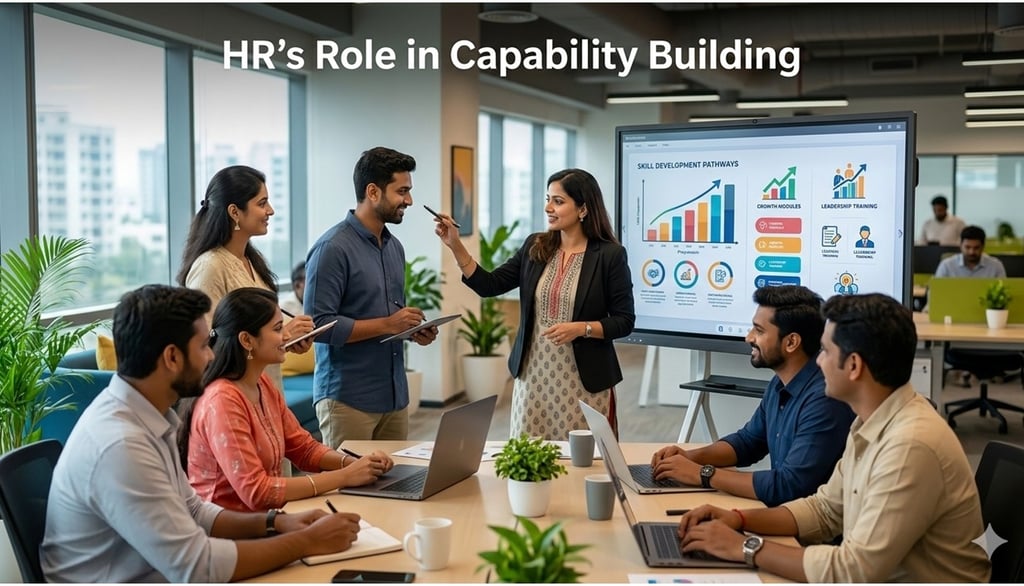
Capability building focuses on developing the skills, behaviours, and competencies an organisation needs to perform effectively today and remain competitive in the future. Unlike isolated training programs, capability building is a long-term, strategic effort that connects performance, learning, and workforce planning.
HR plays a central role in shaping, coordinating, and sustaining capability-building initiatives across the organisation.
What Capability Building Means in Practice
Capability building goes beyond individual skill development. It involves:
Developing role-critical and future-ready skills
Strengthening leadership and managerial effectiveness
Creating systems that support continuous learning
Aligning people capability with business strategy
Effective capability building ensures that organisations can adapt to change, scale operations, and manage evolving skill requirements.
Why HR’s Role Is Critical
Strategic alignment: HR links capability priorities to business goals
Consistency: Ensures structured and fair development across teams
Sustainability: Moves learning from one-time events to ongoing practice
Measurement: Tracks progress and outcomes over time
Without HR involvement, capability initiatives often remain fragmented, short-term, or disconnected from performance needs.
Key Responsibilities of HR in Capability Building
1. Identifying Critical Capabilities
Analyse business strategy and future workforce requirements.
Identify skills and competencies critical to organisational success.
Prioritise capabilities that have the highest impact on performance.
2. Integrating Capability Building with Performance Management
Use performance data to identify capability gaps.
Align development initiatives with appraisal outcomes and feedback.
Ensure development plans are realistic and role-relevant.
3. Designing Structured Development Frameworks
Create competency frameworks and learning pathways.
Define skill progression levels for key roles.
Ensure clarity on expectations and development standards.
4. Enabling Managers as Capability Builders
Equip managers to coach, mentor, and develop their teams.
Provide tools and guidance for development conversations.
Encourage learning through real work assignments.
5. Monitoring and Evaluating Progress
Track capability growth using defined metrics.
Review effectiveness of learning and development initiatives.
Refine strategies based on outcomes and evolving business needs.
Sample View: HR-Led Capability Building Framework
Checklist: HR’s Role in Capability Building
☐ Identify skills critical to current and future business needs
☐ Use performance data to prioritise capability gaps
☐ Create structured development frameworks and pathways
☐ Enable managers to act as coaches and mentors
☐ Monitor capability progress and refine initiatives regularly
Common Pitfalls to Avoid
Treating capability building as a one-time training initiative
Focusing only on technical skills and ignoring behavioural capabilities
Lack of manager involvement in development efforts
Failing to track progress or measure impact
Role of Managers in Capability Building
Reinforce learning through real work and feedback
Support employees in applying new skills
Identify emerging capability needs within teams
Partner with HR to sustain development efforts
Key Takeaway
Capability building is a strategic, ongoing process, not a standalone HR activity. By integrating performance data, structured development frameworks, and manager involvement, HR plays a critical role in building a workforce that is resilient, adaptable, and future-ready.
Conclusion--
Effective labour law compliance depends on how well HR operations, payroll, and business processes work together. When compliance is embedded into everyday workflows, organisations reduce risk, improve accuracy, and build sustainable governance systems. HR teams that prioritise integration over isolation are better positioned to manage compliance confidently and consistently.
HireDesk India © 2026 | All Rights Reserved
"Thoughtful guidance for everyday HR"


Quick Links
Topics
Connect
_______________________________________________________________________________________________________________________________________________________________________________________
HireDesk is a free HR knowledge platform focused on practical, India-specific workplace guidance. We help HR professionals, managers, and learners navigate people practices with clarity, responsibility, and real-world relevance.