
HR’s Role in Capacity Planning
WORKFORCE PLANNING & MANPOWER
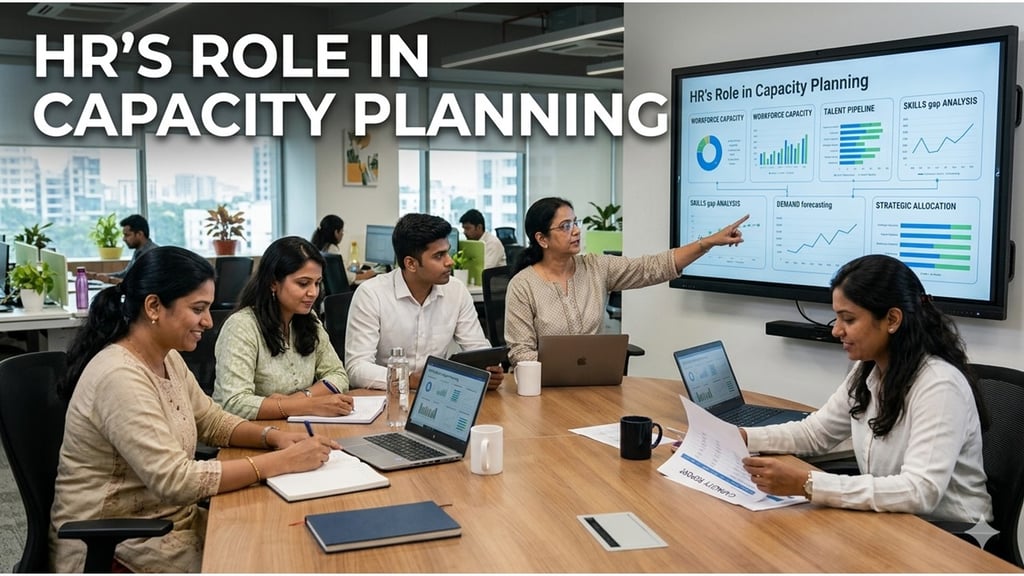

Capacity planning ensures that the organisation has sufficient workforce to meet operational and strategic demands. HR plays a critical role in this process by evaluating current capacity, forecasting future needs, and implementing strategies to balance workforce supply and demand.
Effective capacity planning helps avoid overstaffing, understaffing, and productivity bottlenecks, while supporting business growth.
What Is Capacity Planning?
Capacity planning is the process of assessing current workforce capability, predicting future requirements, and ensuring resources are available when needed. It involves both quantitative and qualitative assessment of manpower to meet organisational objectives.
Key elements include:
Current workforce availability and utilisation
Future headcount and skills required
Workload forecasting
Alignment with business priorities
HR Responsibilities in Capacity Planning
1. Workforce Assessment
HR evaluates existing manpower, skills, and productivity to determine capacity constraints or surpluses.
2. Forecasting Demand and Supply
HR provides inputs on future workforce requirements based on business plans, growth projections, and project schedules.
3. Gap Analysis
HR identifies areas where capacity is insufficient or excessive and recommends corrective actions.
4. Planning Workforce Adjustments
HR develops strategies such as recruitment, redeployment, internal mobility, training, or temporary staffing to address capacity gaps.
5. Monitoring and Reporting
Regular tracking of workforce utilisation, vacancies, and project requirements ensures alignment with organisational goals.
Light Checklist: HR’s Role in Capacity Planning
☐ Current workforce availability and utilisation reviewed
☐ Future workforce requirements forecasted
☐ Capacity gaps identified and analysed
☐ Recruitment, training, and redeployment plans developed
☐ Workforce capacity monitored and adjusted periodically
Sample Table: HR Role in Capacity Planning
Common Challenges
Incomplete or outdated workforce data
Lack of integration with business plans or project schedules
Reactive adjustments rather than proactive planning
Insufficient focus on skill development and internal mobility
Addressing these challenges strengthens HR’s contribution to organisational readiness and efficiency.
Conclusion
HR plays a central role in capacity planning, ensuring the organisation has the right people with the right skills at the right time. By assessing current capacity, forecasting future requirements, identifying gaps, and implementing corrective actions, HR supports both operational continuity and strategic growth.
Effective HR-led capacity planning reduces risks associated with overstaffing, understaffing, and skill shortages, contributing to overall organisational agility.
Conclusion--
Effective labour law compliance depends on how well HR operations, payroll, and business processes work together. When compliance is embedded into everyday workflows, organisations reduce risk, improve accuracy, and build sustainable governance systems. HR teams that prioritise integration over isolation are better positioned to manage compliance confidently and consistently.
HireDesk India © 2026 | All Rights Reserved
"Thoughtful guidance for everyday HR"


Quick Links
Topics
Connect
_______________________________________________________________________________________________________________________________________________________________________________________
HireDesk is a free HR knowledge platform focused on practical, India-specific workplace guidance. We help HR professionals, managers, and learners navigate people practices with clarity, responsibility, and real-world relevance.