
HR’s Role in Shaping Manager Mindsets: From Task Supervisors to People Leaders
EMPLOYEE EXPERIENCE & CULTURE
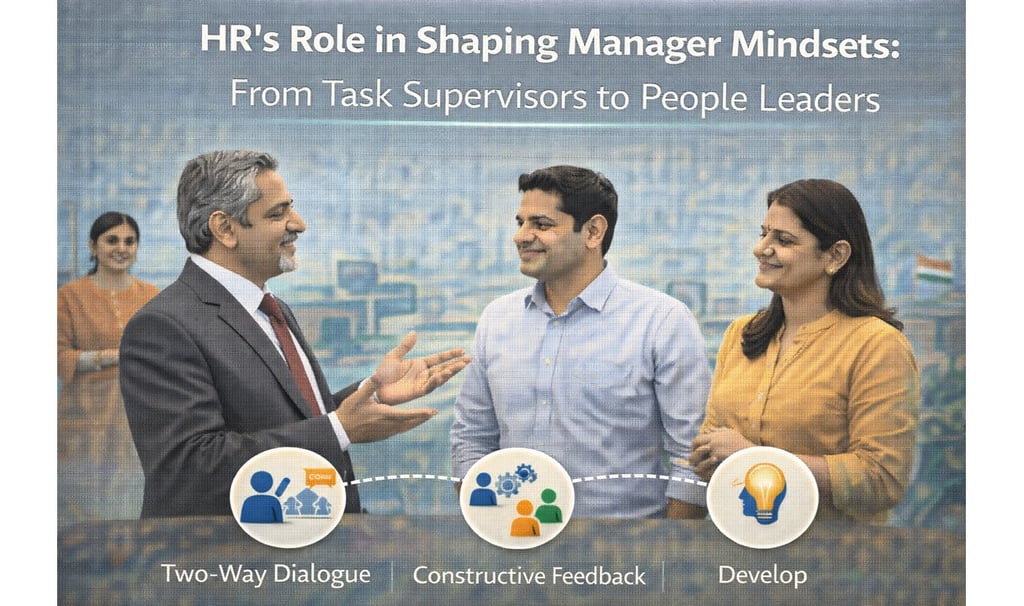
In many Indian organisations, managers are promoted for technical competence or tenure, not for people leadership capability. As a result, teams are often supervised for task completion rather than supported for growth and engagement.
HR plays a critical role in helping managers shift from being task supervisors to effective people leaders. This article explores how HR can shape manager mindsets in a practical, sustainable way.
Why Manager Mindsets Matter to Employee Experience
Employees experience the organisation largely through their managers. Manager behaviour influences:
Engagement and motivation
Psychological safety
Retention and performance
Trust in leadership and HR
Even the best HR policies fail if managers apply them mechanically or inconsistently.
Common Manager Behaviour Patterns in Indian Workplaces
HR professionals often observe:
Focus on deadlines over development
Discomfort with feedback conversations
Reliance on authority rather than influence
Limited accountability for people outcomes
These behaviours are usually learned, not intentional.
HR’s Levers for Shaping Manager Behaviour
HR can influence manager mindsets through:
Clear expectations of people leadership responsibilities
Practical manager training focused on real scenarios
Coaching and ongoing guidance, not one-time workshops
Linking people behaviour to performance outcomes
Change happens through reinforcement, not instruction alone.
Building People Leadership Skills Over Time
Effective HR teams:
Introduce simple, repeatable people practices
Equip managers with conversation frameworks
Encourage reflection through feedback and data
Address poor people behaviour early and fairly
Progress is gradual and requires consistency.
Holding Managers Accountable Without Creating Fear
Accountability improves when HR:
Sets measurable people leadership expectations
Uses feedback from multiple sources
Supports improvement before escalation
Applies consequences consistently
The aim is capability-building, not punishment.
Conclusion
Shifting manager mindsets is one of HR’s most impactful responsibilities. When managers grow into people leaders, employee experience improves organically across the organisation.
HR’s success lies not in control, but in enabling managers to lead with clarity, empathy, and accountability.
HR Checklist: Developing Managers into People Leaders
🗹 Define people leadership expectations clearly
🗹 Train managers using real workplace scenarios
🗹 Provide ongoing coaching and guidance
🗹 Encourage regular feedback conversations
🗹 Link people behaviour to performance outcomes
🗹 Address poor management practices early
🗹 Support managers through transition phases
🗹 Measure people leadership effectiveness
🗹 Reinforce accountability consistently
Manager Mindset Shift and HR Interventions
Conclusion--
Effective labour law compliance depends on how well HR operations, payroll, and business processes work together. When compliance is embedded into everyday workflows, organisations reduce risk, improve accuracy, and build sustainable governance systems. HR teams that prioritise integration over isolation are better positioned to manage compliance confidently and consistently.
HireDesk India © 2026 | All Rights Reserved
"Thoughtful guidance for everyday HR"


Quick Links
Topics
Connect
_______________________________________________________________________________________________________________________________________________________________________________________
HireDesk is a free HR knowledge platform focused on practical, India-specific workplace guidance. We help HR professionals, managers, and learners navigate people practices with clarity, responsibility, and real-world relevance.