
Identifying Skill Gaps Through Performance Data
PERFORMANCE & DEVELOPMENT
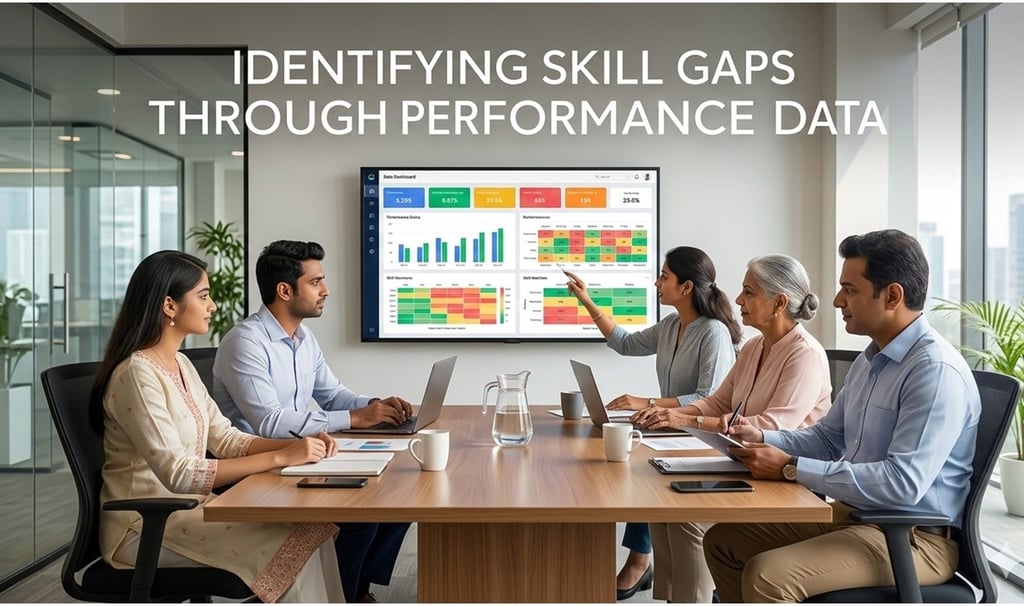
Understanding employee skill gaps is essential for effective workforce development. Performance data — when collected and analysed systematically — provides actionable insights to identify areas where employees need support, training, or coaching.
Skill gap identification allows HR and managers to make targeted learning investments, align resources with organisational goals, and enhance overall team capability.
Why Identifying Skill Gaps Matters
Supports learning and development: Enables creation of targeted training programs.
Improves productivity: Employees can focus on areas that impact performance most.
Enhances succession planning: Highlights readiness for future roles.
Drives fair appraisals: Differentiates performance issues caused by skill gaps versus other factors.
Without structured skill analysis, organisations risk misaligned training, underdeveloped talent, and performance inconsistencies.
Key Steps in Identifying Skill Gaps
1. Collect Relevant Performance Data
Review appraisal ratings, project outcomes, and feedback.
Include 360-degree feedback, peer reviews, and client inputs where applicable.
Track key KPIs tied to role expectations.
2. Compare Performance Against Role Requirements
Map actual skills against job competencies and role expectations.
Highlight areas where employees fall short of desired proficiency.
Use competency matrices to visualise skill levels.
3. Analyse Patterns Across Teams
Identify recurring gaps affecting multiple employees.
Determine whether gaps are role-specific, departmental, or organisational.
Consider external factors impacting performance, such as process inefficiencies.
4. Prioritise Gaps for Development
Focus on skills critical to business goals and operational success.
Categorise gaps into immediate, medium-term, and long-term priorities.
Align learning resources and coaching efforts accordingly.
5. Integrate Findings with Learning and Performance Plans
Feed skill gap data into individual development plans (IDPs).
Incorporate insights into training schedules and succession planning.
Use data-driven targets to track progress over time.
Sample View: Identifying Skill Gaps Using Performance Data
Checklist: Using Performance Data to Identify Skill Gaps
☐ Collect comprehensive performance data from multiple sources
☐ Map current skills against role requirements
☐ Analyse patterns across teams and departments
☐ Prioritise critical skill gaps aligned with business goals
☐ Feed insights into development plans, training, and succession strategies
Common Pitfalls to Avoid
Focusing only on low performers and ignoring high-potential employees
Relying on a single data source for assessment
Overlooking external or systemic factors affecting performance
Treating skill gaps in isolation without linking to business outcomes
Role of HR and Managers
HR designs tools, templates, and processes for skill analysis.
Managers provide context, validate observations, and coach employees.
Both collaborate to ensure that skill development aligns with organisational goals and individual career growth.
Key Takeaway
Using performance data to identify skill gaps allows organisations to make informed learning investments, improve productivity, and prepare employees for future roles. Systematic, evidence-based analysis ensures fairness, clarity, and measurable outcomes.
Conclusion--
Effective labour law compliance depends on how well HR operations, payroll, and business processes work together. When compliance is embedded into everyday workflows, organisations reduce risk, improve accuracy, and build sustainable governance systems. HR teams that prioritise integration over isolation are better positioned to manage compliance confidently and consistently.
HireDesk India © 2026 | All Rights Reserved
"Thoughtful guidance for everyday HR"


Quick Links
Topics
Connect
_______________________________________________________________________________________________________________________________________________________________________________________
HireDesk is a free HR knowledge platform focused on practical, India-specific workplace guidance. We help HR professionals, managers, and learners navigate people practices with clarity, responsibility, and real-world relevance.