
Industrial Disputes and Strikes in Factories: HR Preparedness and Response
INDUSTRIAL RELATIONS & FACTORY HR
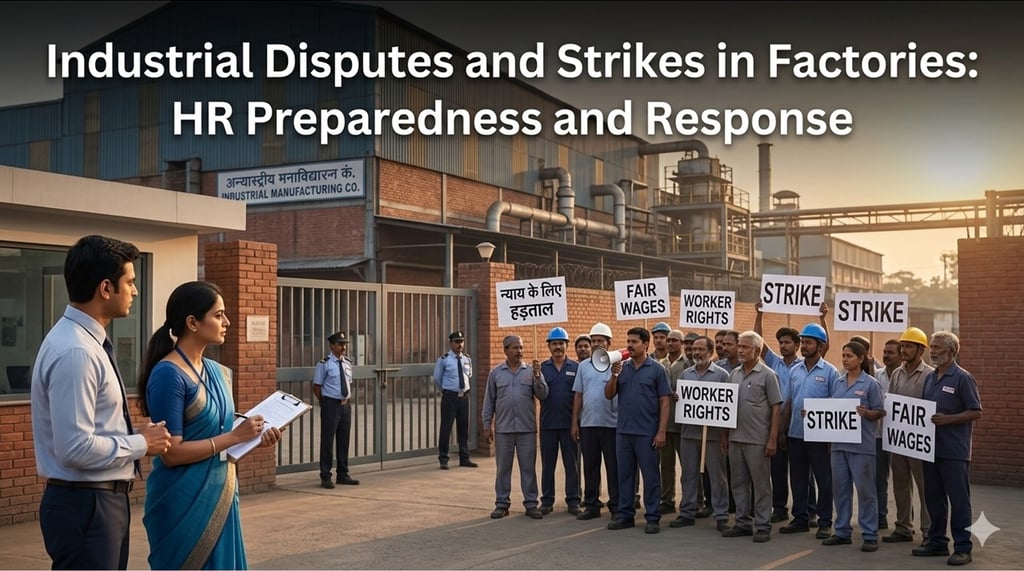
Industrial disputes and strikes are among the most sensitive challenges faced by factories in India. While disputes are a legitimate part of industrial relations, poor handling can quickly escalate into work stoppages, legal exposure, and long-term damage to trust.
For Factory HR teams, preparedness matters more than reaction. Disputes rarely arise overnight—they usually build up due to unresolved grievances, communication gaps, or perceived unfairness. HR’s role is to anticipate, manage, and resolve disputes within the legal framework while maintaining workplace discipline and continuity.
This article explains how HR must prepare for, respond to, and manage industrial disputes and strikes in Indian factories.
Legal Framework Governing Industrial Disputes
Key laws governing disputes and strikes include:
Industrial Disputes Act, 1947
Industrial Relations Code, 2020
State-specific labour rules and notifications
These laws define what constitutes an industrial dispute, lawful and unlawful strikes, lockouts, conciliation procedures, and penalties.
HR must understand that procedural lapses often matter more than intent during dispute handling.
Common Causes of Industrial Disputes in Factories
Disputes in factories typically arise from:
Wage revisions and allowances
Working hours and overtime practices
Disciplinary actions and suspensions
Contract labour issues
Welfare and safety concerns
Perceived management bias or delay
Early identification of these triggers helps HR prevent escalation.
HR Preparedness Before a Dispute Escalates
Proactive HR measures include:
Functional grievance redressal mechanisms
Regular engagement with worker representatives
Clear communication on policies and changes
Timely resolution of minor issues
Proper documentation of discussions and decisions
Factories with strong preventive systems face fewer strikes.
Handling Strikes and Work Stoppages
When a strike occurs or is threatened, HR must:
Verify legality and notice requirements
Inform senior management immediately
Engage conciliation machinery promptly
Maintain calm communication with workers
Document events and decisions carefully
HR must avoid emotional reactions and ensure all actions remain legally defensible.
Role of Conciliation and Government Authorities
Conciliation officers play a critical role during disputes. HR must:
Cooperate fully with conciliation proceedings
Present accurate records and facts
Avoid unilateral actions during conciliation
Explore negotiated settlements in good faith
Ignoring conciliation processes can weaken the organisation’s legal position.
Post-Dispute Stabilisation
After a dispute is resolved, HR must:
Communicate settlement terms clearly
Monitor implementation closely
Rebuild trust through engagement
Address root causes to prevent recurrence
Closure is as important as resolution.
Conclusion
Industrial disputes and strikes require preparedness, legal awareness, and emotional maturity from HR. Effective handling protects business continuity while respecting workers’ rights.
Factories that invest in strong grievance systems, transparent communication, and disciplined response mechanisms manage disputes with minimal disruption.
🗹 Factory HR Checklist: Dispute and Strike Management
🗹 Maintain functional grievance redressal systems
🗹 Track early warning signs of unrest
🗹 Understand legality of strikes and notices
🗹 Engage conciliation authorities promptly
🗹 Document all discussions and actions
🗹 Communicate calmly during disputes
🗹 Implement settlements without delay
🗹 Review root causes post-resolution
Industrial Disputes & Strikes – HR Reference Table
Conclusion--
Effective labour law compliance depends on how well HR operations, payroll, and business processes work together. When compliance is embedded into everyday workflows, organisations reduce risk, improve accuracy, and build sustainable governance systems. HR teams that prioritise integration over isolation are better positioned to manage compliance confidently and consistently.
HireDesk India © 2026 | All Rights Reserved
"Thoughtful guidance for everyday HR"


Quick Links
Topics
Connect
_______________________________________________________________________________________________________________________________________________________________________________________
HireDesk is a free HR knowledge platform focused on practical, India-specific workplace guidance. We help HR professionals, managers, and learners navigate people practices with clarity, responsibility, and real-world relevance.