Integrating L&D Platforms with Performance Management: A Practical HR Perspective
HR TECH & ANALYTICS
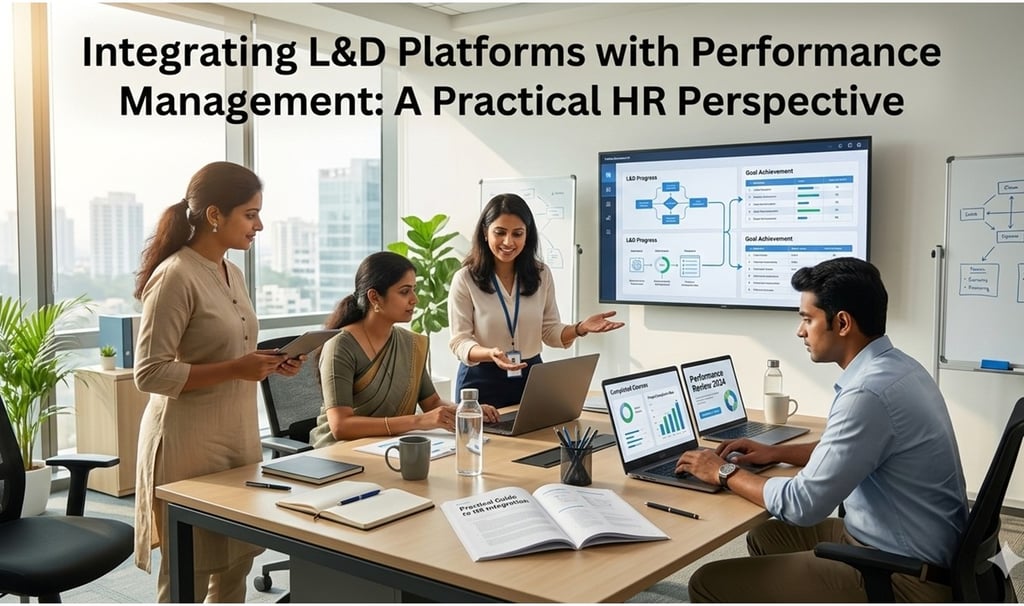
In modern Indian organisations, Learning and Development (L&D) is no longer an isolated HR activity. Linking L&D platforms with performance management systems ensures that employee learning directly contributes to capability development, career growth, and business outcomes.
Integration of these systems helps HR monitor skill gaps, track learning impact on performance, and ensure that development initiatives are purposeful rather than transactional.
Why Integration Matters
1. Align Learning with Organisational Goals
When learning platforms are linked with performance management:
Employees receive training recommendations aligned with their role and performance ratings.
Managers can assign targeted development programmes based on appraisal outcomes.
Organisations can ensure learning initiatives support strategic business priorities.
2. Improved Tracking and Accountability
Integration allows HR to:
Track completion of training programmes in the context of performance goals.
Evaluate whether learning interventions have improved skills, productivity, or behavioural competencies.
Generate real-time insights for decision-making without manual reconciliations.
3. Enhance Employee Engagement
Employees benefit when learning is connected to their performance and career path:
Training is perceived as relevant, increasing participation and completion.
Clear links between learning and promotions, bonuses, or internal mobility motivate employees.
Personalized development paths reinforce a culture of continuous growth.
Key Considerations for Indian HR Teams
Data Accuracy and Standardisation
Ensure employee performance data is reliable.
Maintain consistent records across performance and L&D platforms.
Role-Based Learning Recommendations
Training assignments should reflect both current performance gaps and future career aspirations.
User-Friendly Experience
The integration should be seamless: employees and managers should easily access both systems from a single interface where possible.
Analytics and Insights
HR can combine learning and performance data to identify trends such as skill improvement, completion rates, and impact on appraisal ratings.
Change Management
Introduce the integration gradually, communicate benefits clearly, and provide guidance to managers and employees to maximise adoption.
Measuring the Impact of Integration
HR should track both usage metrics and outcomes:
Usage Metrics: Course enrolments, completions, time spent on learning.
Performance Outcomes: Improvement in appraisal ratings, closing of skill gaps, successful project completion.
Employee Feedback: Perceived relevance, satisfaction with learning experience, confidence in role capabilities.
Integration is successful when learning translates into improved performance and business results, not just completed courses.
Conclusion
Integrating L&D platforms with performance management allows Indian HR teams to close the loop between learning and performance outcomes. When done thoughtfully, it ensures that training initiatives are strategic, relevant, and measurable, rather than just administrative tasks.
HR can thus strengthen talent capability, improve engagement, and demonstrate clear business impact through a connected, data-driven approach to employee development.
Checklist: Integrating L&D Platforms with Performance Management
🗹 Conduct a needs assessment linking performance gaps with learning requirements.
🗹 Map L&D content to role-specific performance goals and career paths.
🗹 Ensure data accuracy and consistency across L&D and performance systems.
🗹 Select platforms that allow seamless integration or single sign-on.
🗹 Design user-friendly dashboards showing learning progress and performance impact.
🗹 Set clear success metrics such as completion rates, skill improvement, and appraisal impact.
🗹 Communicate the purpose and benefits clearly to employees and managers.
🗹 Roll out integration in phases, starting with priority functions or teams.
🗹 Provide support and guidance to managers for assigning learning and monitoring progress.
🗹 Review and refine the integration regularly based on analytics and feedback.
Conclusion--
Effective labour law compliance depends on how well HR operations, payroll, and business processes work together. When compliance is embedded into everyday workflows, organisations reduce risk, improve accuracy, and build sustainable governance systems. HR teams that prioritise integration over isolation are better positioned to manage compliance confidently and consistently.
HireDesk India © 2026 | All Rights Reserved
"Thoughtful guidance for everyday HR"


Quick Links
Topics
Connect
_______________________________________________________________________________________________________________________________________________________________________________________
HireDesk is a free HR knowledge platform focused on practical, India-specific workplace guidance. We help HR professionals, managers, and learners navigate people practices with clarity, responsibility, and real-world relevance.