Internal Mobility and Development Opportunities
PERFORMANCE & DEVELOPMENT
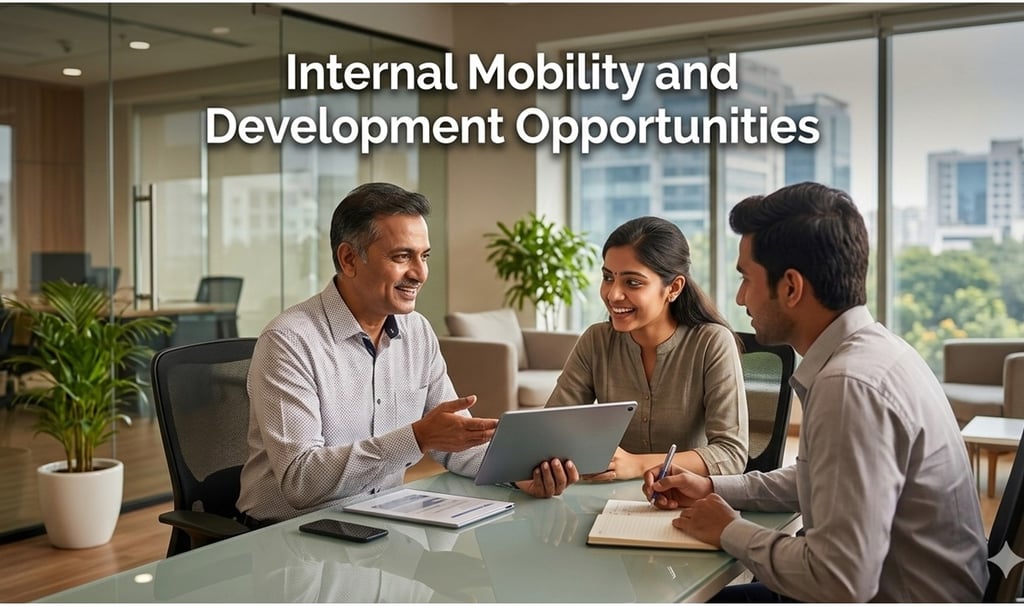
Internal mobility refers to the movement of employees across roles, functions, projects, or locations within an organisation. When supported by structured development opportunities, internal mobility becomes a powerful workforce strategy that strengthens retention, builds future-ready skills, and reduces hiring risks.
For HR, internal mobility is not just a talent initiative—it is a core performance and development lever that connects learning, career progression, and workforce planning.
Why Internal Mobility Matters
Reduces dependency on external hiring
Improves employee engagement and retention
Accelerates skill development and readiness
Preserves organisational knowledge
Supports succession and workforce continuity
Organisations that actively enable internal movement are better positioned to respond to changing business needs.
Types of Internal Mobility
1. Vertical Mobility
Promotions to higher-level roles
Often linked to performance outcomes and readiness
Requires clear role expectations and capability assessments
2. Lateral Mobility
Role changes at the same level across functions or teams
Helps employees broaden skills and business understanding
Particularly effective for building future leaders
3. Project-Based Mobility
Temporary assignments or cross-functional projects
Allows employees to develop new skills without permanent role change
Useful for testing readiness and potential
4. Location or Business Unit Transfers
Movement across geographies or business units
Supports workforce optimisation and talent redeployment
Role of Development Opportunities in Internal Mobility
Internal mobility is sustainable only when supported by structured development.
Key development enablers include:
Targeted learning programs
On-the-job stretch assignments
Mentoring and coaching
Exposure to cross-functional work
Career development conversations
Without development, internal moves may lead to performance gaps rather than growth.
Sample View: Internal Mobility Framework
HR’s Role in Enabling Internal Mobility
HR plays a central role by:
Designing transparent internal job posting processes
Defining eligibility and readiness criteria
Integrating performance data into mobility decisions
Supporting managers with assessment frameworks
Ensuring fairness and consistency
HR must balance business needs with employee aspirations.
Common Challenges
Manager resistance to releasing high performers
Lack of visibility into internal opportunities
Inconsistent assessment of readiness
Poor transition support after movement
Addressing these challenges requires leadership alignment and strong governance.
Linking Internal Mobility to Performance Management
Internal mobility should be informed by:
Performance trends and outcomes
Skill readiness assessments
Development progress
Career conversations
This ensures movement decisions are evidence-based, not ad hoc.
Best Practices for Sustainable Internal Mobility
Communicate career pathways clearly
Encourage regular career discussions
Recognise and reward managers who develop talent
Track post-move performance and engagement
Align mobility with succession and workforce plans
Key Takeaway
Internal mobility, when supported by structured development opportunities, strengthens both performance outcomes and workforce resilience. It enables organisations to grow talent internally while giving employees meaningful career progression.
Conclusion--
Effective labour law compliance depends on how well HR operations, payroll, and business processes work together. When compliance is embedded into everyday workflows, organisations reduce risk, improve accuracy, and build sustainable governance systems. HR teams that prioritise integration over isolation are better positioned to manage compliance confidently and consistently.
HireDesk India © 2026 | All Rights Reserved
"Thoughtful guidance for everyday HR"


Quick Links
Topics
Connect
_______________________________________________________________________________________________________________________________________________________________________________________
HireDesk is a free HR knowledge platform focused on practical, India-specific workplace guidance. We help HR professionals, managers, and learners navigate people practices with clarity, responsibility, and real-world relevance.