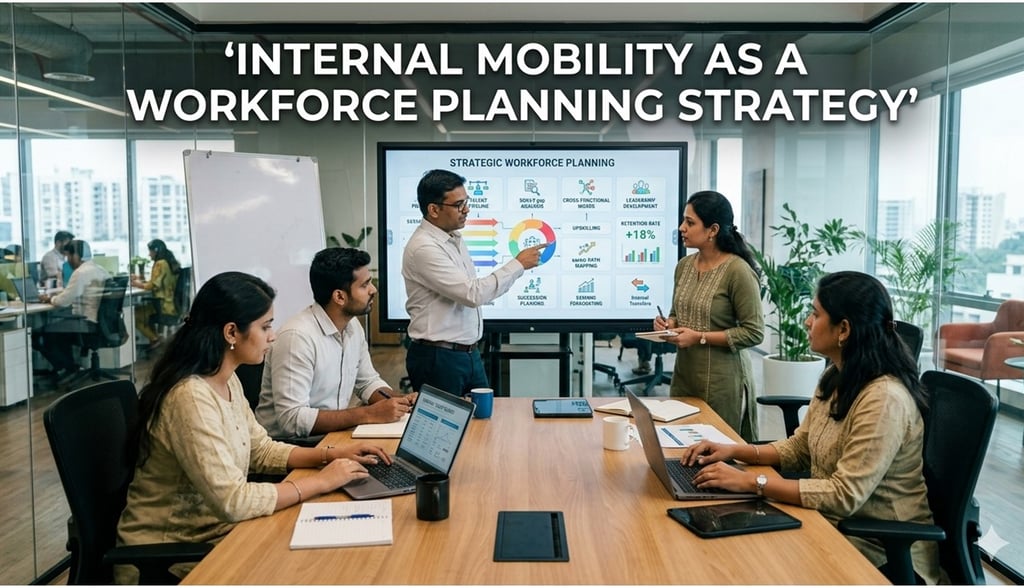
Internal Mobility as a Workforce Planning Strategy
Workforce planning is no longer limited to estimating headcount or forecasting hiring needs. For organisations operating in dynamic markets, the ability to redeploy existing talent has become just as important as external recruitment. Internal mobility—moving employees across roles, teams, or functions—helps organisations respond to skill gaps, business changes, and growth plans with greater speed and stability.
WORKFORCE PLANNING & MANPOWER
Workforce planning is no longer limited to estimating headcount or forecasting hiring needs. For organisations operating in dynamic markets, the ability to redeploy existing talent has become just as important as external recruitment. Internal mobility—moving employees across roles, teams, or functions—helps organisations respond to skill gaps, business changes, and growth plans with greater speed and stability.
When planned systematically, internal mobility becomes a core workforce planning strategy rather than an ad-hoc HR initiative.
What Is Internal Mobility?
Internal mobility refers to the structured movement of employees within an organisation. This can include:
Role changes within the same function
Transfers across departments or business units
Project-based assignments
Promotions or lateral moves
Unlike external hiring, internal mobility focuses on optimising existing human capital to meet current and future workforce requirements.
Why Internal Mobility Matters for Workforce Planning
1. Faster Response to Skill Demand
Business needs often evolve faster than hiring cycles. Internal mobility allows organisations to fill critical roles quickly by identifying employees with transferable skills.
2. Better Utilisation of Existing Talent
Many organisations already have capable employees whose skills are underutilised. Workforce planning that includes internal mobility reduces dependency on constant external hiring.
3. Improved Retention and Engagement
Employees are more likely to stay when they see visible career movement opportunities. This directly impacts attrition forecasts, a key input for manpower planning.
4. Cost Efficiency
Redeploying internal talent typically costs less than recruiting, onboarding, and training new hires, making workforce plans more financially sustainable.
Types of Internal Mobility Relevant to Workforce Planning
Vertical Mobility
Promotions or role expansions aligned with succession planning and leadership pipelines.
Lateral Mobility
Moves across roles at the same level to balance manpower, develop skills, or address operational gaps.
Cross-Functional Mobility
Transfers across departments to support business diversification, digital initiatives, or restructuring.
Temporary or Project-Based Mobility
Short-term assignments to meet seasonal demand, transformation projects, or skill-building objectives.
Integrating Internal Mobility into Workforce Planning
Step 1: Map Current Workforce Capabilities
Maintain an updated view of employee skills, experience, and certifications—not just job titles.
Step 2: Align Mobility with Business Forecasts
Identify future skill requirements and growth areas, then assess how internal talent can be repositioned.
Step 3: Define Clear Eligibility and Movement Rules
Workforce planning works best when internal transfers follow transparent criteria, timelines, and approvals.
Step 4: Coordinate with Learning & Development
Internal mobility often requires reskilling or upskilling. Training plans should be aligned with manpower projections.
Light Checklist: Internal Mobility Readiness
Clear role definitions and skill requirements
Visibility of internal job opportunities
Manager alignment on employee movement
Basic skill or role mapping system
Transition and handover process defined
Sample View: Internal Mobility vs External Hiring
Common Challenges to Watch
Manager resistance to releasing team members
Lack of visibility into employee skills
Informal or inconsistent transfer decisions
Overloading high-performing employees
Addressing these challenges early helps internal mobility support workforce plans rather than disrupt operations.
Conclusion
Internal mobility strengthens workforce planning by turning talent movement into a proactive business tool rather than a reactive HR response. When aligned with skill forecasting, succession planning, and learning initiatives, it enables organisations to meet manpower needs with greater agility and continuity.
For Indian organisations managing growth, transformation, or cost pressures, internal mobility is no longer optional—it is a practical and sustainable workforce planning strategy.
Conclusion--
Effective labour law compliance depends on how well HR operations, payroll, and business processes work together. When compliance is embedded into everyday workflows, organisations reduce risk, improve accuracy, and build sustainable governance systems. HR teams that prioritise integration over isolation are better positioned to manage compliance confidently and consistently.
HireDesk India © 2026 | All Rights Reserved
"Thoughtful guidance for everyday HR"


Quick Links
Topics
Connect
_______________________________________________________________________________________________________________________________________________________________________________________
HireDesk is a free HR knowledge platform focused on practical, India-specific workplace guidance. We help HR professionals, managers, and learners navigate people practices with clarity, responsibility, and real-world relevance.