
Joining Dropouts, Backouts, and Hiring Risk Controls in India
RECRUITMENT AND HIRING
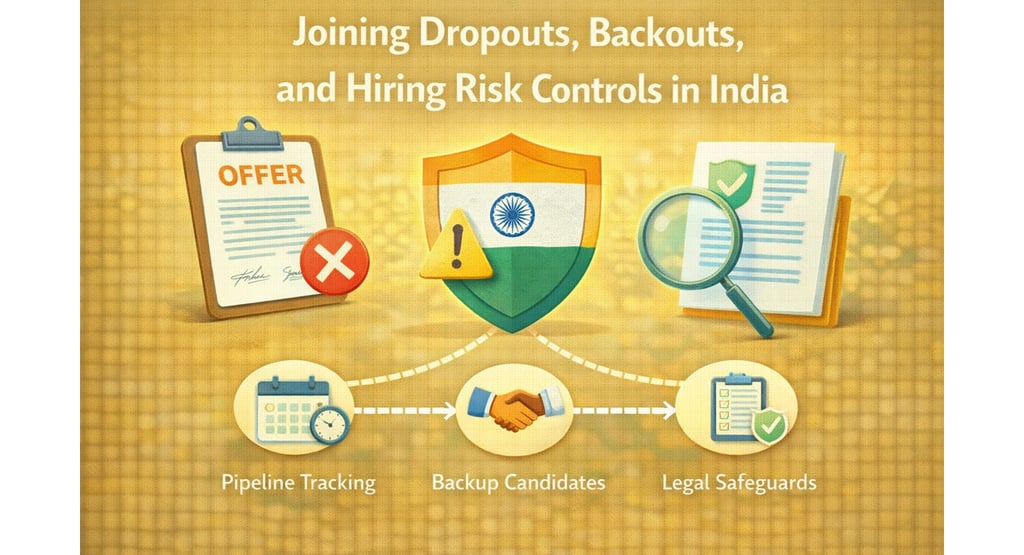
Joining dropouts and last-minute backouts are among the most frustrating challenges in Indian hiring. Organisations invest time, effort, and cost in sourcing, interviewing, and negotiating, only to see candidates disengage after accepting the offer or even on the joining date.
For HR, this is not just an operational issue. High dropout rates reflect gaps in expectation setting, engagement, risk assessment, and follow-through. Managing this risk requires structured controls, not ad-hoc follow-ups.
Indian Context of Joining Dropouts
Joining dropouts are common across industries in India due to:
Multiple parallel offers and delayed decisions
Counter-offers from current employers
Family-driven decision reversals
Long notice periods
Weak emotional connection with the hiring organisation
Understanding these patterns helps HR intervene earlier.
Typical Stages Where Dropouts Occur
After Offer Acceptance
Candidates may:
Continue interviewing elsewhere
Re-negotiate silently
Lose interest due to slow communication
Offer acceptance does not guarantee commitment.
During Notice Period
Long notice periods increase risk due to:
Counter-offers and role changes
Fatigue and uncertainty
Changing personal priorities
This stage needs active engagement.
On or Just Before Joining Date
Sudden dropouts often occur due to:
Better offers materialising
Relocation or family concerns
Fear of change or role clarity issues
Late dropouts are the most disruptive.
Practical Controls to Reduce Dropouts
Strengthen Pre-Offer Risk Assessment
HR should evaluate:
Candidate motivation and career intent
Number of active offers
Willingness to resign formally
Past joining behaviour if known
Risk awareness allows proactive planning.
Improve Offer and Role Clarity
Many dropouts are avoidable through clarity:
Clear role expectations and reporting structure
Transparent compensation and deductions
Honest discussion on work pressure and culture
Ambiguity breeds second thoughts.
Structured Engagement During Notice Period
HR must stay connected:
Regular check-ins without pressure
Sharing onboarding plans or welcome notes
Connecting candidates with future managers or peers
Engagement builds emotional commitment.
Backup and Contingency Planning
HR should plan for failure, not assume success:
Maintain secondary shortlisted candidates
Stagger joining dates for critical roles
Avoid single-point dependencies
This reduces business disruption.
HR’s Role in Hiring Risk Management
HR must institutionalise controls:
Track dropout data by role, recruiter, and stage
Identify patterns and systemic gaps
Train recruiters and managers on risk signals
Set clear acceptance and joining timelines
Hiring risk management is a process, not a reaction.
Conclusion
Joining dropouts and backouts are a reality of Indian hiring, but they are not uncontrollable. With early risk assessment, clear communication, consistent engagement, and contingency planning, HR can significantly reduce hiring disruptions.
Strong hiring risk controls protect business continuity and reinforce professionalism across the recruitment process.
🗹 Joining Dropout & Hiring Risk Control Checklist
🗹 Assess dropout risk before issuing offers
🗹 Set clear role, pay, and joining expectations
🗹 Maintain regular engagement during notice periods
🗹 Track candidates’ resignation and commitment status
🗹 Plan backups for critical roles
🗹 Avoid over-reliance on single candidates
🗹 Analyse dropout patterns and root causes
🗹 Train teams to identify early warning signs
Joining Dropouts and Risk Controls Overview
Conclusion--
Effective labour law compliance depends on how well HR operations, payroll, and business processes work together. When compliance is embedded into everyday workflows, organisations reduce risk, improve accuracy, and build sustainable governance systems. HR teams that prioritise integration over isolation are better positioned to manage compliance confidently and consistently.
HireDesk India © 2026 | All Rights Reserved
"Thoughtful guidance for everyday HR"


Quick Links
Topics
Connect
_______________________________________________________________________________________________________________________________________________________________________________________
HireDesk is a free HR knowledge platform focused on practical, India-specific workplace guidance. We help HR professionals, managers, and learners navigate people practices with clarity, responsibility, and real-world relevance.