
Labour Inspections and Audits: How HR Should Prepare
COMPLIANCE & LABOUR LAWS

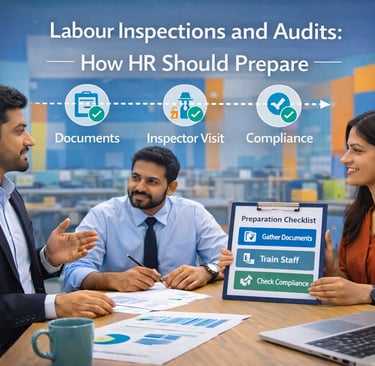
Labour inspections and audits are a routine part of operating in India, not a signal of wrongdoing. However, many organisations treat inspections as crisis events because records are scattered, responsibilities are unclear, or compliance is reactive.
For HR, inspections are less about explanations and more about documentation, readiness, and consistency. Organisations that maintain orderly records and follow basic statutory discipline usually pass inspections smoothly.
This article explains how HR should prepare for labour inspections and audits in a structured, confident manner.
Understanding Labour Inspections in India
Labour inspections may be triggered by:
Routine government inspections
Employee complaints
Specific enforcement drives
Follow-up on earlier non-compliances
Inspecting authorities may include:
Labour Inspector
Assistant Labour Commissioner
Factory Inspector
ESI or PF officials
HR should treat every inspection as formal and legally significant.
HR’s Core Responsibility: Record Readiness
Most inspection observations relate to:
Missing or incomplete registers
Mismatch between payroll and statutory records
Outdated notices or abstracts
Delayed filings
Maintaining updated records is the single biggest inspection safeguard.
Pre-Inspection Preparation: What HR Should Always Have Ready
HR should ensure:
Statutory registers are complete and current
Payroll, attendance, and wage records match
Appointment letters and service records are accessible
Licences, registrations, and returns are valid
Preparation should be ongoing—not triggered after receiving an inspection notice.
During the Inspection: HR Conduct Matters
HR representatives should:
Cooperate with inspecting officers
Produce records without delay
Avoid arguments or speculative explanations
Take note of observations made
Professional conduct often influences inspection outcomes.
Post-Inspection Follow-Up
After the inspection:
Review observations carefully
Close gaps within stipulated timelines
File compliance reports if required
Update internal processes to prevent recurrence
Ignoring post-inspection follow-up can escalate minor gaps into legal actions.
Audits vs Inspections: HR Perspective
Internal or third-party audits differ from inspections:
Audits are preventive and advisory
Inspections are regulatory and enforceable
HR should use audits to prepare for inspections, not replace them.
Conclusion
Labour inspections test an organisation’s process maturity, not just legal knowledge. HR teams that maintain disciplined records, train teams, and respond professionally can manage inspections with confidence.
Inspection readiness is not a one-day activity—it is a daily HR responsibility.
HR Compliance Action Checklist: Labour Inspections
🗹 Maintain updated statutory registers
🗹 Align payroll and attendance records
🗹 Display required notices and abstracts
🗹 Track licences, registrations, and returns
🗹 Assign trained HR inspection coordinators
🗹 Cooperate and document inspection proceedings
🗹 Record inspection observations accurately
🗹 Close gaps within stipulated timelines
🗹 File compliance reports where required
🗹 Review processes after every inspection
Labour Inspections and Audits: HR Preparation Framework
Conclusion--
Effective labour law compliance depends on how well HR operations, payroll, and business processes work together. When compliance is embedded into everyday workflows, organisations reduce risk, improve accuracy, and build sustainable governance systems. HR teams that prioritise integration over isolation are better positioned to manage compliance confidently and consistently.
HireDesk India © 2026 | All Rights Reserved
"Thoughtful guidance for everyday HR"


Quick Links
Topics
Connect
_______________________________________________________________________________________________________________________________________________________________________________________
HireDesk is a free HR knowledge platform focused on practical, India-specific workplace guidance. We help HR professionals, managers, and learners navigate people practices with clarity, responsibility, and real-world relevance.