
Learning Analytics: Measuring Skill Readiness and Impact
HR TECH & ANALYTICS
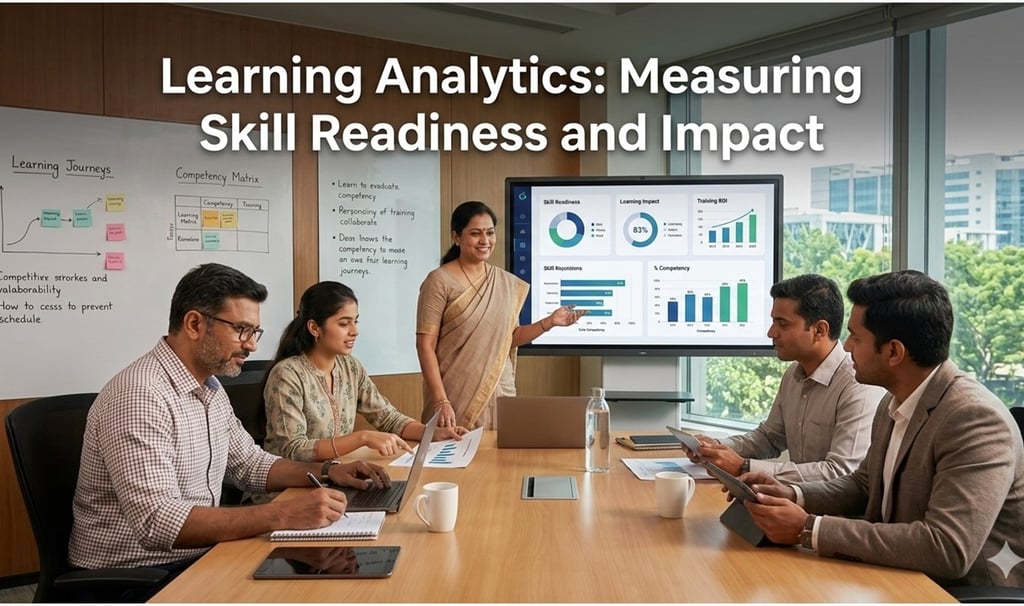
Organisations today invest significantly in learning and development, yet many HR teams struggle to answer a fundamental question: Is learning actually improving capability and readiness? Learning analytics helps HR move beyond completion reports to assess whether learning interventions are translating into skills, performance, and business outcomes.
In the Indian organisational context—where budgets, scale, and workforce diversity vary widely—learning analytics must be practical, focused, and decision-oriented rather than complex or academic.
What Is Learning Analytics?
Learning analytics refers to the systematic collection and analysis of learning-related data to understand learner behaviour, skill development, and the effectiveness of learning initiatives.
Unlike basic training reports that track attendance or completion, learning analytics focuses on:
Skill acquisition and readiness
Learning application on the job
Gaps between current and required capability
Return on learning investments
Why Measuring Skill Readiness Matters
Skill readiness reflects how prepared employees are to perform current roles or transition into future roles. Without measuring readiness, learning becomes activity-driven rather than outcome-driven.
Effective measurement helps HR:
Identify critical skill gaps early
Prioritise learning investments
Support workforce planning and succession
Improve internal mobility and career pathways
Key Learning Data HR Should Track
Learning Participation and Engagement
Basic metrics such as enrolments, completions, and time spent provide a foundation but should not be the end goal.
Assessment and Proficiency Indicators
Assessments, simulations, quizzes, and certifications offer insight into knowledge acquisition and proficiency levels.
Skill Mapping and Role Alignment
Linking learning outcomes to defined role skills helps HR understand readiness for specific positions or responsibilities.
Post-Learning Performance Indicators
Where possible, learning data should be reviewed alongside performance outcomes such as productivity, quality, or error reduction.
Measuring Learning Impact in Practice
Linking Learning to Performance Management
Learning analytics is most meaningful when aligned with performance goals, competency frameworks, and development plans.
Manager Inputs and Observations
Manager feedback provides context that data alone cannot capture. Structured observations strengthen the credibility of analytics.
Trend-Based Analysis
Rather than focusing on individual data points, HR should track trends across time, teams, and roles to identify patterns.
Learning Analytics in the Indian Context
Indian organisations often operate with:
Multiple learning platforms
Limited system integration
Spreadsheet-driven reporting
Diverse employee skill baselines
In such settings, learning analytics should:
Start with simple, consistent metrics
Focus on role-critical skills
Avoid over-engineered dashboards
Support practical decision-making
Advanced analytics can be introduced gradually as systems and data maturity improve.
Common Challenges in Learning Analytics
Overemphasis on completion metrics
Poor data quality or inconsistent tagging
Lack of integration between L&D and performance systems
Limited capability to interpret insights
Resistance from managers unfamiliar with data-led development
These challenges highlight the need for HR ownership rather than tool-driven reporting.
HR’s Role in Making Learning Analytics Meaningful
HR must ensure that learning analytics:
Aligns with organisational priorities
Is communicated in simple, actionable language
Supports managers in development conversations
Respects data privacy and ethical use
Leads to clear follow-up actions
Analytics should prompt decisions—not just reports.
Conclusion
Learning analytics enables HR to measure what truly matters: skill readiness, capability growth, and learning impact. When applied thoughtfully, it helps organisations move from training activity to workforce capability.
For Indian organisations, a practical, phased approach—anchored in business relevance and human judgement—ensures that learning analytics becomes a strategic enabler rather than a reporting burden.
Checklist: Using Learning Analytics Effectively
🗹 Define skill readiness clearly for each critical role.
🗹 Go beyond completion data to assess proficiency and application.
🗹 Align learning metrics with performance and capability frameworks.
🗹 Use trend analysis rather than isolated data points.
🗹 Involve managers in validating learning impact.
🗹 Keep dashboards simple and decision-focused.
🗹 Maintain consistency in data definitions and tagging.
🗹 Communicate insights in clear, non-technical language.
🗹 Review learning outcomes periodically and refine interventions.
🗹 Ensure ethical and transparent use of learner data.
Sample Table: Learning Analytics Metrics and HR Use
Conclusion--
Effective labour law compliance depends on how well HR operations, payroll, and business processes work together. When compliance is embedded into everyday workflows, organisations reduce risk, improve accuracy, and build sustainable governance systems. HR teams that prioritise integration over isolation are better positioned to manage compliance confidently and consistently.
HireDesk India © 2026 | All Rights Reserved
"Thoughtful guidance for everyday HR"


Quick Links
Topics
Connect
_______________________________________________________________________________________________________________________________________________________________________________________
HireDesk is a free HR knowledge platform focused on practical, India-specific workplace guidance. We help HR professionals, managers, and learners navigate people practices with clarity, responsibility, and real-world relevance.