
Learning and Development Planning Basics
PERFORMANCE & DEVELOPMENT
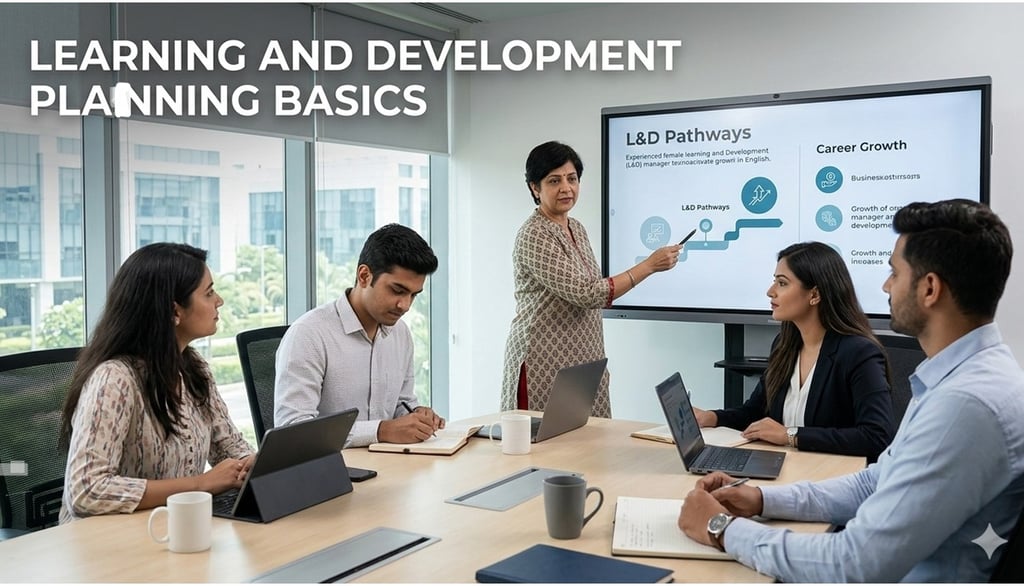
Learning and Development (L&D) planning is a structured approach to help employees acquire the skills and knowledge they need to perform effectively and grow professionally. Well-planned L&D initiatives align with business objectives, address skill gaps, and support employee engagement and retention.
A clear L&D plan ensures that learning efforts are strategic, measurable, and impactful across the organisation.
Why L&D Planning Matters
Aligns skills with business needs: Ensures employees develop competencies critical to organisational goals.
Supports career progression: Helps employees advance in their roles and prepare for future responsibilities.
Boosts engagement: Employees feel valued when their growth is actively supported.
Improves performance outcomes: Targeted learning interventions enhance productivity and efficiency.
Without planning, L&D programs can be fragmented, reactive, and fail to address actual skill gaps.
Core Steps in Learning and Development Planning
1. Assess Organisational and Role Needs
Review business objectives, strategic priorities, and upcoming projects.
Identify critical roles and competencies required to achieve these objectives.
2. Conduct Skill Gap Analysis
Analyse employee performance data to pinpoint current skill levels.
Compare existing skills with those needed for current and future roles.
3. Define Learning Goals
Establish clear, measurable learning objectives for employees and teams.
Ensure goals are aligned with both role requirements and individual career aspirations.
4. Identify Learning Methods
Determine the most effective learning formats: workshops, e-learning, mentoring, on-the-job training, or blended approaches.
Consider practical application, learning preferences, and available resources.
5. Develop Individual Development Plans (IDPs)
Translate learning objectives into actionable steps for employees.
Set timelines, milestones, and expected outcomes.
Include follow-up and coaching mechanisms.
6. Evaluate and Refine
Measure learning effectiveness through assessments, performance improvements, and feedback.
Adjust plans based on evolving business needs or new skill requirements.
Sample View: L&D Planning Framework
Checklist: Effective L&D Planning
☐ Align learning objectives with organisational priorities
☐ Identify skill gaps using performance data
☐ Set measurable learning goals for individuals and teams
☐ Choose appropriate learning methods
☐ Develop actionable Individual Development Plans (IDPs)
☐ Track, evaluate, and refine learning initiatives
Common Pitfalls to Avoid
Designing L&D programs without linking to business goals
Ignoring actual skill gaps or relying solely on self-assessment
One-size-fits-all training without personalisation
Lack of follow-up or evaluation to measure effectiveness
Role of HR and Managers
HR facilitates the L&D planning process, provides resources, and tracks outcomes.
Managers identify role-specific skill requirements, coach employees, and monitor learning progress.
Collaboration ensures L&D initiatives are relevant, measurable, and impactful.
Key Takeaway
Learning and development planning is a strategic investment that strengthens workforce capability, aligns employee growth with business objectives, and drives engagement. Structured, evidence-based planning ensures that learning initiatives deliver tangible results for both employees and the organisation.
Conclusion--
Effective labour law compliance depends on how well HR operations, payroll, and business processes work together. When compliance is embedded into everyday workflows, organisations reduce risk, improve accuracy, and build sustainable governance systems. HR teams that prioritise integration over isolation are better positioned to manage compliance confidently and consistently.
HireDesk India © 2026 | All Rights Reserved
"Thoughtful guidance for everyday HR"


Quick Links
Topics
Connect
_______________________________________________________________________________________________________________________________________________________________________________________
HireDesk is a free HR knowledge platform focused on practical, India-specific workplace guidance. We help HR professionals, managers, and learners navigate people practices with clarity, responsibility, and real-world relevance.