
Learning Experience Platforms (LXP) for Continuous Skill Development: An HR Perspective
HR TECH & ANALYTICS
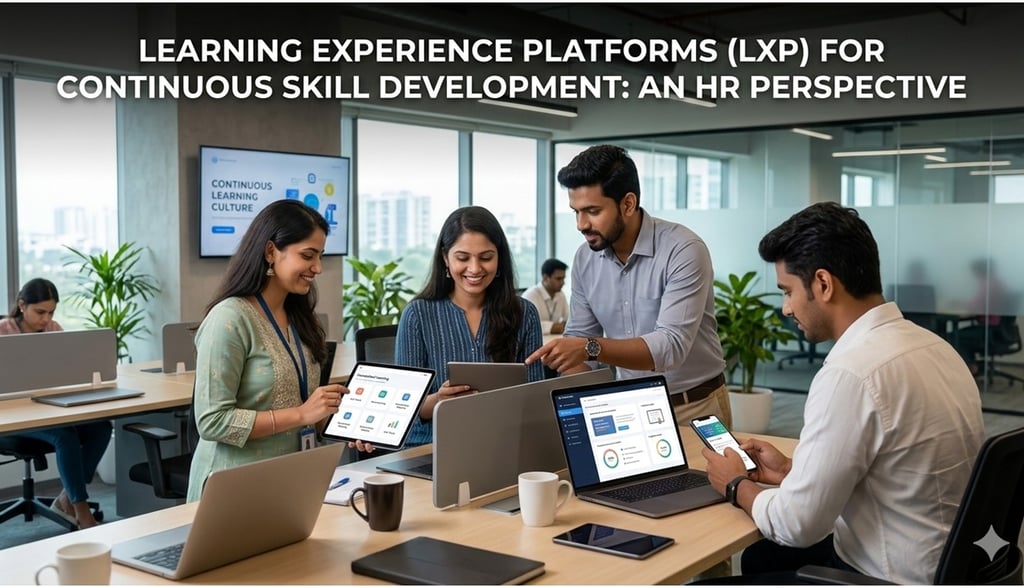
MIndian organisations are increasingly recognising that skills have a shorter shelf life than ever before. Formal classroom training or annual learning calendars alone are no longer sufficient to keep employees relevant and productive. This has led HR teams to explore Learning Experience Platforms (LXP) as a way to support continuous, self-driven skill development.
Unlike traditional learning systems that focus on mandatory courses, LXPs are designed to promote personalised, on-demand, and continuous learning. This article explains what LXPs are, how they support skill development, and how HR can use them effectively in the Indian organisational context.
What is a Learning Experience Platform (LXP)?
A Learning Experience Platform is a digital learning platform that places the learner at the centre. It curates learning content from multiple sources and recommends it based on employee interests, role requirements, and career aspirations.
Typical LXP capabilities include:
Personalised learning recommendations
Microlearning and short-format content
Integration with external learning providers
Social and collaborative learning features
Mobile-first access
LXPs are not designed to replace structure entirely. Instead, they complement formal learning systems by enabling continuous and voluntary learning.
Why LXPs Matter for Continuous Skill Development
Supporting Self-Directed Learning
LXPs allow employees to take ownership of their development. Employees can explore topics beyond their immediate role, helping them build future-ready skills and broaden their capabilities.
Enabling Just-in-Time Learning
Rather than waiting for scheduled training programmes, employees can access learning content when they need it, whether for a project, a new responsibility, or skill refresh.
Encouraging a Learning Culture
By making learning accessible and engaging, LXPs support a culture where learning becomes part of daily work rather than a periodic HR activity.
LXP Adoption in the Indian Context
In Indian organisations, LXP adoption is often driven by:
Rapid technology and role changes
Multi-generational workforce expectations
Distributed and hybrid work models
Need for scalable upskilling solutions
However, HR teams must be mindful that not all employees may be equally comfortable with self-driven learning. Clear guidance, manager support, and alignment with career growth are critical for success.
How HR Can Use LXPs Effectively
Align LXP Content with Organisational Priorities
Learning recommendations should reflect current and future skill needs, not just popular topics.Link Learning to Career Pathways
Employees are more engaged when learning is visibly connected to internal mobility, role readiness, and growth opportunities.Encourage Manager Involvement
Managers play a key role in reinforcing learning by recommending content and discussing skill development during reviews.Balance Freedom with Direction
While LXPs promote exploration, HR should provide curated learning paths to avoid confusion or content overload.
Measuring Skill Development Through LXPs
Unlike LMS, LXP success is not measured only by completion rates. HR should look at:
Learning engagement and frequency
Skill themes being explored
Application of learning in work outcomes
Feedback from employees and managers
Linkages between learning activity and performance trends
The objective is capability building, not just content consumption.
Common Challenges in LXP Implementation
Indian organisations may face challenges such as:
Low adoption due to lack of clarity on purpose
Content overload without guidance
Difficulty in linking informal learning to performance outcomes
Perception that learning is optional and non-essential
These challenges can be addressed through clear communication, leadership endorsement, and integration with performance and career processes.
Conclusion
Learning Experience Platforms offer Indian HR teams a powerful way to support continuous skill development, especially in fast-changing business environments. When used thoughtfully, LXPs help employees stay relevant, engaged, and future-ready.
The success of an LXP depends not on technology alone, but on how well HR integrates learning with career growth, performance conversations, and organisational capability goals. A guided, purpose-driven approach ensures LXPs add real value rather than becoming another unused platform.
Sample Using LXP for Skill Development
Checklist: Learning Experience Platforms for Continuous Skill Development
🗹 Define clear objectives for LXP adoption linked to skill and capability priorities.
🗹 Align learning content with current and future role requirements.
🗹 Provide curated learning paths alongside open exploration.
🗹 Encourage manager involvement in recommending and reinforcing learning.
🗹 Communicate how learning supports career growth and internal mobility.
🗹 Ensure the platform is mobile-friendly and easy to navigate.
🗹 Monitor engagement trends rather than only completion metrics.
🗹 Collect employee feedback to improve relevance and usability.
🗹 Integrate LXP insights with performance and development discussions.
🗹 Review and refresh content regularly to avoid stagnation.
Conclusion--
Effective labour law compliance depends on how well HR operations, payroll, and business processes work together. When compliance is embedded into everyday workflows, organisations reduce risk, improve accuracy, and build sustainable governance systems. HR teams that prioritise integration over isolation are better positioned to manage compliance confidently and consistently.
HireDesk India © 2026 | All Rights Reserved
"Thoughtful guidance for everyday HR"


Quick Links
Topics
Connect
_______________________________________________________________________________________________________________________________________________________________________________________
HireDesk is a free HR knowledge platform focused on practical, India-specific workplace guidance. We help HR professionals, managers, and learners navigate people practices with clarity, responsibility, and real-world relevance.