
Learning Experience Platforms (LXP) vs Learning Management Systems (LMS): What HR Should Know
HR TECH & ANALYTICS
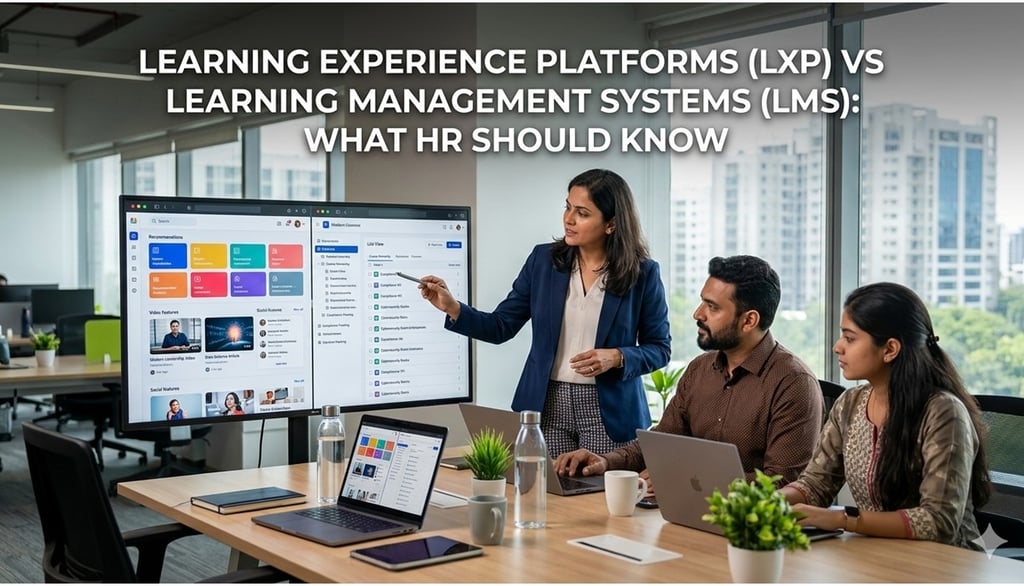
As organisations increasingly prioritise employee development, HR teams in India face the challenge of selecting the right digital learning platform. While Learning Management Systems (LMS) have been the traditional choice, Learning Experience Platforms (LXP) are gaining attention for their personalised, learner-driven approach.
Understanding the differences, complementary strengths, and appropriate applications of LMS and LXP is essential for HR teams to design effective learning programmes. This article explains both platforms, their benefits in the Indian organisational context, and practical guidance for HR.
What is an LMS?
A Learning Management System (LMS) is a structured digital platform that allows HR teams to plan, deliver, track, and manage learning activities. LMS is HR-driven and ensures consistency, compliance, and measurable outcomes.
Key features include:
Mandatory and role-based course assignment
Content hosting (videos, documents, assessments)
Progress tracking and reporting
Integration with HR systems (HRMS, performance management)
In Indian organisations, LMS is particularly valuable for:
Regulatory and compliance training
Standardised onboarding across multiple locations
Tracking skill development aligned to business needs
What is an LXP?
A Learning Experience Platform (LXP) is a learner-centric platform that focuses on personalised learning experiences. Unlike LMS, LXPs encourage exploration, recommendations, and informal learning, often integrating content from multiple sources.
Key features include:
AI-driven content recommendations
Social learning and peer collaboration
Access to external learning resources and microlearning modules
Mobile-friendly and on-demand access
LXPs are useful in India for:
Enhancing engagement through self-directed learning
Supporting upskilling and reskilling initiatives
Fostering a learning culture in diverse and distributed teams
Key Differences Between LMS and LXP
Feature
LMS
LXP
Learning Focus
Structured, HR-driven
Personalised, learner-driven
Content Delivery
Mandatory courses, formal learning
Curated, on-demand, informal learning
Tracking & Reporting
Strong reporting, compliance tracking
Limited formal reporting, focus on engagement insights
Integration
Integrates tightly with HR and performance systems
Can aggregate content from multiple sources, including external providers
User Control
HR assigns learning paths
Employees choose learning paths and explore content
Use Case in Indian Organisations
Compliance, onboarding, role-based training
Upskilling, employee engagement, continuous learning culture
How HR Can Leverage Both Platforms
1. Complementary Use
Many organisations benefit from combining LMS and LXP, using LMS for mandatory and role-based learning while leveraging LXP for personalised, exploratory learning.
2. Align With Organisational Goals
HR should map LMS usage to compliance, mandatory training, and performance-linked learning.
LXP usage should focus on upskilling, engagement, and culture-building.
3. Encourage Adoption
Provide guidance on how to use both platforms effectively
Promote engagement through manager recommendations and success stories
Gather feedback for continuous improvement
4. Monitor Outcomes
LMS: Training completion, compliance adherence, role readiness
LXP: Learning engagement, skills development, informal learning patterns
Common Challenges in LXP vs LMS Adoption
Confusion between mandatory vs optional learning
Low adoption due to unclear guidance
Overloading employees with too many platforms
Resistance to change, especially in traditional work environments
HR must provide clear communication, leadership support, and gradual rollout strategies to ensure adoption.
Sample Table: Choosing LMS vs LXP for HR Needs
Conclusion
Both LMS and LXP have distinct roles in Indian organisations. While LMS ensures compliance, standardisation, and measurable outcomes, LXP supports learner autonomy, engagement, and continuous skill growth.
HR’s challenge is to strategically combine both platforms according to organisational priorities, workforce needs, and learning culture. A clear implementation strategy, stakeholder alignment, and continuous monitoring will ensure that both platforms contribute meaningfully to employee development and organisational capability building.
Checklist: Learning Experience Platforms (LXP) vs LMS: What HR Should Know
🗹 Understand the differences between LMS (structured) and LXP (learner-driven).
🗹 Align each platform to the appropriate use case (compliance vs upskilling).
🗹 Encourage adoption through clear communication and guidance.
🗹 Monitor engagement and learning outcomes for both systems.
🗹 Integrate platforms with existing HRMS and performance tools where possible.
🗹 Avoid overloading employees with too many tools simultaneously.
🗹 Use analytics to measure impact on skills, performance, and engagement.
Conclusion--
Effective labour law compliance depends on how well HR operations, payroll, and business processes work together. When compliance is embedded into everyday workflows, organisations reduce risk, improve accuracy, and build sustainable governance systems. HR teams that prioritise integration over isolation are better positioned to manage compliance confidently and consistently.
HireDesk India © 2026 | All Rights Reserved
"Thoughtful guidance for everyday HR"


Quick Links
Topics
Connect
_______________________________________________________________________________________________________________________________________________________________________________________
HireDesk is a free HR knowledge platform focused on practical, India-specific workplace guidance. We help HR professionals, managers, and learners navigate people practices with clarity, responsibility, and real-world relevance.