Learning Management Systems (LMS) in HR: Design and Implementation
HR TECH & ANALYTICS
INTRODUCTION
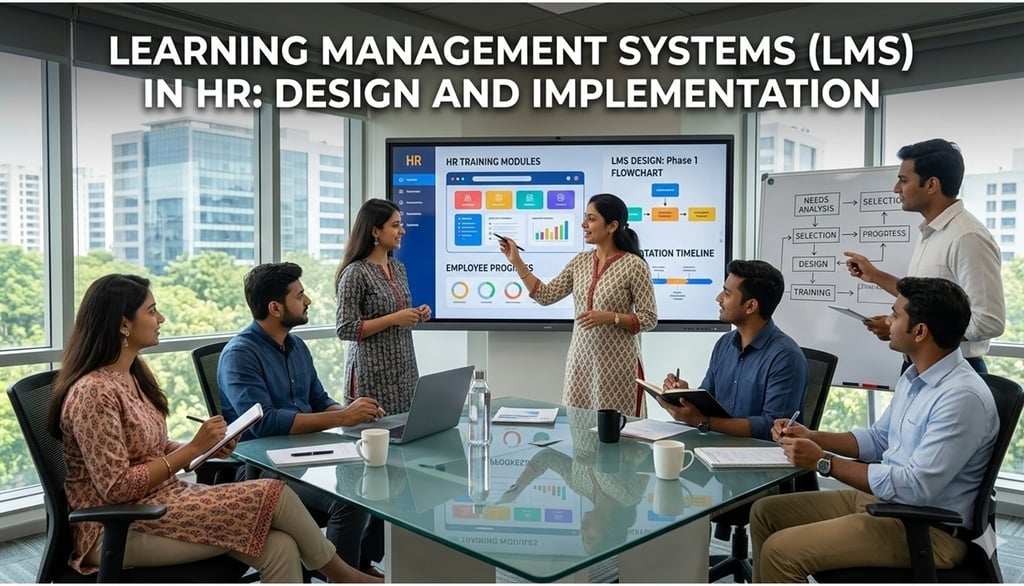
In today’s dynamic business environment, continuous learning has become a business necessity rather than an optional HR initiative. Indian organisations, facing rapid skill changes, regulatory requirements, and workforce scale, are increasingly adopting Learning Management Systems (LMS) to manage training and development in a structured and consistent manner.
A Learning Management System is a digital platform used to plan, deliver, track, and measure employee learning activities. For HR teams, an LMS is not merely a training repository. When used effectively, it becomes a strategic enabler that supports talent development, compliance training, onboarding, and overall organisational capability building.
This article explains the role of LMS in HR, key considerations while designing and implementing an LMS, common challenges faced by Indian organisations, and practical best practices to ensure long-term value.
The Role of LMS in Human Resources
An LMS supports multiple HR functions and directly contributes to workforce capability and consistency. Its role typically spans the following areas:
Talent Development and Skill Building
An LMS helps HR teams create structured learning pathways aligned with role requirements and career progression. It supports upskilling and reskilling initiatives, which are increasingly important as Indian organisations adapt to technology changes and evolving business models.
Compliance and Regulatory Training
Indian organisations are required to conduct and document several mandatory trainings related to labour laws, workplace safety, POSH, data security, and industry-specific regulations. An LMS helps assign mandatory courses, track completion, and maintain audit-ready records, thereby reducing compliance risks.
Performance and Capability Alignment
Learning outcomes can be linked with performance goals and competency frameworks. LMS data helps HR and managers identify skill gaps and plan targeted development interventions, supporting succession planning and internal mobility.
Onboarding and Employee Engagement
An LMS ensures a consistent onboarding experience across locations and business units. New hires can access policies, role-specific learning, and induction programmes in a structured manner, helping them become productive faster and feel engaged from the beginning.
Why LMS Adoption Matters in Indian Organisations
In the Indian context, LMS adoption is often driven by practical and operational needs rather than experimentation. Common drivers include:
Managing training for a large and geographically dispersed workforce
Ensuring compliance documentation and audit readiness
Reducing dependency on classroom-based training
Improving training consistency across locations
Creating visibility into learning progress and skill readiness
An LMS should simplify learning administration and support HR processes, not add complexity or distance HR from employees.
HR’s Role in LMS Design and Implementation
HR plays a central role in ensuring that an LMS delivers meaningful outcomes. Technology alone does not guarantee success; HR ownership is critical at every stage.
Key HR responsibilities include:
Conducting a learning needs assessment based on current and future skill requirements
Collaborating with business leaders and IT teams to align expectations
Defining clear learning objectives and success measures
Supporting communication, training, and adoption among employees and managers
Ensuring discipline in data entry, course completion, and usage
HR acts as the bridge between the system, employees, and management, ensuring that learning remains relevant and accessible.
Designing an Effective LMS: Practical Considerations
While designing or selecting an LMS, Indian organisations should focus on usability and relevance rather than feature volume.
Important considerations include:
User-friendly design: Simple navigation, clear dashboards, and mobile accessibility are essential, especially for frontline and field employees.
Content relevance: Learning content should be role-based, practical, and aligned with organisational priorities. Excessive or generic content often reduces engagement.
Integration with HR systems: Seamless integration with HRMS, payroll, or performance systems improves data consistency and reporting.
Scalability: The system should support organisational growth, new locations, and additional learning requirements over time.
Implementation Approach for LMS Success
Implementing an LMS is a change initiative and should be managed accordingly.
Key steps include:
Stakeholder alignment: Involving HR, IT, business leaders, and end users early helps set clear expectations.
Pilot implementation: A pilot phase allows HR to test usability, content relevance, and technical stability before full rollout.
Change management: Clear communication on benefits, user training, leadership support, and ongoing assistance improve adoption.
Phased rollout: Gradual deployment often works better than organisation-wide launches, especially in large Indian enterprises.
Measuring the Effectiveness of an LMS
The success of an LMS should be evaluated based on outcomes rather than system features.
HR teams can review:
Training completion and participation rates
Reduction in onboarding time for new hires
Improvement in role readiness and skill coverage
Compliance audit outcomes
Feedback from employees and managers
These indicators help HR assess whether the LMS is delivering practical value.
Common Challenges in LMS Adoption
Indian organisations often face the following challenges:
Resistance to change from employees and managers
Low adoption due to poor usability or irrelevant content
Content overload without clear learning pathways
Limited follow-up after implementation
Budget constraints affecting platform choice and content quality
Addressing these challenges requires clear priorities, continuous communication, and periodic system reviews.
Responsible Use of Learning Data
Learning data forms part of employee records and should be handled responsibly. HR teams should:
Use learning data only for legitimate organisational purposes
Maintain confidentiality and access controls
Communicate transparently on how learning data is used
Responsible data practices build employee trust and strengthen HR credibility.
Conclusion
Learning Management Systems have become an important component of modern HR practices in Indian organisations. When designed thoughtfully and implemented with clarity, an LMS supports capability building, compliance, and employee development.
The real value of an LMS lies not in advanced features, but in its practical use, ease of access, and alignment with organisational needs. By taking a measured, HR-led approach, organisations can ensure that their LMS remains a valuable enabler of learning rather than a mere technology investment.
Checklist: Learning Management Systems (LMS) in HR: Design and Implementation
🗹 Conduct a thorough learning needs assessment.
🗹 Map content to skill gaps, compliance, and career paths.
🗹 Choose an LMS aligned with organisational culture and technical infrastructure.
🗹 Design intuitive, mobile-friendly, and engaging user interfaces.
🗹 Plan integration with HRMS, performance, and other systems.
🗹 Implement pilot testing before full rollout.
🗹 Provide training and support for administrators and employees.
🗹 Review analytics regularly to measure learning impact and ROI.
Conclusion--
Effective labour law compliance depends on how well HR operations, payroll, and business processes work together. When compliance is embedded into everyday workflows, organisations reduce risk, improve accuracy, and build sustainable governance systems. HR teams that prioritise integration over isolation are better positioned to manage compliance confidently and consistently.
HireDesk India © 2026 | All Rights Reserved
"Thoughtful guidance for everyday HR"


Quick Links
Topics
Connect
_______________________________________________________________________________________________________________________________________________________________________________________
HireDesk is a free HR knowledge platform focused on practical, India-specific workplace guidance. We help HR professionals, managers, and learners navigate people practices with clarity, responsibility, and real-world relevance.