
Linking Learning and Development to Competency Frameworks
PERFORMANCE & DEVELOPMENT
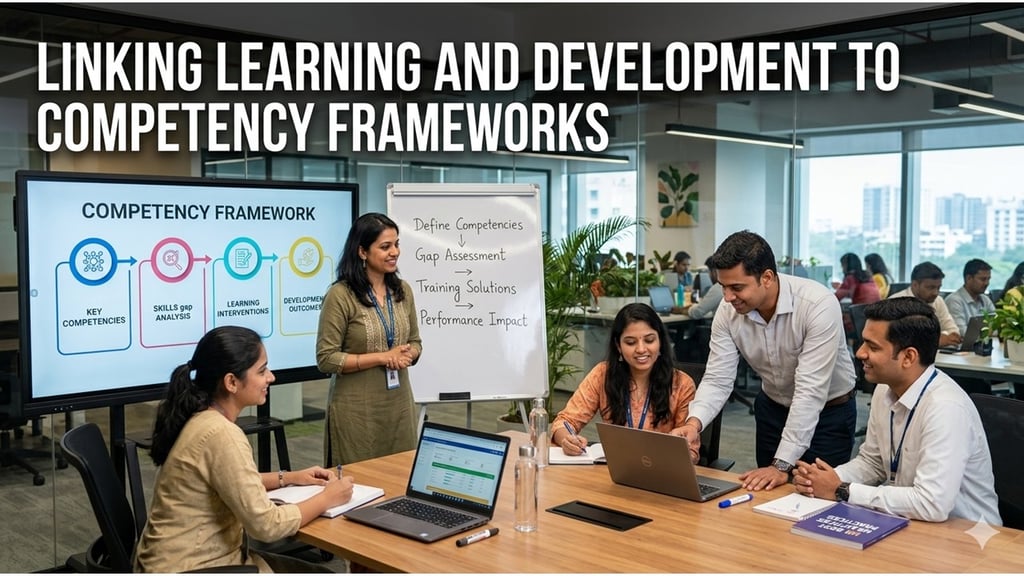
Competency frameworks define what employees need to know and demonstrate, while learning and development (L&D) determines how those capabilities are built over time. When these two are closely linked, organisations can move away from generic training programs and focus on purpose-driven capability development.
For Indian organisations, aligning L&D initiatives with competency frameworks ensures that learning investments directly support performance improvement, career progression, and business needs.
Why Competency-Linked Learning Matters
Many organisations run training programs without clear outcomes. When learning is not mapped to competencies, employees may gain knowledge but struggle to apply it effectively at work.
Linking L&D to competency frameworks helps organisations:
Focus learning on real capability gaps
Prioritise training based on role requirements
Support structured career development
Measure learning effectiveness more clearly
How Competency Frameworks Guide Learning Design
Identifying Skill Gaps
Performance reviews and competency assessments highlight gaps between current proficiency and expected levels. These gaps form the foundation for learning needs analysis.
Structuring Learning Pathways
Competencies enable HR to design role-based learning paths, ensuring employees build skills progressively rather than through isolated training programs.
Supporting Career Progression
Competency-linked learning helps employees understand what skills are required to move to the next role or level, making development more transparent and motivating.
Types of Learning Interventions Mapped to Competencies
Different competencies require different learning approaches:
Technical competencies benefit from formal training, certifications, and hands-on practice
Behavioural competencies improve through coaching, mentoring, and feedback
Leadership competencies develop through stretch roles, cross-functional exposure, and guided reflection
A competency framework helps HR select the right learning method rather than relying on one-size-fits-all programs.
Light Checklist: Aligning L&D with Competency Frameworks
☐ Competency assessments are used to identify learning needs
☐ Learning programs are mapped to specific competencies
☐ Role-based learning paths are defined and communicated
☐ Managers support on-the-job learning and coaching
☐ Progress in competency development is tracked
☐ Learning outcomes are reflected in performance discussions
☐ Employees understand how learning supports career growth
Sample Table: Mapping Competencies to Learning Approaches
Role of Managers in Competency-Based Learning
Managers play a crucial role by:
Reinforcing learning on the job
Providing feedback aligned with competency expectations
Encouraging application of new skills in real work scenarios
Without managerial support, competency-based learning often remains theoretical.
Closing Note
Linking learning and development to competency frameworks ensures that training efforts translate into measurable performance improvement. For Indian organisations, this alignment creates clarity, strengthens career pathways, and builds a future-ready workforce. When learning is driven by competencies, development becomes intentional, relevant, and impactful.
Conclusion--
Effective labour law compliance depends on how well HR operations, payroll, and business processes work together. When compliance is embedded into everyday workflows, organisations reduce risk, improve accuracy, and build sustainable governance systems. HR teams that prioritise integration over isolation are better positioned to manage compliance confidently and consistently.
HireDesk India © 2026 | All Rights Reserved
"Thoughtful guidance for everyday HR"


Quick Links
Topics
Connect
_______________________________________________________________________________________________________________________________________________________________________________________
HireDesk is a free HR knowledge platform focused on practical, India-specific workplace guidance. We help HR professionals, managers, and learners navigate people practices with clarity, responsibility, and real-world relevance.