
Linking Performance Management to Learning and Development
PERFORMANCE & DEVELOPMENT
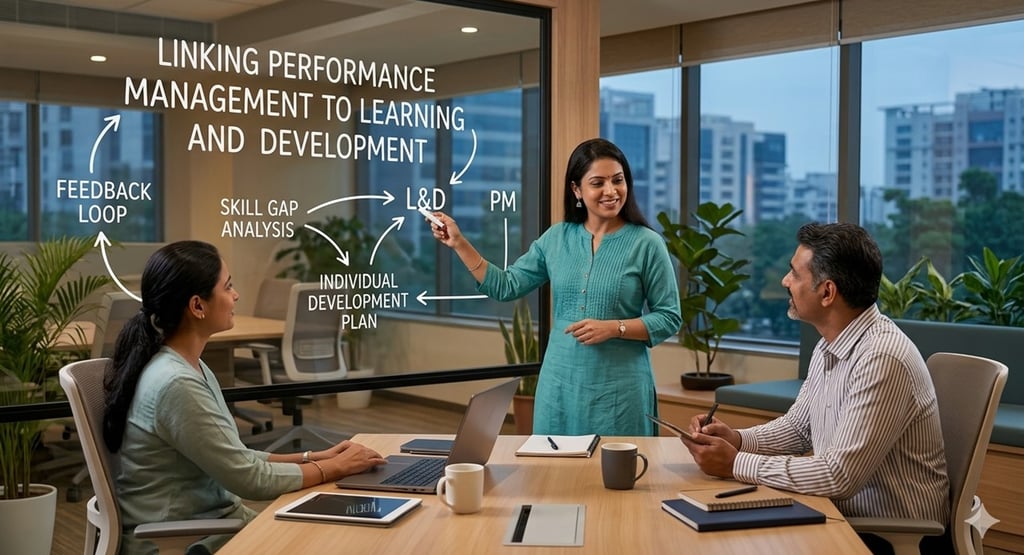
Performance management and learning often operate as separate systems, yet their effectiveness depends on how well they reinforce each other. When development activities are disconnected from actual performance needs, training becomes generic and underutilised.
This article explains how HR can meaningfully link performance insights to learning and development (L&D) initiatives.
Why Performance and Development Must Be Connected
Strong linkage helps:
Address real skill gaps
Improve role effectiveness
Increase return on training investments
Make development plans credible
Development works best when it responds to observed performance patterns.
Using Performance Inputs to Identify Development Needs
Performance discussions can highlight:
Skill gaps affecting outcomes
Behavioural patterns needing reinforcement
Readiness for expanded responsibilities
Areas requiring targeted coaching
HR should guide managers to identify development needs objectively.
Designing Practical Development Interventions
Effective development does not always require formal programs. Options include:
On-the-job learning opportunities
Manager coaching and mentoring
Peer learning and knowledge sharing
Short, role-specific training modules
Practical relevance matters more than scale.
HR’s Role in L&D Alignment
HR supports alignment by:
Providing development planning frameworks
Linking learning options to role requirements
Tracking development follow-through
Reviewing impact beyond attendance metrics
This ensures development supports performance, not just participation.
Common Gaps HR Should Avoid
Recommending training without performance context
Offering identical programs to all employees
Treating development plans as formalities
Ignoring post-training application
Performance–Development Alignment Checklist
☐ Capture development needs during reviews
☐ Link learning to role-specific gaps
☐ Encourage manager-led coaching
☐ Track application of learning
☐ Review development outcomes periodically
Conclusion
When learning and development are anchored in performance realities, they become purposeful and effective. HR’s role is to ensure development efforts are practical, targeted, and aligned with organisational needs.
Conclusion--
Effective labour law compliance depends on how well HR operations, payroll, and business processes work together. When compliance is embedded into everyday workflows, organisations reduce risk, improve accuracy, and build sustainable governance systems. HR teams that prioritise integration over isolation are better positioned to manage compliance confidently and consistently.
HireDesk India © 2026 | All Rights Reserved
"Thoughtful guidance for everyday HR"


Quick Links
Topics
Connect
_______________________________________________________________________________________________________________________________________________________________________________________
HireDesk is a free HR knowledge platform focused on practical, India-specific workplace guidance. We help HR professionals, managers, and learners navigate people practices with clarity, responsibility, and real-world relevance.