
Linking Performance Outcomes to Rewards and Recognition
PERFORMANCE & DEVELOPMENT
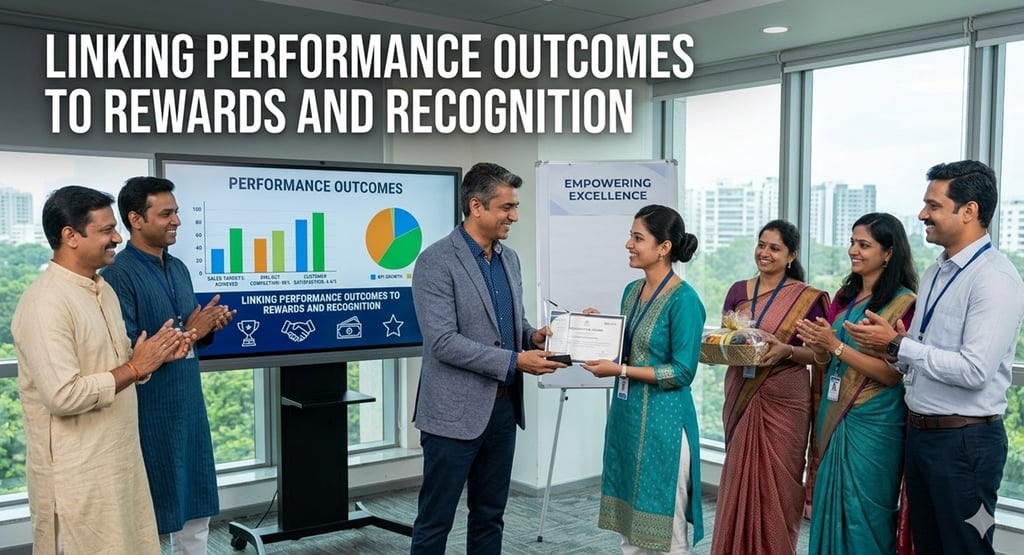
Performance management achieves its full impact only when outcomes are meaningfully linked to rewards and recognition. When employees clearly see how performance influences rewards, motivation improves and expectations become more transparent.
This article explains how organisations can design fair, consistent, and credible linkages between performance outcomes and reward decisions, without reducing performance management to a purely transactional exercise.
Why Performance–Reward Linkages Matter
Effective linkages help organisations:
Reinforce desired performance and behaviours
Retain high-performing and critical talent
Increase trust in the performance management system
Ensure reward decisions are defensible and consistent
Weak or unclear linkages often result in dissatisfaction, disengagement, and perceptions of unfairness.
Principles for Linking Performance to Rewards
1. Clarity and Transparency
Employees should understand how performance outcomes influence rewards
Criteria and ranges must be communicated clearly
Avoid surprises during reward discussions
Transparency builds credibility and acceptance.
2. Differentiation Based on Performance
Reward outcomes should reflect meaningful performance differences
High performers should see visible recognition
Avoid excessive uniformity that dilutes merit
Differentiation reinforces performance standards.
3. Balanced Use of Monetary and Non-Monetary Rewards
Use pay increases, bonuses, and incentives appropriately
Combine with recognition, development opportunities, and visibility
Not all performance recognition must be financial
Balanced rewards support sustained motivation.
4. Consistency Across Teams
Apply reward principles consistently across functions and managers
Use calibration and HR review to reduce variability
Ensure similar performance leads to comparable outcomes
Consistency prevents trust erosion.
5. Alignment with Organisational Values
Rewards should reinforce both results and behaviours
Recognise how outcomes are achieved, not just what is achieved
Align recognition with culture and values
This prevents unintended reinforcement of undesirable behaviours.
Common Approaches to Performance-Linked Rewards
Annual Pay Increments
Performance ratings influence increment ranges within approved budgets.
Variable Pay and Incentives
Bonuses tied to individual, team, or organisational performance.
Recognition Programs
Spot awards, formal recognition, or leadership acknowledgment for exceptional contributions.
Development Opportunities
High performers gain access to learning, projects, or career advancement.
Sample View: Performance Outcomes and Reward Linkages
Checklist: Strengthening Performance–Reward Linkages
☐ Performance criteria and reward principles are transparent
☐ Differentiation reflects meaningful performance differences
☐ Monetary and non-monetary rewards are balanced
☐ Reward outcomes are reviewed for consistency
☐ Managers are trained to explain reward decisions
☐ HR monitors fairness and employee perception
Role of HR
HR plays a key role by:
Designing reward frameworks aligned with performance philosophy
Supporting calibration and governance processes
Ensuring reward decisions are documented and defensible
Communicating reward principles clearly across the organisation
HR ensures rewards reinforce performance, fairness, and values.
Key Takeaway
Linking performance outcomes to rewards and recognition strengthens motivation and trust when done transparently and consistently. Well-designed linkages reinforce desired behaviours, support retention, and enhance the overall effectiveness of the performance management system.
Conclusion--
Effective labour law compliance depends on how well HR operations, payroll, and business processes work together. When compliance is embedded into everyday workflows, organisations reduce risk, improve accuracy, and build sustainable governance systems. HR teams that prioritise integration over isolation are better positioned to manage compliance confidently and consistently.
HireDesk India © 2026 | All Rights Reserved
"Thoughtful guidance for everyday HR"


Quick Links
Topics
Connect
_______________________________________________________________________________________________________________________________________________________________________________________
HireDesk is a free HR knowledge platform focused on practical, India-specific workplace guidance. We help HR professionals, managers, and learners navigate people practices with clarity, responsibility, and real-world relevance.