
Listening to Employees the Right Way: Surveys, Check-ins, and Open Forums
EMPLOYEE EXPERIENCE & CULTURE
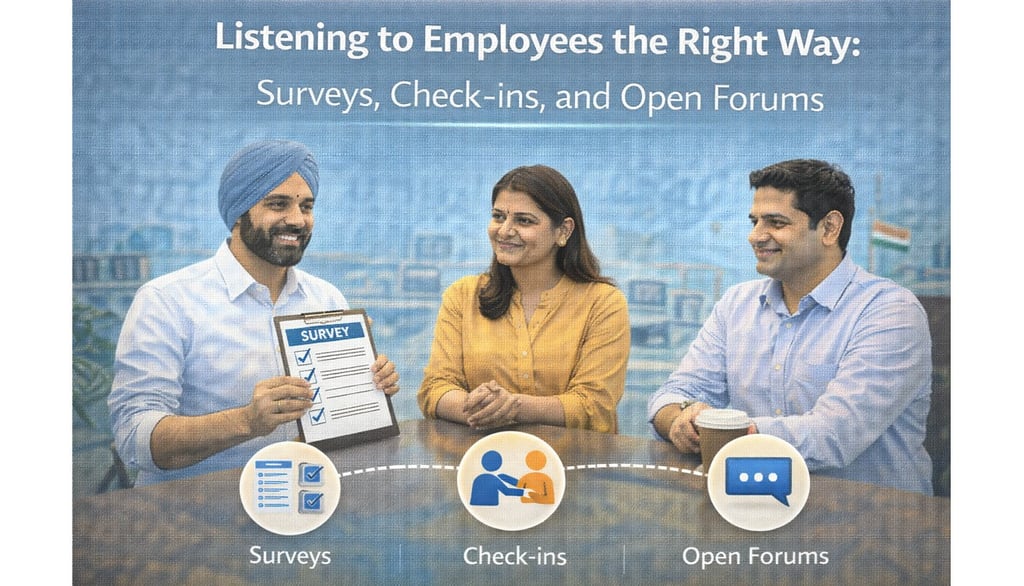
Many Indian organisations collect employee feedback regularly, yet employees often feel unheard. Surveys are conducted, town halls are organised, and check-ins are scheduled — but trust remains low.
Listening to employees is not about the number of channels, but about how seriously input is handled. This article explains how HR can design listening mechanisms that genuinely improve employee experience.
Why Listening Often Fails
Listening efforts fall short when:
Feedback is collected without clear intent
Employees see no visible action
Managers respond defensively
Too many tools create fatigue
When listening feels performative, participation drops.
Using Surveys with Care and Clarity
Surveys are effective when they:
Are short and purposeful
Protect anonymity clearly
Focus on themes, not individuals
Lead to visible follow-up
Frequency should match organisational readiness, not vendor recommendations.
Making Check-ins Meaningful
Regular check-ins work best when:
Managers are trained to listen, not evaluate
Conversations are documented thoughtfully
Issues raised are escalated responsibly
Employees feel psychologically safe
Check-ins should complement, not replace, formal feedback systems.
Structuring Open Forums and Town Halls
Open forums succeed when:
Questions are collected in advance
Sensitive topics are acknowledged honestly
Leadership commits to follow-up
HR moderates discussions neutrally
Silence in forums often reflects fear, not apathy.
Closing the Loop: The Most Critical Step
Employees trust listening systems when HR:
Communicates outcomes clearly
Explains constraints transparently
Shares progress regularly
Acknowledges unresolved issues
Closing the loop is more important than collecting more data.
Conclusion
Listening is a responsibility, not an event. In Indian organisations, trust grows when employees see that speaking up leads to thoughtful action or honest explanation.
HR’s role is to ensure listening systems are credible, consistent, and humane.
HR Checklist: Designing Effective Listening Systems
🗹 Define clear objectives for listening efforts
🗹 Use surveys selectively and thoughtfully
🗹 Train managers for meaningful check-ins
🗹 Offer multiple listening channels
🗹 Protect confidentiality consistently
🗹 Moderate open forums carefully
🗹 Close the loop on feedback shared
🗹 Avoid feedback fatigue
🗹 Track themes, not individual opinions
Listening Channels and Practical Use
Conclusion--
Effective labour law compliance depends on how well HR operations, payroll, and business processes work together. When compliance is embedded into everyday workflows, organisations reduce risk, improve accuracy, and build sustainable governance systems. HR teams that prioritise integration over isolation are better positioned to manage compliance confidently and consistently.
HireDesk India © 2026 | All Rights Reserved
"Thoughtful guidance for everyday HR"


Quick Links
Topics
Connect
_______________________________________________________________________________________________________________________________________________________________________________________
HireDesk is a free HR knowledge platform focused on practical, India-specific workplace guidance. We help HR professionals, managers, and learners navigate people practices with clarity, responsibility, and real-world relevance.