
Making HR Communication Human: Writing Mails and Policies Employees Actually Read
EMPLOYEE EXPERIENCE & CULTURE
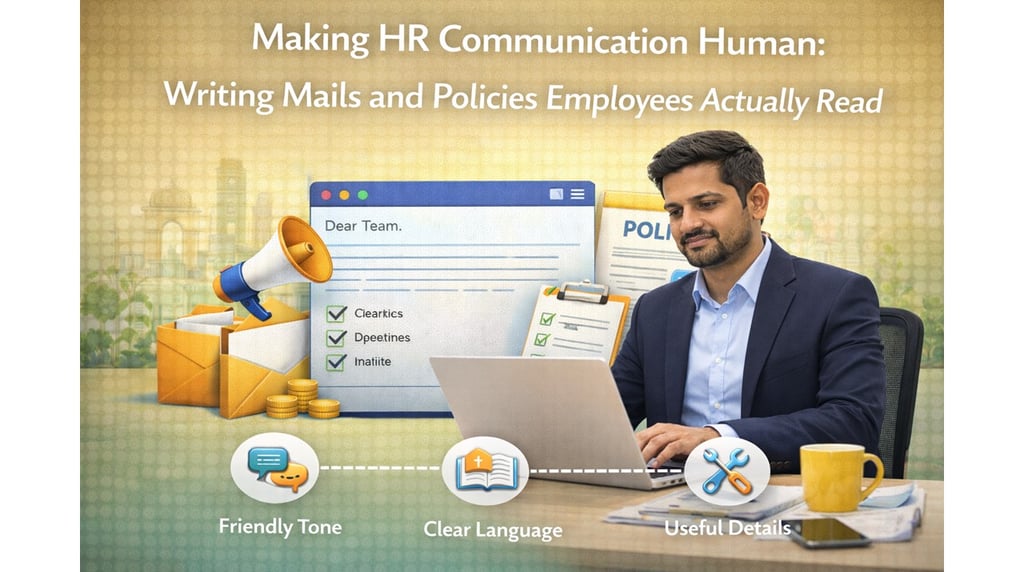
HR communication in Indian organisations often suffers from one common problem — it is technically correct but emotionally disconnected. Long emails, legal-heavy policy language, and generic announcements may meet compliance needs, but they rarely engage employees.
This article focuses on how HR can make communication more human, readable, and trustworthy — without losing clarity, authority, or legal safety.
Why HR Communication Fails in Indian Workplaces
Employees commonly complain that HR communication is:
Too long and jargon-heavy
Written like a legal notice
Focused on rules, not intent
Inconsistent in tone across messages
Easy to ignore
When employees stop reading HR communication, misunderstandings and distrust increase.
The Cultural Impact of How HR Writes
HR mails and policies silently shape culture by signalling:
Whether employees are trusted or controlled
Whether HR is approachable or bureaucratic
Whether leadership respects employee intelligence
Whether policies exist to support or punish
Tone is not cosmetic — it reflects mindset.
Principles of Human-Centred HR Communication
Effective HR communication in India should:
Use simple, conversational Indian English
Explain why before what
Balance firmness with empathy
Anticipate employee concerns
Respect diverse education and language backgrounds
Clear writing reduces conflict and follow-ups.
Writing HR Emails Employees Will Actually Read
Practical tips that work:
One clear purpose per email
Short paragraphs and bullet points
Meaningful subject lines
Direct call-to-action
Avoid unnecessary CCs
If an email needs repeated follow-ups, it likely wasn’t clear the first time.
Making HR Policies More Employee-Friendly
Policies should guide behaviour, not intimidate employees.
HR can:
Add a short “policy intent” section
Use examples instead of abstract rules
Separate legal clauses from practical guidance
Avoid threatening language
Review policies for tone, not just content
A readable policy is more likely to be followed.
HR’s Role as a Communication Coach
HR must also enable managers to communicate better by:
Providing mail templates
Reviewing sensitive announcements
Coaching managers on tone and timing
Setting organisation-wide communication standards
Culture improves when communication improves.
Conclusion
Human HR communication builds credibility, reduces confusion, and strengthens culture. Employees may not love every policy or decision, but they respond better when communication is respectful, clear, and empathetic.
In Indian workplaces, how HR communicates often matters as much as what HR decides.
HR Checklist: Making HR Communication Human
🗹 Use simple, conversational Indian English
🗹 Explain intent before rules
🗹 Keep emails short and focused
🗹 Avoid legal-heavy language in routine communication
🗹 Use examples in policies
🗹 Maintain consistent tone across HR messages
🗹 Review communication from an employee’s perspective
🗹 Coach managers on effective communication
HR Communication Pitfalls and Better Alternatives
Conclusion--
Effective labour law compliance depends on how well HR operations, payroll, and business processes work together. When compliance is embedded into everyday workflows, organisations reduce risk, improve accuracy, and build sustainable governance systems. HR teams that prioritise integration over isolation are better positioned to manage compliance confidently and consistently.
HireDesk India © 2026 | All Rights Reserved
"Thoughtful guidance for everyday HR"


Quick Links
Topics
Connect
_______________________________________________________________________________________________________________________________________________________________________________________
HireDesk is a free HR knowledge platform focused on practical, India-specific workplace guidance. We help HR professionals, managers, and learners navigate people practices with clarity, responsibility, and real-world relevance.