
Managing Culture During Layoffs, Restructuring, and Tough Business Decisions
EMPLOYEE EXPERIENCE & CULTURE
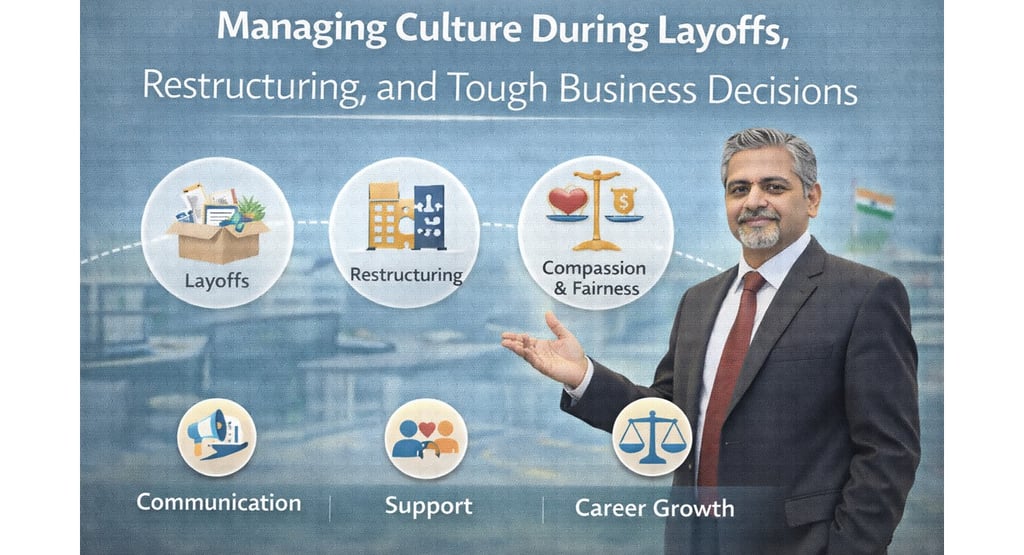
Layoffs, restructuring, and difficult business decisions test organisational culture more than any growth phase. In Indian workplaces, these moments are closely watched by employees, not just for outcomes but for how decisions are made, communicated, and implemented.
This article explains how HR can protect trust, dignity, and cultural integrity during tough business situations, even when decisions are unpopular or painful.
Why Culture Is Most Exposed During Difficult Decisions
During layoffs or restructuring, employees closely observe:
Transparency of communication
Fairness in decision-making
Treatment of affected employees
Behaviour of leaders and managers
Alignment between stated values and actions
Cultural damage during this phase can be long-lasting if mishandled.
Common Cultural Risks in Layoffs and Restructuring
HR teams often encounter:
Rumours and misinformation
Loss of trust in leadership
Survivor guilt and disengagement
Manager avoidance of difficult conversations
Legal and compliance risks
Without structure, emotional and operational risks escalate together.
HR’s Role Before, During, and After Tough Decisions
HR must act with clarity and courage:
Before
Challenge assumptions and ensure fairness
Prepare communication plans and FAQs
Train managers on empathetic conversations
During
Ensure respectful and consistent messaging
Protect dignity and privacy
Monitor behaviour and emotional responses
After
Support remaining employees
Rebuild trust through transparency
Reinforce cultural values in action
HR is the custodian of both process and humanity.
Practical Practices That Protect Culture
India-relevant, realistic practices include:
Clear explanation of business rationale
Consistent criteria for decisions
Face-to-face or personal communication wherever possible
Fair severance and support measures
Ongoing engagement with remaining teams
How decisions are executed matters as much as the decision itself.
Avoiding Long-Term Cultural Damage
HR should help leadership avoid:
Abrupt, poorly explained actions
Inconsistent treatment across teams
Silence after major decisions
Delegating sensitive conversations without support
Recovery begins with honesty and follow-through.
Conclusion
Managing culture during layoffs, restructuring, and tough business decisions requires discipline, empathy, and integrity. HR’s role is to ensure that even in difficult times, organisations act in line with their stated values.
Employees may not agree with decisions, but they will remember how they were treated.
HR Checklist: Protecting Culture During Tough Decisions
🗹 Ensure fairness and consistency in decision criteria
🗹 Prepare clear communication and FAQs
🗹 Train managers for empathetic conversations
🗹 Protect dignity and privacy of affected employees
🗹 Monitor legal and compliance requirements
🗹 Support remaining employees post-decision
🗹 Communicate transparently and regularly
🗹 Reinforce values through leadership behaviour
Culture Risks and HR Interventions During Tough Decisions
Conclusion--
Effective labour law compliance depends on how well HR operations, payroll, and business processes work together. When compliance is embedded into everyday workflows, organisations reduce risk, improve accuracy, and build sustainable governance systems. HR teams that prioritise integration over isolation are better positioned to manage compliance confidently and consistently.
HireDesk India © 2026 | All Rights Reserved
"Thoughtful guidance for everyday HR"


Quick Links
Topics
Connect
_______________________________________________________________________________________________________________________________________________________________________________________
HireDesk is a free HR knowledge platform focused on practical, India-specific workplace guidance. We help HR professionals, managers, and learners navigate people practices with clarity, responsibility, and real-world relevance.