
Managing Culture During Rapid Hiring and Business Growth
EMPLOYEE EXPERIENCE & CULTURE
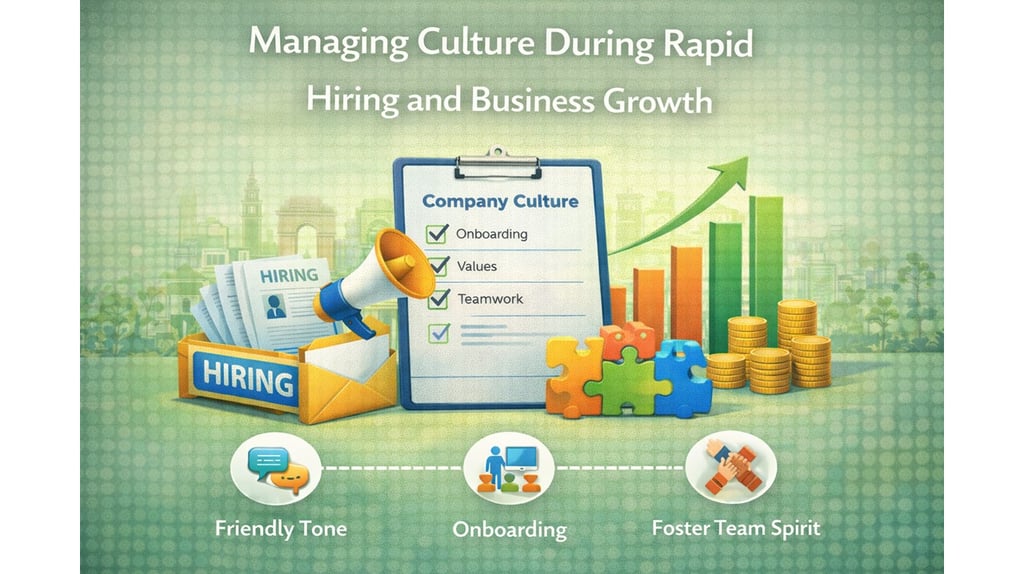
Rapid hiring is often a sign of business success. In Indian organisations, periods of expansion usually involve aggressive recruitment, new managers, changing processes, and increased pressure on existing teams. While growth brings opportunity, it also puts organisational culture at risk.
This article explains how HR can protect and shape culture during rapid hiring and business growth, without slowing down momentum or becoming overly bureaucratic.
Why Culture Is Most Vulnerable During Rapid Growth
During fast expansion, organisations commonly face:
Inconsistent hiring decisions under pressure
Dilution of values as headcount increases
New managers unfamiliar with expected behaviours
Overloaded HR processes and teams
Informal practices becoming unmanageable
If culture is not actively managed, it gets defined by speed, not intent.
Typical Culture Risks in High-Growth Phases
HR leaders often observe:
“Anyone who can deliver” mindset overriding values
Uneven onboarding quality across teams
Conflicting management styles
Loss of informal trust as teams scale
Early employee disengagement and attrition
Growth exposes cultural gaps that were previously manageable.
HR’s Role in Stabilising Culture During Growth
HR must act as an anchor, not a bottleneck:
Define non-negotiable cultural principles
Standardise hiring and onboarding basics
Equip new managers quickly
Reinforce behavioural expectations consistently
Flag cultural risks early to leadership
Culture governance becomes critical as scale increases.
Practical Culture Practices for High-Growth Indian Organisations
Realistic and effective practices include:
Clear hiring criteria aligned to values
Short, consistent onboarding programmes
Manager playbooks for people leadership
Simple communication rituals as teams expand
Early feedback loops for new hires
Consistency matters more than sophistication during growth.
Balancing Speed with Discipline
HR should help leaders understand that:
Speed without structure increases long-term costs
Cultural debt accumulates quietly
Early discipline reduces future correction effort
Growth and culture are not opposites — they must progress together.
Conclusion
Managing culture during rapid hiring and business growth requires deliberate effort, clarity, and consistency. HR’s responsibility is to ensure that expansion strengthens, rather than weakens, organisational values and behaviours.
When culture is protected during growth, organisations scale with stability and trust.
HR Checklist: Protecting Culture During Rapid Growth
🗹 Define and communicate cultural non-negotiables
🗹 Align hiring decisions with values and behaviour
🗹 Standardise onboarding for all new hires
🗹 Equip new managers with clear people guidelines
🗹 Maintain simple, consistent communication rituals
🗹 Track early engagement and attrition trends
🗹 Escalate cultural risks to leadership early
🗹 Balance hiring speed with process discipline
Growth-Stage Culture Risks and HR Interventions
Conclusion--
Effective labour law compliance depends on how well HR operations, payroll, and business processes work together. When compliance is embedded into everyday workflows, organisations reduce risk, improve accuracy, and build sustainable governance systems. HR teams that prioritise integration over isolation are better positioned to manage compliance confidently and consistently.
HireDesk India © 2026 | All Rights Reserved
"Thoughtful guidance for everyday HR"


Quick Links
Topics
Connect
_______________________________________________________________________________________________________________________________________________________________________________________
HireDesk is a free HR knowledge platform focused on practical, India-specific workplace guidance. We help HR professionals, managers, and learners navigate people practices with clarity, responsibility, and real-world relevance.